

Introduction
Not having an oven should never mean not having a proper chicken dinner. I lived for two years in a flat where the oven was, to put it kindly, decorative. It heated unevenly, it smelled faintly of burning whenever it was switched on, and eventually I stopped fighting it and learned to cook everything on the hob. What I discovered was that stovetop chicken is not a second-best option at all. In many cases it is faster, juicier and more flavourful than oven cooking, because you are right there with the pan, watching, tasting and adjusting as you go.
A good skillet, a lid, and a little patience will take you a long way. Chicken thighs crisped skin-side down, breasts seared and then finished gently in a sauce, strips of chicken tossed through noodles or vegetables — all of these happen entirely on the stovetop, most of them in under half an hour, and none of them require you to preheat anything or wait for a tray to come up to temperature. If your oven is broken, busy, or simply full of something else, these recipes have you covered.
This guide gives you four reliable stovetop dinners, plus the techniques that make them work every time. Once you know how to sear chicken without it sticking, how to tell when it is done without cutting it to pieces, and how to build a pan sauce from the browned bits left behind, you can improvise your own versions with whatever is in the fridge. And if you want more chicken ideas in the same spirit, the chicken recipes on TastyxTherapy are a good next stop.
Why the Stovetop Suits Chicken So Well
Heat control is the stovetop’s great advantage. An oven cooks by surrounding food with hot air, which is even but slow and hard to adjust mid-cook. A hob lets you turn the heat up to crisp skin, down to simmer a sauce, and off entirely in a second. That control matters with chicken, because the difference between juicy and dry is often just a few degrees and a few minutes.
The pan itself does work an oven cannot. When chicken browns in a skillet, it leaves behind fond — those golden-brown bits stuck to the base. Deglaze with a splash of wine, stock or even water, and that fond becomes a sauce with a depth of flavour that is hard to get any other way. It is the reason a simple pan-fried chicken breast with a quick pan sauce can taste like something from a restaurant.
Stovetop cooking is also simply quicker on a busy night. There is no preheating, no waiting for a large piece of meat to cook through in a hot box, and washing up is usually one pan. For weeknight cooking, that combination of speed, control and flavour is hard to beat.
Choosing the Right Cut for the Hob
Not all chicken behaves the same in a pan, and choosing the right cut makes the recipe much easier. Boneless, skinless thighs are the most forgiving stovetop cut. They have enough fat to stay juicy even if you overshoot by a few minutes, they cook quickly, and they take strong flavours well. Bone-in thighs take a little longer but reward you with crisp skin and meat that practically falls off the bone after a covered simmer.
Breasts are leaner and faster, but they punish overcooking. The trick is even thickness — if one end is much thicker than the other, it will dry out while the thick end catches up. A few firm presses with a rolling pin between sheets of baking paper solves this in seconds. Drumsticks are cheap, flavourful and great for braising in a sauce, though they need a lid and a bit more time than thighs or breasts.
Whatever cut you buy, bring it out of the fridge fifteen minutes before cooking. Ice-cold chicken hitting a hot pan cooks unevenly and is more likely to stick. Pat it very dry with kitchen paper, because moisture is the enemy of browning, and season it generously before it goes anywhere near the heat.
Recipe 1: Creamy Garlic Chicken in One Pan
This is the stovetop chicken dinner I make when I want something that feels like a treat but still lands on the table in half an hour. It is rich without being heavy, and the sauce comes together from the same pan the chicken cooked in, so nothing is wasted.
Season four chicken breasts or six boneless thighs with salt and pepper. Heat a tablespoon of olive oil and a knob of butter in a large skillet over medium-high heat, and sear the chicken for five to six minutes a side until deeply golden. Do not crowd the pan — cook in two batches if needed, because crowded chicken steams instead of browning. Remove the chicken to a plate and lower the heat.
In the same pan, soften three sliced garlic cloves and a finely chopped shallot or half an onion in the remaining fat for two minutes. Pour in about 250 millilitres of chicken stock, scraping up the browned bits, and let it bubble for two minutes. Stir in 200 millilitres of cream, a teaspoon of mustard and a handful of grated Parmesan, and simmer gently until slightly thickened. Return the chicken to the pan, spoon sauce over it, cover, and cook on low for five to eight minutes until the chicken is cooked through. Rest for five minutes before serving, scattered with parsley if you have it.
The sauce is endlessly adaptable. A spoonful of sun-dried tomato paste makes it Mediterranean, mushrooms fried with the garlic make it earthier, and a handful of spinach wilted in at the end turns it into a complete one-pan meal. Serve it with rice, pasta or crusty bread to catch every last bit of sauce.
Recipe 2: Lemon and Herb Chicken Thighs
Sometimes the simplest chicken is the best, and this is that recipe. It relies on good browning, lemon, garlic and herbs rather than a sauce, and it is on the table in about twenty-five minutes. It is also a great recipe for learning how to get chicken skin properly crisp.
Start with bone-in, skin-on thighs if you can get them. Pat the skin very dry and season well on both sides. Heat a dry or very lightly oiled skillet over medium heat — not screaming hot — and lay the thighs skin-side down. Leave them alone. This is the hard part, because the instinct is to move them, but undisturbed skin renders its fat and crisps up beautifully over ten to twelve minutes. When the skin is deep golden and releases easily, flip and cook for another eight to ten minutes until cooked through.
While the chicken rests, make a quick dressing in the pan juices: squeeze in half a lemon, add a crushed garlic clove, a drizzle of olive oil and a handful of chopped parsley or thyme, and stir. Spoon it over the chicken at the table. The contrast of crisp skin, juicy meat and bright lemon is exactly why this simple dinner never gets old, and it pairs with almost anything — roasted vegetables, a green salad, rice, or just good bread.
Recipe 3: Quick Chicken and Vegetable Stir-Fry
When time is really short, a stir-fry is the answer. It is fast, it uses up vegetables, and it is much better than a takeaway version because you control the salt, the oil and the amount of sauce. The key is preparation: everything chopped before the pan gets hot, because once stir-frying starts, it moves very quickly.
Slice two chicken breasts thinly across the grain — partially frozen chicken is actually easier to slice thinly, so do not wait for it to fully defrost if you are in a hurry. Toss the slices with a tablespoon of soy sauce, a teaspoon of cornflour and a pinch of black pepper, and set aside while you chop vegetables: peppers, onions, broccoli, carrots, frozen mixed vegetables, whatever you have. Mix a sauce from two tablespoons of soy sauce, a tablespoon of oyster sauce or hoisin, a teaspoon of honey, a teaspoon of vinegar and a splash of water.
Heat oil in a large pan or wok until it shimmers, fry the chicken in a single layer for two to three minutes a side until golden, and remove. Fry the vegetables in the same pan for three to four minutes until just tender but still bright, add garlic and ginger for the last minute, then return the chicken with the sauce and toss for a minute until glossy. Serve immediately over rice or noodles, with chilli oil or sesame seeds if you like them.
Recipe 4: Smoky Chicken and Bean Skillet
This one-pan dinner leans on tinned beans and smoked paprika for a smoky, hearty meal that tastes like it simmered for hours but takes about thirty minutes. It is also a brilliant way to stretch a small amount of chicken to feed more people.
Brown diced chicken thighs in olive oil, remove, and soften an onion and a pepper in the same pan. Add two cloves of garlic, a teaspoon of smoked paprika, half a teaspoon of cumin and a pinch of chilli, and cook for a minute until fragrant. Tip in a tin of chopped tomatoes and a tin of drained beans — kidney, black or cannellini all work — season, and simmer for ten minutes. Return the chicken, cover, and cook for another ten minutes until the chicken is tender and the sauce has thickened. Finish with a squeeze of lemon and a scattering of coriander or parsley.
Serve it with rice, flatbreads or tortilla chips for scooping. It reheats beautifully the next day, and the flavours actually improve overnight, so it is a smart choice for cooking ahead on a Sunday for a busy Monday.
How to Make Stovetop Chicken That Stays Juicy
Juicy stovetop chicken comes down to a few habits that are easy to learn and hard to forget. First, dry the surface and season well. Second, preheat the pan properly — a drop of water should sizzle and evaporate, not sit there — but do not let oil smoke before the chicken goes in. Third, leave the chicken alone once it is in the pan. Moving it constantly prevents browning and tears the surface.
Fourth, use the lid strategically. Searing uncovered builds colour; finishing covered with a splash of stock or sauce lets thicker pieces cook through gently without drying out. Fifth, rest the chicken for five minutes before slicing. Cutting into it immediately lets juices run out onto the board instead of staying in the meat, and that five-minute wait makes a noticeable difference.
Finally, trust a thermometer if you have one. Chicken is safely cooked at 74 degrees Celsius in the thickest part, and checking takes two seconds. Without a thermometer, cut into the thickest piece and check that the juices run clear and the meat is no longer pink. With practice, you will be able to judge by touch and timing, but there is no shame in checking — it is how good cooks stay consistent.
Building a Pan Sauce from Nothing
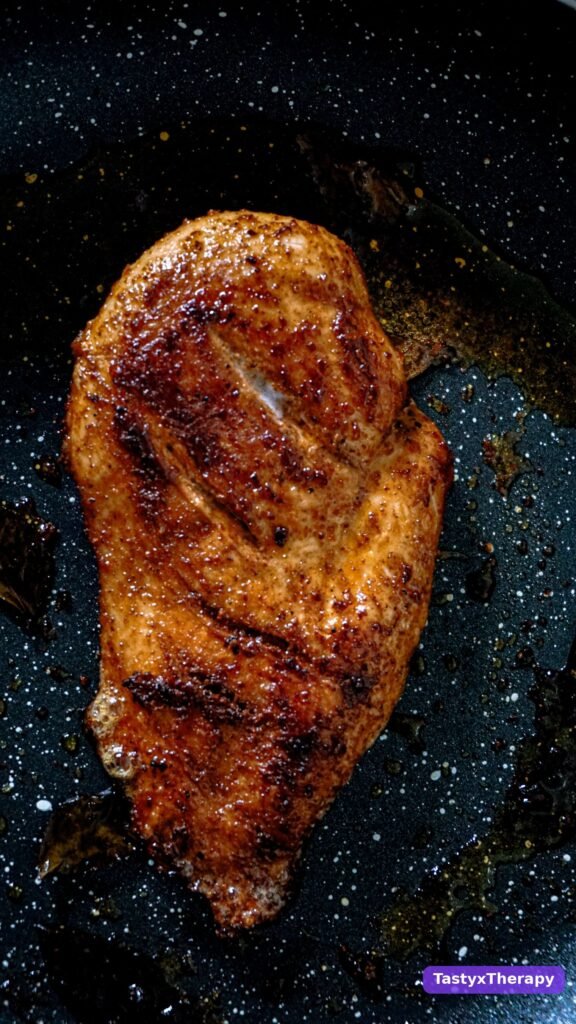
A pan sauce is the stovetop cook’s secret weapon, and it takes about five minutes. After removing the chicken, you should have a pan with browned bits and a little fat. Keep the heat medium, pour in a splash of liquid — stock, wine, water or even the juice of a lemon — and scrape the base with a wooden spoon as it bubbles. That is deglazing, and it lifts all the flavour off the pan.
Then build the sauce to suit the meal. Add cream and mustard for richness, tomatoes and herbs for something brighter, or soy, honey and garlic for an Asian-style glaze. Simmer until it thickens enough to coat a spoon, taste for salt and acid, and return the chicken to warm through. A knob of cold butter whisked in at the very end gives a glossy finish that makes the whole dish look polished. Once you can make a pan sauce without thinking, plain chicken breast stops being boring for good. For more background on chicken as an ingredient around the world, the article on chicken as food is a useful read, and the BBC Good Food chicken breast collection offers plenty of stovetop-friendly variations.
Serving Ideas
Stovetop chicken is flexible about company, which is part of its appeal. Creamy garlic chicken loves rice, mashed potatoes or pasta — anything that will hold sauce. Lemon herb thighs are wonderful with a sharp salad, roasted vegetables, or a simple cucumber and tomato salad that cuts through the richness of the skin. Stir-fries want rice or noodles and something crunchy on top, like spring onions, sesame seeds or chopped peanuts.
For a complete weeknight plate without extra cooking, think in threes: chicken, one starch, one vegetable. That might be smoky bean skillet with rice and a green salad, or lemon thighs with bread and steamed broccoli. A wedge of lemon, a drizzle of oil or a spoonful of yoghurt on the side finishes the plate without another pan. And if you have leftover chicken, it is a gift for tomorrow: sliced over salad, folded into a wrap, or stirred through pasta with the leftover pan sauce. If you enjoy this kind of leftover-first cooking, the leftover rotisserie chicken ideas on this site follow exactly the same logic.
Common Mistakes to Avoid
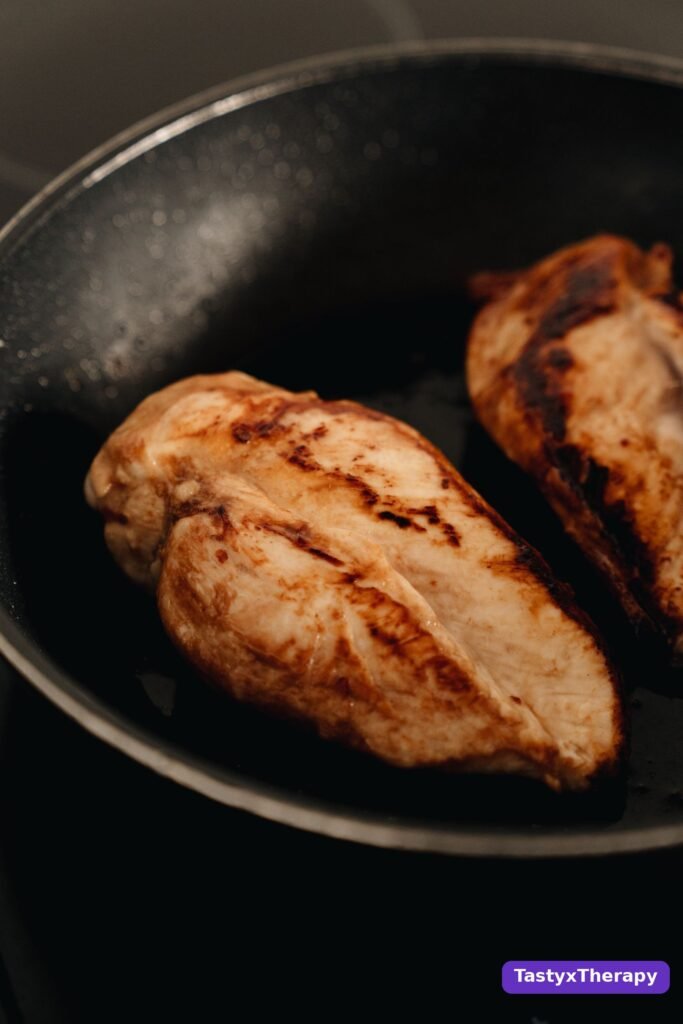
Crowding the pan is the most common stovetop mistake. Too much chicken at once drops the temperature, and instead of browning, the meat steams in its own juices and turns grey. Cook in batches if you need to; it is faster in the end than trying to rescue pale chicken. Cooking on too high a heat is the other extreme — it burns the outside before the inside is done, especially with breasts. Medium-high for searing, then medium or low to finish, is the reliable pattern.
Skipping the rest is another quiet mistake, as is slicing chicken straight from the pan to check doneness repeatedly, which dries it out. And do not throw away the pan fond by washing the pan between steps. Those browned bits are flavour, and a splash of liquid turns them into sauce. Finally, be careful with cream sauces on high heat, which can split. Keep them at a gentle simmer and they will stay smooth and glossy.
Frequently Asked Questions
Can I cook chicken completely on the stovetop without an oven?
Yes, absolutely. Thighs, breasts, drumsticks and diced chicken all cook beautifully in a skillet with a lid. Thicker pieces benefit from searing first and then finishing covered on low heat, which mimics the gentle, even cooking of an oven while giving you more control. A thermometer helps confirm doneness, but visual checks work too.
How do I know when stovetop chicken is done?
Chicken is done when it reaches 74 degrees Celsius in the thickest part, or when cut open it is no longer pink and the juices run clear. Thighs are more forgiving than breasts and stay juicy even a little past this point. Resting for five minutes after cooking also lets the temperature even out and the juices settle.
Why does my chicken stick to the pan?
Sticking usually means the pan was not hot enough, the chicken was wet, or it was moved too soon. Pat chicken dry, preheat the pan until water sizzles, add oil, and let the chicken develop a golden crust before trying to move it — it will release naturally once browned. A well-seasoned cast iron or good non-stick pan also helps.
Can I use frozen chicken on the stovetop?
It is best to defrost chicken fully before pan-frying, because frozen pieces cook unevenly and the outside can burn while the centre stays undercooked. If you are short on time, thinly sliced chicken defrosts much faster than whole breasts, and a cold-water defrost in a sealed bag takes about an hour for breasts. Cooked-from-frozen methods exist, but they are slower and less reliable for searing.
What pan is best for stovetop chicken?
A large, heavy skillet — cast iron, stainless steel or good non-stick — is ideal. Cast iron holds heat beautifully for browning, stainless steel is excellent for building pan sauces, and non-stick is the most forgiving for beginners. Whichever you use, choose one large enough that the chicken can sit in a single layer without crowding.
What sides go best with no-oven chicken dinners?
Rice, pasta, mashed potatoes and crusty bread all work with saucy stovetop chicken, while salads, steamed vegetables and roasted vegetables balance richer dishes like creamy garlic chicken. For a quick, freezer-friendly side, the frozen vegetable chicken dinners pair especially well with these recipes, and you can find more ideas across the TastyxTherapy homepage.
3 thoughts on “No Oven Chicken Dinner Recipes: Easy, Delicious Meals Made on the Stovetop”