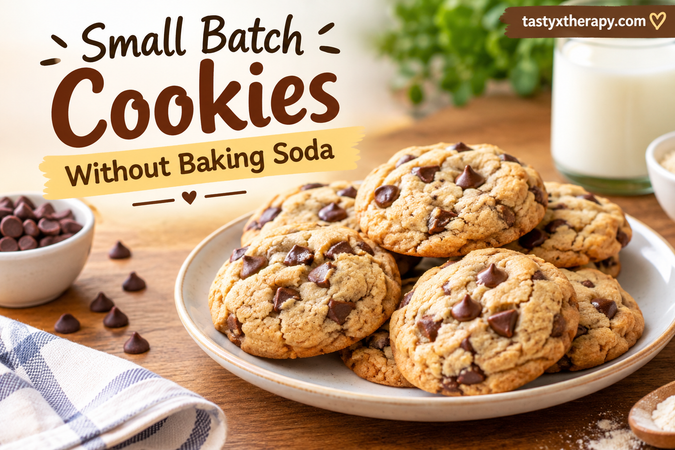
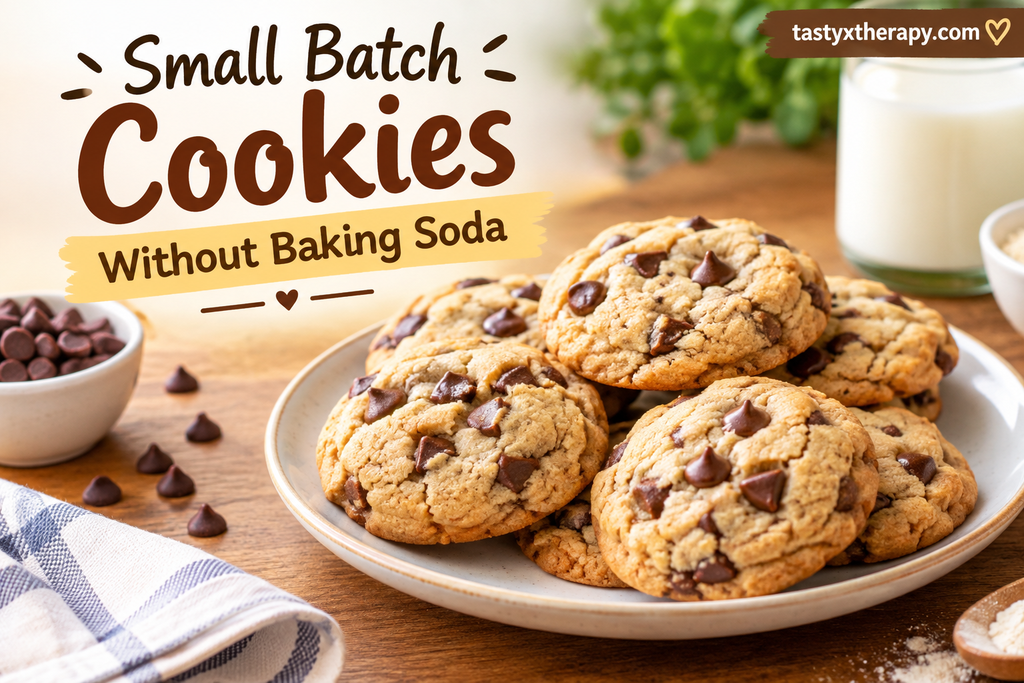
Sometimes you want a warm, homemade cookie without making three dozen of them. Maybe you are baking for yourself, sharing dessert with one or two people, or simply do not want a container full of leftovers sitting on the counter. That is where small batch cookies without baking soda come in handy.
This easy cookie recipe makes a small number of delicious cookies using simple pantry ingredients. There is no baking soda, no complicated equipment, and no need to prepare a huge batch. The cookies are buttery, soft in the middle, lightly crisp around the edges, and packed with chocolate chips.
The best part is that you can make these cookies whenever a craving hits. You do not need to wait for a special occasion or spend a lot of time in the kitchen.
Why Make Small Batch Cookies Without Baking Soda?
There are plenty of reasons to love a small batch cookie recipe. First, it is convenient. Traditional cookie recipes can make two or three dozen cookies, which is more than you may need. A small batch gives you just enough for a quick dessert.
Another advantage is that you can make these cookies even when you are out of baking soda. Baking soda is common in cookie recipes, but it is not essential for every cookie. By using a slightly different ingredient combination and relying on the natural structure of the dough, you can still get delicious homemade cookies.
These cookies are also great for beginner bakers. The ingredient list is short, the preparation is straightforward, and there is no need for a stand mixer.
Ingredients for Small Batch Cookies
You probably already have most of what you need in your kitchen.
Butter
Use softened unsalted butter for the best texture. Butter gives the cookies their rich flavor and helps create tender, slightly crisp edges.
If you only have salted butter, you can use it. Simply reduce or skip any additional salt in the recipe.
Brown Sugar
Brown sugar adds moisture, chewiness, and a gentle caramel flavor. It also helps keep the cookies soft after baking.
Granulated Sugar
A little white sugar helps the cookies spread and gives the edges a pleasant crispness. Combining brown sugar with granulated sugar creates a balanced texture.
Egg Yolk
For a small batch, using a whole egg can add too much moisture. An egg yolk provides richness without making the dough overly wet.
It also helps give the cookies a tender texture.
Vanilla Extract
Vanilla may seem like a small ingredient, but it makes a noticeable difference. It brings out the buttery and chocolate flavors.
All-Purpose Flour
Regular all-purpose flour works perfectly for these cookies. Measure the flour carefully because adding too much can make the cookies dry and dense.
Salt
A small amount of salt balances the sweetness and makes the chocolate flavor stand out.
Chocolate Chips
Semi-sweet chocolate chips are a classic choice, but you can use milk chocolate, dark chocolate, or chopped chocolate.
Simple Small Batch Cookie Recipe
For approximately 6 to 8 cookies, you can use:
- 4 tablespoons unsalted butter, softened
- 3 tablespoons brown sugar
- 1 tablespoon granulated sugar
- 1 egg yolk
- 1/2 teaspoon vanilla extract
- 1/2 cup plus 1 tablespoon all-purpose flour
- 1/4 teaspoon salt
- 1/3 cup chocolate chips
Because this recipe is made without baking soda, there is no baking soda in the ingredient list.
If you prefer thicker cookies, you can chill the dough before baking.
How to Make Small Batch Cookies Without Baking Soda
1. Soften the Butter
Start with softened butter rather than completely melted butter. Soft butter should be easy to press with your finger but should not be oily or liquid.
Place it in a mixing bowl.
2. Add the Sugars
Add the brown sugar and granulated sugar to the butter. Mix until the ingredients are well combined and creamy.
You do not necessarily need an electric mixer. A sturdy spoon or spatula works well for such a small batch.
3. Add the Egg Yolk and Vanilla
Mix in the egg yolk and vanilla extract until smooth.
The mixture may look slightly creamy and glossy at this stage. That is exactly what you want.
4. Add the Dry Ingredients
Add the flour and salt. Mix gently until a soft cookie dough forms.
Avoid overmixing. Once the flour disappears, stop stirring.
Overmixing can develop too much gluten, which may result in tougher cookies.
5. Fold in the Chocolate Chips
Add your chocolate chips and gently fold them into the dough.
Save a few chocolate chips to press onto the tops of the cookies after shaping if you want them to look extra appealing.
6. Chill the Dough if Needed
If the dough feels very soft or sticky, refrigerate it for about 20 to 30 minutes.
Chilling helps firm up the butter and can prevent the cookies from spreading too much during baking.
This step is especially useful if your kitchen is warm.
7. Shape the Cookies
Divide the dough into 6 to 8 portions. Roll each portion gently into a ball and place them on a parchment-lined baking sheet.
Leave enough space between each cookie because they will spread as they bake.
8. Bake
Bake the cookies in a preheated oven at approximately 350°F (175°C) for around 9 to 12 minutes.
The exact baking time depends on your oven and the size of your cookies.
The edges should look set and lightly golden, while the centers can still look slightly soft.
Do not wait for the centers to become completely firm in the oven. Cookies continue cooking from residual heat after they come out.
9. Let Them Cool
Allow the cookies to sit on the baking sheet for several minutes before transferring them to a cooling rack.
They will become firmer as they cool while maintaining a soft, tender center.
What Happens When You Make Cookies Without Baking Soda?
Baking soda affects how cookies spread, brown, and develop their texture. When you make cookies without baking soda, the final result can be somewhat different from traditional recipes.
You may notice that the cookies spread less and have a slightly denser texture.
That is not necessarily a bad thing.
For a small batch cookie, a slightly thicker, buttery texture can actually be very satisfying. The key is not to expect exactly the same result as a recipe specifically formulated with baking soda.
This recipe is designed around the ingredients rather than simply removing baking soda from a standard cookie recipe.
How to Keep the Cookies Soft
If you prefer soft cookies, there are a few simple things you can do.
First, avoid overbaking them. The centers should still appear slightly soft when you remove the cookies from the oven.
Second, use brown sugar. The moisture in brown sugar contributes to a softer texture.
Third, store cooled cookies in an airtight container.
You can also place a small piece of bread in the container. The bread can help maintain moisture in the container, although you should replace it regularly.
How to Make Cookies Chewy
Chewy cookies depend heavily on the ratio of ingredients and baking time.
Using brown sugar helps provide chewiness, while slightly underbaking the cookies keeps the centers tender.
Do not flatten the dough too aggressively. Keeping the dough balls relatively thick can help create a chewy center.
Chilling the dough can also help produce a thicker cookie.
How to Make Crispy-Edged Cookies
If you enjoy cookies with crisp edges and a softer center, use a combination of brown and white sugar and bake until the edges are lightly golden.
Allow the cookies to cool on the baking sheet for several minutes. The edges will continue to firm up while the center remains tender.
For extra crispness, you can bake the cookies for another minute or two, but watch them carefully because small cookies can go from perfectly baked to overbaked quickly.
Chocolate Variations
Chocolate chip cookies are only the beginning.
Try replacing some of the chocolate chips with chopped dark chocolate for a more intense chocolate flavor.
White chocolate chips can create a sweeter cookie, while milk chocolate gives you a creamy, nostalgic taste.
You can also combine chocolate chips with chopped nuts such as walnuts or pecans.
For a richer chocolate cookie, add a small amount of cocoa powder while slightly reducing the flour to maintain the dough’s consistency.
Small Batch Cookies Without Baking Soda and Without an Electric Mixer
One of the nicest things about this recipe is that you do not need fancy equipment.
A mixing bowl, spoon, measuring cups or scale, baking sheet, and oven are enough.
Because you are making only a few cookies, mixing by hand takes very little effort.
Start by thoroughly combining the softened butter and sugars. Once the flour is added, mix just until the dough comes together.
This makes the recipe particularly convenient when you want dessert without creating a pile of dishes.
Can You Use Melted Butter?
Yes, but melted butter changes the texture and spread of the cookies.
If you use melted butter, allow it to cool slightly before mixing it with the other ingredients.
You may also want to chill the finished dough before baking.
Softened butter generally gives you more control over the texture, so it is the preferred option for this small batch recipe.
Can You Freeze the Cookie Dough?
Absolutely.
Prepare the dough as usual, then divide it into individual portions. Place the dough balls on a plate or tray and freeze them until firm.
Once frozen, transfer them to a freezer-safe container or bag.
When you want fresh cookies, you can bake the dough from frozen, although you may need to add a few minutes to the baking time.
This is one of the easiest ways to have homemade cookies available whenever you want them.
Common Mistakes to Avoid
Adding Too Much Flour
This is one of the most common cookie problems.
Too much flour can make cookies dry and crumbly. If possible, use a kitchen scale for accurate measurements.
If measuring with cups, spoon the flour into the measuring cup rather than packing it down.
Overbaking
Cookies often look underdone when they are actually ready.
If you wait until the center looks completely firm, you may end up with hard cookies after they cool.
Look for lightly golden edges and soft centers.
Skipping Chilling When the Dough Is Very Soft
If your dough feels extremely soft, refrigerate it before baking.
This can make the dough easier to handle and reduce excessive spreading.
Overmixing
Once you add flour, mix only until combined.
There is no benefit to mixing cookie dough for several minutes.
Easy Flavor Additions
You can customize this small batch cookie recipe in many ways.
Try adding:
- Chopped walnuts
- Chopped pecans
- Coconut flakes
- Peanut butter chips
- White chocolate chips
- Dark chocolate chunks
- Mini chocolate chips
- A pinch of cinnamon
- A little orange zest
- Crushed candy pieces
For a simple holiday variation, add a pinch of cinnamon and a few chopped nuts.
For a classic chocolate cookie, use semi-sweet chocolate chips and a little extra vanilla.
Frequently Asked Questions
Can I make cookies without baking soda?
Yes. Cookies can be made without baking soda when the recipe is designed for it. The texture and spread may differ from cookies made with baking soda.
Why are my cookies not spreading?
Cookies that do not spread may have too much flour, very cold dough, or a butter-to-flour ratio that produces a thicker cookie.
For this recipe, a moderate amount of chilling is useful, but extremely cold dough may spread less.
Can I use salted butter?
Yes. Salted butter works well. If you use salted butter, reduce or omit the added salt.
Can I double the recipe?
Yes. Simply double each ingredient. Keep in mind that baking time can vary depending on the size of your cookies.
How long do homemade cookies last?
Stored in an airtight container at room temperature, these cookies are best enjoyed within several days. Their texture is usually best during the first few days.
Can I make these cookies without chocolate chips?
Definitely. You can leave out the chocolate or replace it with nuts, dried fruit, coconut, or another favorite mix-in.
Tips for Perfect Small Batch Cookies
For the best results every time, keep these tips in mind:
Use room-temperature butter. Softened butter blends easily with sugar.
Measure flour carefully. Too much flour can produce dry cookies.
Do not overmix. Stop as soon as the dough comes together.
Chill when necessary. A short chill can help control spreading.
Watch the baking time. Small cookies bake quickly.
Let them cool. They continue setting after they leave the oven.
Add extra chocolate on top. Pressing a few chocolate chips into the dough before baking makes the finished cookies look bakery-style.
Why This Recipe Is Perfect for Small Cravings
There is something special about making exactly enough cookies.
A giant cookie recipe can feel like a project. You have to soften a lot of butter, measure several cups of flour, prepare multiple baking trays, and then figure out what to do with all the leftovers.
A small batch is different.
You can decide in the afternoon that you want cookies and have warm homemade cookies shortly afterward. There is less preparation, less cleanup, and less temptation to eat an entire container of cookies simply because they are sitting there.
These small batch cookies without baking soda are especially useful for people who bake for one or two people or who simply want a quick homemade dessert.
Serving Ideas
Fresh cookies are delicious on their own, but you can easily turn them into a more complete dessert.
Serve warm cookies with a scoop of vanilla ice cream for a simple cookie sundae.
You can also crumble them over yogurt, serve them alongside coffee, or enjoy them with a cold glass of milk.
For a special occasion, sandwich two cookies around a little ice cream and freeze them for a homemade cookie ice cream sandwich.
Final Thoughts
Making small batch cookies without baking soda is an easy way to enjoy homemade cookies without preparing a large recipe. With basic ingredients such as butter, sugar, flour, egg yolk, vanilla, salt, and chocolate chips, you can create a handful of warm, buttery cookies whenever the craving strikes.
The most important things are simple: measure your ingredients carefully, avoid overmixing, chill the dough if it is too soft, and take the cookies out of the oven while the centers are still slightly soft.
Once you have made the basic recipe, it is easy to make it your own. Experiment with different chocolates, nuts, spices, and other mix-ins until you find your favorite combination.
Whether you are baking for a quiet night at home, a quick afternoon treat, or a small family dessert, this recipe proves that you do not need a large batch or a long ingredient list to make something delicious.
Sometimes, six or eight homemade cookies are exactly what you need.