

Mashed potatoes are one of those dishes that everyone thinks they already know how to make, and almost everyone has a strong opinion about. Some people like them fluffy and light, some like them dense and buttery, and some like them with the skins left in for texture. I am not here to settle that argument, because it is unwinnable and, frankly, a little beside the point. What I am here to say is that adding roasted garlic changes mashed potatoes in a way that is hard to go back from, and once you have tried it, plain mash can feel like it is missing something.
Roasted garlic is a different ingredient from raw garlic, and that distinction is the whole recipe. Raw garlic is sharp, pungent, and liable to overpower everything around it. Roasted garlic, cooked slowly until it is soft and golden, turns sweet, mellow, and almost caramel-like, with a deep savoury flavour that melts into the potatoes rather than shouting over them. You can use a whole head of it in a pot of mash and nobody will complain about garlic breath, because roasting tames it so completely.
This version is deliberately creamy rather than fluffy, though the line between the two is thinner than people think. The creaminess comes from warm milk and cream, plenty of butter, and potatoes that have been dried properly after boiling, so they absorb the dairy instead of turning watery. It is the kind of mash that holds a pool of gravy beautifully, that spoons up in soft peaks, and that makes a roast dinner feel complete even if everything else on the table is simple.
It does take a little longer than plain mash, because the garlic needs time in the oven, but most of that time is hands-off. You can roast the garlic while the rest of dinner cooks, or even a day ahead, and the actual mashing takes no more than ten minutes. For a dish that gets this much praise, that is a very good return on effort, and it is why this has become my default mash for anything from a Sunday roast to a quiet Tuesday supper.
Why Roasted Garlic Changes Everything
The chemistry is straightforward, and it explains why roasted garlic behaves so differently from raw. Heat breaks down the harsh sulphur compounds that give raw garlic its bite, and it encourages the natural sugars in the garlic to caramelise. The cloves soften into a paste that is sweet, nutty, and deeply savoury, with none of the acrid edge that can make raw garlic dominate a dish. Stirred into hot potatoes, that paste disappears completely, leaving only flavour behind.
That flavour is also more complex than you might expect from a single ingredient. Roasted garlic brings umami, sweetness, and a gentle, almost buttery richness, which means you can use a little less butter and still end up with mash that tastes indulgent. It also pairs with almost everything that mashed potatoes normally go with, from roast chicken to sausages to mushroom gravy, without pulling the dish in any particular direction. It deepens rather than redirects, which is exactly what you want from a side dish.
There is a practical benefit, too. Roasted garlic is far more forgiving than raw. If you add too much raw garlic to mash, the whole pot is ruined. If you add an extra head of roasted garlic, the mash just tastes a little richer and more garlicky, and nobody minds. That forgiveness makes this recipe an excellent one for cooks who are still building confidence, because it is very hard to get wrong in a way that matters.
Choosing the Right Potatoes
Potato choice matters more in mash than in almost any other potato dish, because the texture of the finished mash is largely decided before you ever pick up a masher. Floury potatoes, like Russets, King Edwards, or Maris Pipers, break down easily and absorb butter and milk readily, which gives you light, fluffy, creamy mash. Waxy potatoes, like new potatoes or fingerlings, hold their shape and stay firm, which is wonderful in a salad but gives you gluey, lumpy mash if you try to mash them.
If you are not sure what kind you have, cut one open. Floury potatoes tend to have drier, more crumbly flesh and a slightly rough skin, while waxy potatoes look moist and dense inside. When in doubt, ask at the market, or buy a variety labelled for mashing or baking, which will almost always be floury. Yukon Golds sit in the middle, with a naturally buttery flavour and a texture that mashes smoothly, and they are an excellent choice if you can find them.
Size and freshness matter as well. Choose potatoes of a similar size so they cook evenly, and avoid any with green patches or sprouts, which can taste bitter. Older potatoes that have been stored for a while are fine for mash, and in some ways better, because they have lost a little moisture, but very old, wrinkled potatoes will give a less smooth result. Two pounds of potatoes serves four generously as a side, and it is easy to scale up, though you will need a larger pot and a bit more patience with the mashing.
Ingredients You Will Need
You will need two pounds of floury potatoes, peeled and cut into even chunks, and one whole head of garlic for roasting. For the garlic, you will also need a tablespoon of olive oil and a pinch of salt, plus a small piece of foil to wrap it in. For the mash itself, gather half a cup of unsalted butter, half a cup of warm whole milk, and a quarter cup of heavy cream, plus salt and white or black pepper to taste. White pepper is traditional in mash because it does not show dark specks, but black pepper tastes just as good, so use whichever you have.
A few optional extras are worth mentioning. A spoonful of cream cheese or sour cream, stirred in at the end, adds tang and extra creaminess. Fresh chives or parsley, snipped over the top, add colour and a fresh note. A little freshly grated nutmeg, no more than a pinch, is a classic addition that deepens the flavour without being identifiable, which is often the best kind of seasoning. None of these are essential, and the basic version, with just butter, milk, cream, and roasted garlic, is already excellent.
You will need a large pot, a colander, a potato masher or ricer, a small saucepan for warming the dairy, and a baking sheet and foil for the garlic. If you have a ricer, use it. It produces the smoothest mash with the least effort and the least risk of overworking the potatoes. If you only have a masher, that works too, as long as you mash gently and stop as soon as the potatoes are smooth, because over-mashing is what turns good potatoes gluey.
How to Make Creamy Mashed Potatoes with Roasted Garlic
Start with the garlic, because it needs the most time. Preheat the oven to 200 degrees Celsius, or 400 degrees Fahrenheit. Cut the top off the head of garlic, just enough to expose the tops of the cloves, drizzle over the olive oil, sprinkle with a pinch of salt, and wrap the head loosely in foil. Roast for thirty-five to forty-five minutes, until the cloves are very soft, golden, and sweet-smelling. Let it cool until you can handle it, then squeeze the soft cloves out of their skins into a small bowl and mash them into a paste with a fork. It should smell sweet and mellow, not sharp, and that is how you know it is ready.
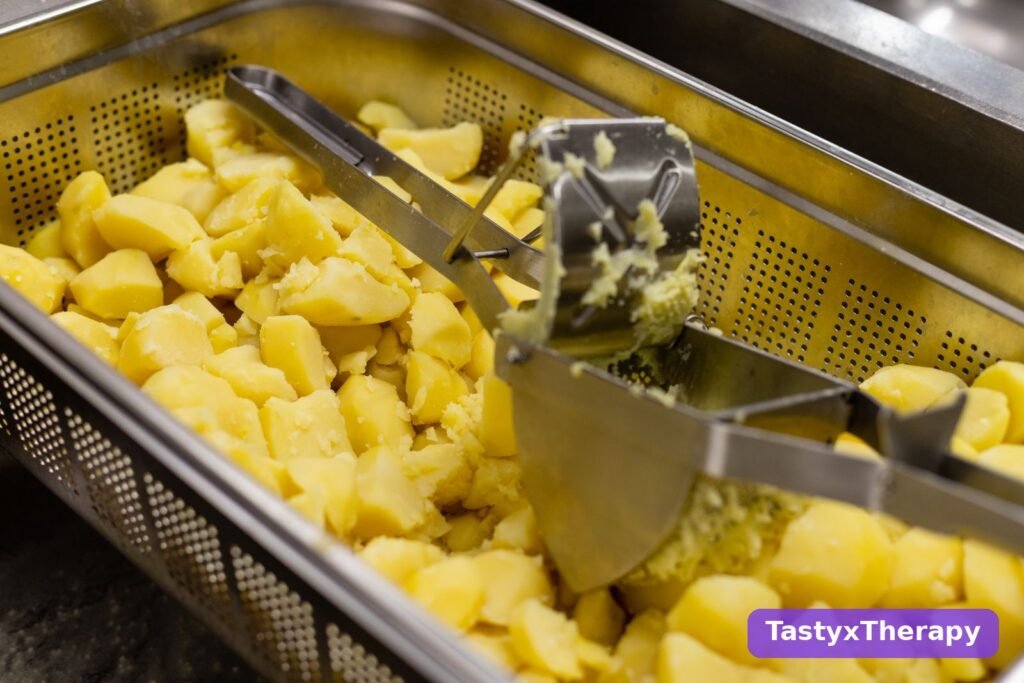
While the garlic roasts, put the peeled, chopped potatoes in a large pot, cover them with cold, well-salted water, and bring to a boil. Cold water matters, because starting potatoes in boiling water cooks the outside before the inside has caught up, which gives you unevenly cooked pieces. Simmer gently for fifteen to twenty minutes, until a knife slides through the largest piece with no resistance at all. Do not rush this step. Undercooked potatoes will not mash smoothly, no matter how hard you work them, and overcooked potatoes that have absorbed too much water will be wet and heavy.
Drain the potatoes thoroughly, then return them to the hot, empty pot over low heat for a minute or two, shaking the pot occasionally. This drying step is the secret to creamy rather than watery mash, because it lets surface moisture evaporate before you add any dairy. Warm the butter, milk, and cream together in a small saucepan until the butter has melted and the mixture is hot but not boiling. Hot dairy absorbs into hot potatoes far better than cold dairy, which cools the potatoes and makes them seize up.
Mash the potatoes with a ricer or masher, then stir in the roasted garlic paste and the warm dairy mixture, a little at a time, until you reach the consistency you like. Season generously with salt and pepper, and taste as you go, because potatoes need more salt than you think. The finished mash should be smooth, glossy, and soft enough to spoon easily, but firm enough to hold its shape in a bowl. If it is too thick, add a splash more warm milk. If it is too thin, you have probably added the dairy too fast, so mash in a little more potato or let it sit over low heat for a minute, stirring, to thicken slightly.
Tips for Smooth, Never Gluey Mash
Gluey mash is almost always caused by overworking the potatoes, and the culprit is usually a food processor or an electric mixer used for too long. Potatoes contain starch, and when you beat them aggressively, the starch cells burst and release a sticky paste that no amount of butter can rescue. A ricer avoids this entirely, because it presses the potatoes through small holes without beating them. A hand masher, used gently and briefly, is the next best thing. An electric mixer can work, but only on the lowest speed and only for a minute or so, and I would not recommend it for a first attempt.
Temperature is the other factor. Potatoes should be mashed while they are still hot, and the dairy should be warm, as mentioned above. Cold potatoes do not absorb dairy well, and they go lumpy and stiff. If your mash has cooled down before you finish, return the pot to low heat and stir gently while you add the dairy, rather than trying to mash cold potatoes into submission. Patience here pays off in texture, and it is worth the extra minute or two.
Do not add all the dairy at once. Adding it gradually lets you control the consistency, and it stops the potatoes from going soupy before you realise it. Different potatoes absorb different amounts of liquid, so a recipe amount is always a guide rather than a rule. Aim for mash that is a little softer than you think you want, because it firms up as it cools, and you can always add more milk, but you cannot easily take it away.
Variations Worth Trying
Once the roasted garlic version is in your repertoire, it is easy to adapt. Stir in grated Parmesan and a handful of chopped herbs for a more savoury, Italian-leaning mash. Swap half the potatoes for celeriac or parsnip, boiled alongside them, for a lighter, more aromatic mash that pairs beautifully with game and roast pork. For a richer holiday version, use all cream instead of milk, add extra butter, and top the finished mash with a drizzle of brown butter and crispy sage leaves.
For a dairy-free version, use olive oil and oat milk in place of butter and dairy milk, and add a spoonful of nutritional yeast for savouriness. The roasted garlic does a lot of the heavy lifting here, and the result is still creamy and satisfying, though it will be lighter in flavour. A vegan butter, melted and warmed with the oat milk, gets you closer to the original richness if you want it.
You can also turn this mash into other dishes. Leftovers make excellent potato cakes, fried crisp in a little oil and served with eggs, or a topping for shepherd’s pie and fish pie, where the roasted garlic adds depth to the whole dish. A spoonful of mash stirred into soup thickens it beautifully and adds body, which is a useful trick when a soup feels thin. Good mash, in other words, is never wasted, and making a little extra is rarely a mistake.
Serving Ideas
Creamy mashed potatoes with roasted garlic are a natural partner for anything with gravy, because the mash holds a pool of it so well. Roast chicken, sausages, meatloaf, and braised beef all benefit from a generous spoonful alongside, and the roasted garlic in the mash echoes the savoury flavours of the main dish without competing with it. For a vegetarian table, serve it with mushroom gravy, roasted vegetables, and a green salad, and it will feel like a complete meal rather than a side looking for a main.
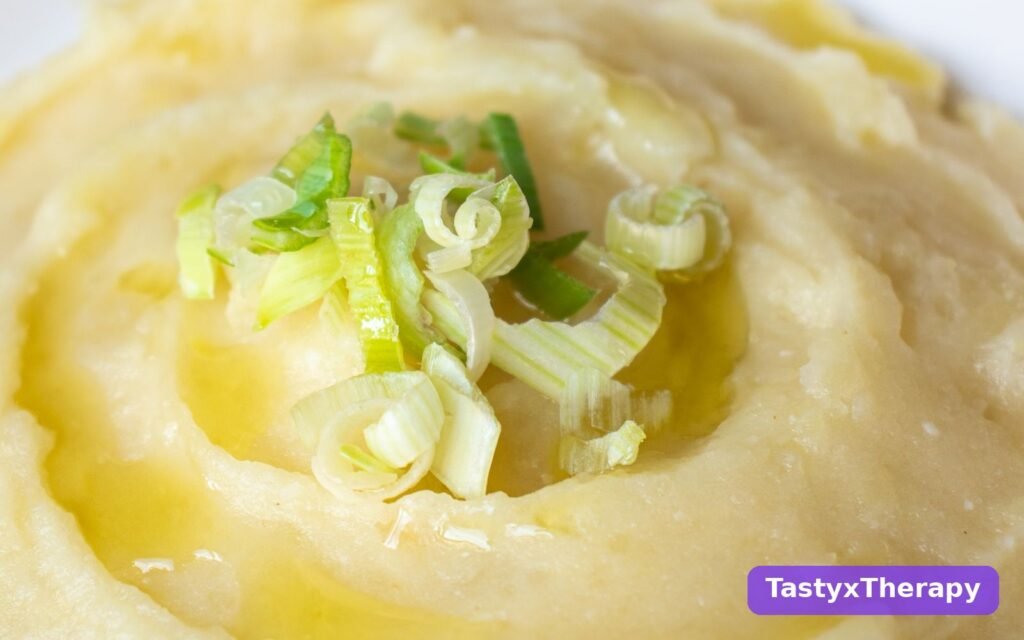
For a more elegant presentation, spoon the mash into a warm serving bowl, make a swirl on top with the back of a spoon, and drizzle over a little melted butter or olive oil. Scatter chives or parsley over the top, and add a few whole roasted garlic cloves as garnish if you have any spare. It takes ten seconds and makes the dish look deliberate rather than merely functional, which matters if you are serving guests, or if you simply like your weeknight dinners to look cared for.
If you are building a full table of sides, this mash sits well next to green vegetables and crisp potatoes, offering a soft, creamy contrast to anything crunchy. For more ideas in the same comforting style, have a look at the TastyxTherapy homepage and the Sides & Vegetables archive. Two potato recipes that go especially well alongside are these crispy potatoes in the air fryer without oil and crispy potatoes without breadcrumbs, which give you a crisp counterpoint to the soft mash.
One practical tip for serving a crowd: mash can be kept warm for a surprisingly long time if you treat it right. Put the finished mash in a heatproof bowl over a pot of barely simmering water, cover it, and stir occasionally. It will stay hot and creamy for up to an hour without drying out, as long as you stir in a splash of warm milk if it starts to stiffen. That frees up the stove for gravy and vegetables, and it means you are not mashing frantically while guests are arriving.
Storing and Reheating
Leftover mash keeps in an airtight container in the fridge for three to four days. To reheat, warm it gently in a saucepan over low heat, stirring frequently and adding splashes of warm milk until it loosens back to a creamy consistency. The microwave works too, but stir halfway through and add milk, because mash reheated without stirring goes hot in patches and stays stiff in others. It also freezes well for up to three months, though it will need a good stir and extra milk after thawing to come back to life.
If you know you will have leftovers, save a little of the warm milk and butter mixture, or just plan to add fresh milk on reheating, because cold mash always stiffens. A knob of butter stirred in at the reheating stage also helps restore gloss. Do not reheat mash more than once, and do not leave it sitting at room temperature for hours, because dairy-based sides are best treated with the same care as any other cooked food.
Frequently Asked Questions
How much roasted garlic should I use?
One whole head is a good starting point for two pounds of potatoes, and it gives a clear but mellow garlic flavour. If you love garlic, use two heads, and the mash will simply taste richer, not sharper, because roasting tames the garlic so much. If you are unsure, start with half a head, taste, and stir in more paste until it tastes right to you. Roasted garlic paste keeps well, so any extra is not wasted.
Can I roast the garlic ahead of time?
Yes, and it is a good way to save time. Roast the garlic up to three days ahead, squeeze out the cloves, mash them into a paste, and keep the paste in a small airtight container in the fridge. Bring it to room temperature, or warm it briefly, before stirring it into hot potatoes, so it blends in smoothly. You can also freeze roasted garlic paste in ice cube trays for longer storage.
Why is my mash gluey?
Gluey mash is usually caused by overmixing, by using waxy potatoes, or by mashing cold potatoes. Use floury potatoes, mash gently with a ricer or hand masher, stop as soon as the potatoes are smooth, and keep everything hot. Avoid food processors, which burst the starch cells and turn mash into paste, and avoid adding cold milk, which makes the potatoes seize and go lumpy.
Can I make mashed potatoes without cream?
Yes. Use warm whole milk and a little extra butter, and the mash will still be creamy, just slightly lighter. Olive oil can replace some of the butter for a different, more Mediterranean flavour, and a spoonful of cream cheese adds richness without needing cream. The roasted garlic helps here too, because it adds body and savouriness that makes up for a little less dairy.
What potatoes are best for mashing?
Floury varieties like Russet, King Edward, and Maris Piper give the lightest, smoothest mash, while Yukon Golds give a naturally buttery, slightly denser result that many people prefer. Avoid waxy potatoes for mash, because they stay firm and turn gluey when worked. For more on the dish itself, the mashed potato entry on Wikipedia is a good background read, and this perfect mashed potatoes recipe from Sainsbury’s Magazine is another reliable method worth comparing.