

There are nights when dinner needs to be fast, filling and forgiving, and it also needs to leave you with exactly one pan to wash. One-pan sausage and pepper pasta is that dinner. Sausage browns in the pan, peppers soften in the same fat, tomatoes and stock go in, and then the pasta cooks right there in the sauce, soaking up flavour as it goes. By the time you put the pan in the middle of the table, you have a hearty, colourful meal and a kitchen that is still more or less tidy.
I love this recipe for its honesty. It does not pretend to be fancy, and it does not need to be. It is the kind of food that makes a normal Tuesday feel a bit better: salty sausage, sweet peppers, a tomato sauce that has had time to pick up all the browned bits from the bottom of the pan, and pasta that is coated rather than drowned. Everyone I have cooked it for has asked for the recipe, not because it is complicated, but because it tastes like it took far more effort than it did.
The one-pan method is also what makes the pasta taste so good. When you cook pasta separately and then toss it with sauce, the sauce sits on the outside of the pasta. When you cook the pasta in the sauce, the starch from the pasta thickens the sauce from the inside, and the pasta itself absorbs flavour as it cooks. The result is silkier, more cohesive, and harder to stop eating. It is a small change in technique with a surprisingly large payoff, and once you try it, you will start cooking other pastas this way too.
This is also a very practical recipe for feeding a crowd on a budget. Sausages stretch a long way when sliced and mixed through pasta, peppers add bulk and colour for very little money, and a tin of tomatoes plus a handful of pasta turns a modest shop into a meal that genuinely fills people up. If you are cooking for a family, double the recipe in a large, deep pan and let everyone serve themselves. If you are cooking for one, make the full amount anyway and enjoy the leftovers for lunch, because this pasta reheats beautifully.
You will find more dinners in the same spirit in our one-pan and skillet meals collection here at TastyxTherapy, where the guiding rule is always the same: good food, minimal washing up.
Why One Pan Makes Better Pasta
Cooking pasta in its sauce is not just a shortcut, although it is certainly that too. It is a different way of building flavour, and it works because of starch. As pasta cooks, it releases starch into the liquid around it. In a separate pot, that starch goes down the drain with the cooking water. In a one-pan pasta, that starch stays in the pan and thickens the sauce naturally, giving you a glossy coating that clings to every piece of pasta instead of pooling at the bottom of the bowl. You do not need cream or extra thickeners, because the pasta does the work for you.
There is also the matter of the browned bits, the fond, that form when you brown sausage in a pan. Those bits are concentrated flavour, and in a traditional recipe they often get left behind or washed away. In a one-pan recipe, you pour stock and tomatoes straight over them, scrape them up, and dissolve them into the sauce. That is why one-pan pasta often tastes deeper and more savoury than the same ingredients cooked separately. You are not adding anything exotic; you are simply not throwing flavour away.
Washing up is the obvious benefit, and it is not a trivial one. A colander, a pasta pot, a sauce pan and a frying pan add up to a sink full of washing on a night when you are already tired. One deep pan, plus a board and a knife, is a different proposition entirely. It means you are more likely to cook at home instead of ordering takeaway, which is a real benefit over weeks and months, not just on one evening. Good recipes are the ones you actually make, and this one removes one of the main reasons people do not cook.
Choosing Sausage and Peppers
The sausage you choose will define this dish, so it is worth choosing with a little care. Italian-style sausages, mild or hot, are the classic choice, because they are already seasoned with fennel and garlic, and those flavours carry beautifully through the whole pan. A mild sausage gives a warm, savoury result that children tend to like. A hot sausage gives the dish a gentle background heat that adults often prefer. If you can only find plain pork sausages, they work too, but add a pinch of fennel seeds and a little extra garlic to make up for the seasoning they lack.
Whether to use sausage meat squeezed from the skins or sliced sausages is a matter of preference, and both have their fans. Squeezed sausage meat breaks into small, nuggety pieces that distribute through the pasta and give you sausage in every bite. Sliced sausages give you distinct, meaty rounds that look handsome in the bowl and feel more substantial when you bite into them. I usually slice them, because I like the look and the texture, but if you are feeding young children, the smaller pieces from squeezed sausage meat are easier for them to eat. Either way, brown the sausage properly before adding anything else, because that browning is where much of the flavour comes from.
For the peppers, a mix of red, yellow and orange gives the best colour and sweetness. Red peppers are the sweetest and soften into something almost jammy. Yellow peppers stay a little firmer and brighter. Green peppers are more bitter and grassy, which can be a nice contrast in a rich tomato sauce, but they can also dominate if you use too many. My usual mix is two red peppers and one yellow, which gives a sweet, colourful result without any bitterness. Slice them into strips, not too thin, so they keep a little bite after cooking rather than dissolving into the sauce.
Ingredients You Will Need
You will need 400 grams of sausages, about four to six depending on size, one onion finely sliced, three cloves of garlic minced, three bell peppers sliced into strips, a tin of chopped tomatoes, 500 millilitres of chicken or vegetable stock, 300 grams of short pasta such as penne or rigatoni, a tablespoon of tomato paste, a teaspoon of dried oregano, half a teaspoon of chilli flakes, salt and black pepper, a tablespoon of olive oil, and Parmesan and fresh basil or parsley to serve.
Short pasta shapes work best for one-pan cooking, because they cook evenly in a shallow layer of liquid and are easy to stir without breaking. Penne, rigatoni and fusilli are all excellent choices, and their ridges and hollows catch the sauce beautifully. Long pasta like spaghetti can work, but it is harder to submerge at the start and harder to stir without splashing sauce everywhere. If you only have spaghetti, break it in half before adding it, and be prepared to stir a little more often in the first few minutes until it softens and sinks into the sauce.
The stock is doing more work here than it might seem, so use a decent one. A good chicken stock gives a rounder, more savoury sauce than water alone, and it helps the pasta cook with flavour rather than just softening. If you are using a stock cube, dissolve it fully in hot water before adding it, because an undissolved cube can leave salty patches in the sauce. Vegetable stock is a fine substitute, especially if you are using chicken or turkey sausages and want to keep the dish lighter.
How to Make One-Pan Sausage and Pepper Pasta
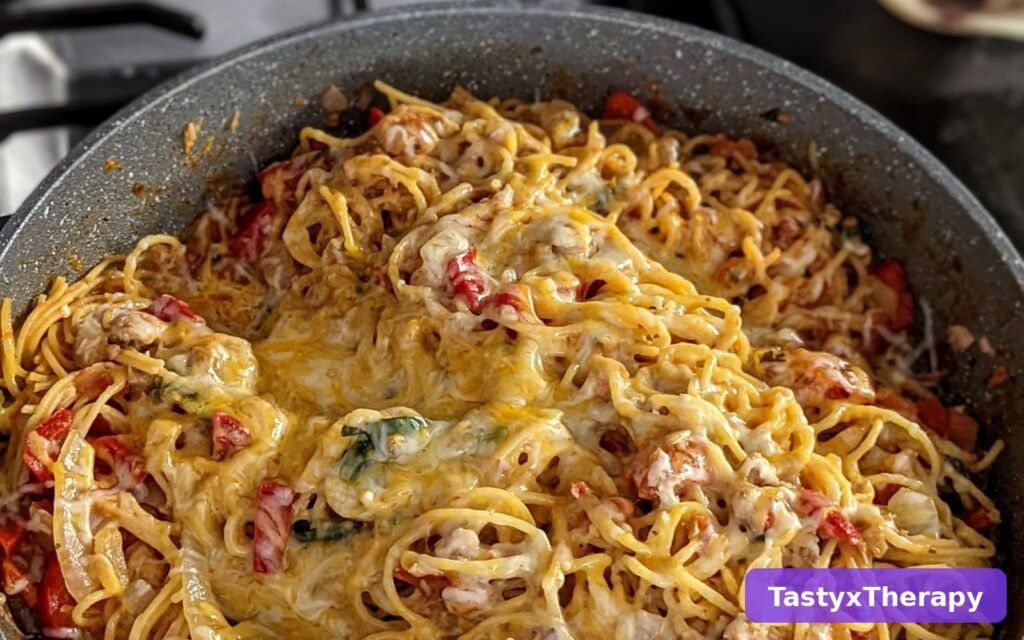
Start by heating the olive oil in a large, deep pan or skillet over a medium-high heat. Squeeze the sausage meat out or slice the sausages into rounds, whichever you have chosen, and add them to the hot pan in a single layer. Let them brown undisturbed for three or four minutes before you stir them, because that undisturbed contact with the pan is what gives you proper browning rather than grey, steamed meat. Turn the pieces and brown the other side for another couple of minutes, then lift the sausage out onto a plate and set it aside. Do not clean the pan; the browned bits left behind are flavour you are about to use.
Lower the heat to medium and add the sliced onion to the same pan, with a splash more oil if the pan looks dry. Cook for four to five minutes, stirring occasionally and scraping up the browned bits as the onion softens and releases moisture. Add the pepper strips and cook for another four minutes, until they start to soften and take on a little colour at the edges. Stir in the garlic, oregano and chilli flakes and cook for just a minute, until fragrant, because garlic burns quickly and burnt garlic will make the whole sauce taste bitter.
Stir in the tomato paste and cook for a minute, then pour in the chopped tomatoes and the stock, scraping the bottom of the pan well to dissolve all the browned bits. Bring the mixture to a gentle simmer and season with salt and pepper, remembering that the sausage and the stock are already salty, so taste before you add too much. Return the sausage to the pan, add the pasta, and stir well so the pasta is mostly submerged. If some pieces poke out, push them down gently; they will soften and sink as they cook.
Cover the pan with a lid, reduce the heat to medium-low, and cook for twelve to fifteen minutes, stirring every few minutes to stop the pasta from sticking to the bottom. This stirring is important in a one-pan pasta, because the starch that thickens the sauce can also make the pasta cling to the pan if it sits undisturbed. Check the pasta a couple of minutes before the packet time, because it will keep cooking in the residual heat, and you want it just tender with a little bite, not soft and mushy. If the sauce looks too thick before the pasta is done, add a splash of hot water or stock, a little at a time, until it loosens. If it looks too thin at the end, take the lid off and let it simmer uncovered for two or three minutes, stirring, until it thickens to a glossy coating.
Take the pan off the heat and let it stand, covered, for two or three minutes. This short rest lets the sauce settle and cling to the pasta, and it makes the dish easier to serve without sauce running everywhere. Taste and adjust the seasoning one last time, then serve straight from the pan at the table, scattered with grated Parmesan and torn basil or chopped parsley. The pan in the middle of the table is part of the charm of this dish, and it keeps the pasta warm while people help themselves to seconds.
Tips for Pasta That Does Not Stick
Sticking is the main thing people worry about with one-pan pasta, and it is almost always avoidable. Stirring every few minutes is the single most effective habit, especially in the first half of cooking, when the pasta is releasing the most starch and is most likely to clump. Use a wooden spoon and scrape the bottom of the pan as you stir, not just the top layer, because it is the bottom layer that sticks first. A pan with a heavy base helps too, because it distributes heat more evenly and reduces hot spots where pasta catches.
Liquid level is the other factor. You need enough liquid to cook the pasta, but not so much that you end up with soup. The quantities in this recipe are designed to leave you with a thick, coating sauce at the end, but different pasta shapes absorb slightly different amounts of liquid, and your pan and heat level affect evaporation too. If the pan looks dry halfway through, add a splash of hot water rather than waiting until the pasta sticks. If it looks very wet near the end, uncover the pan and let it reduce. Cooking is a conversation with the pan, not a rigid formula, and adjusting liquid as you go is a normal part of one-pan cooking, not a sign that you have done something wrong.
Lid discipline matters as well. Keeping the lid on traps steam and helps the pasta cook evenly, especially pieces that sit above the liquid line at the start. Taking the lid off too often lets heat and moisture escape and slows everything down. Lift the lid to stir every few minutes, then put it straight back on. In the last few minutes, you can leave the lid off to reduce the sauce, but only once the pasta is nearly done, because uncovered cooking evaporates liquid quickly and can leave you with undercooked pasta in a thick sauce.
Variations to Try
A creamy version is a natural next step. Stir in a good splash of double cream or a few spoonfuls of mascarpone at the very end, off the heat, and let it melt into the sauce. The cream softens the tomato’s acidity and makes the dish feel richer, which is lovely on a cold night. Do not boil the sauce after adding cream, because it can split, and do not add the cream too early, because a long simmer dulls its flavour. Added at the end, it gives you a rosy, velvety sauce that still tastes of sausage and peppers.
A vegetable-packed version is easy too. Add a handful of sliced mushrooms with the peppers, or stir in a couple of handfuls of spinach at the very end, letting it wilt into the hot pasta. Courgette, cut into half-moons, cooks well alongside the peppers. The key is not to overload the pan, because too many vegetables release water and thin the sauce. Add one or two extras, cook off their moisture properly, and the dish stays rich and well-balanced rather than turning watery.
If you want more heat, use hot Italian sausages and add a little extra chilli, or stir in a spoonful of harissa at the tomato stage. Harissa brings warmth and a smoky depth that suits sausage very well, but add it cautiously, because it varies a lot in heat from brand to brand. A squeeze of lemon at the end, while not traditional, brightens a spicy version nicely and stops it from feeling heavy. Taste as you go, and remember that you can always add more heat at the table with chilli oil, but you cannot take it out once it is in the pan.
For a lighter version, use chicken or turkey sausages, swap half the pasta for extra peppers and a tin of beans, and finish with plenty of fresh herbs instead of cheese. The dish will still be satisfying, because the sausage and the starchy sauce give it body, but it will feel less rich. This version is a good option if you are cooking for people who want a hearty meal without a heavy one, and it shows how flexible the one-pan method is: the technique stays the same, only the ingredients change.
Storing and Reheating
One-pan sausage and pepper pasta keeps in the fridge for up to three days in a sealed container, and it is one of those dishes that tastes arguably better the next day, once the flavours have had time to settle. To reheat, warm it gently in a pan over a low heat with a splash of water or stock, stirring often, until piping hot. The pasta will have absorbed some sauce overnight, so the splash of liquid restores the glossy coating. Microwaving works too, in short bursts with a stir between each, but the pan method gives a better texture and heats more evenly.
Freezing is possible for up to a month, though pasta texture softens a little on thawing, so freeze it slightly undercooked if you know you are going to freeze it. Thaw overnight in the fridge and reheat gently with a splash of stock. It will not be quite as perfect as fresh, but it will still be a very good lunch, and on a busy day a good lunch from the freezer is a genuine win. Label the container with the date, because frozen pasta dishes all start to look the same after a few weeks.
If you are packing leftovers for work, add the Parmesan separately rather than mixing it in before storage, because cheese can go a little greasy when reheated with pasta. A small separate pot of Parmesan, plus a few basil leaves if you have them, keeps the reheated lunch tasting fresh. A side of salad, packed separately so it does not wilt, turns leftovers into a complete meal rather than just a container of pasta eaten at a desk.
Serving Ideas
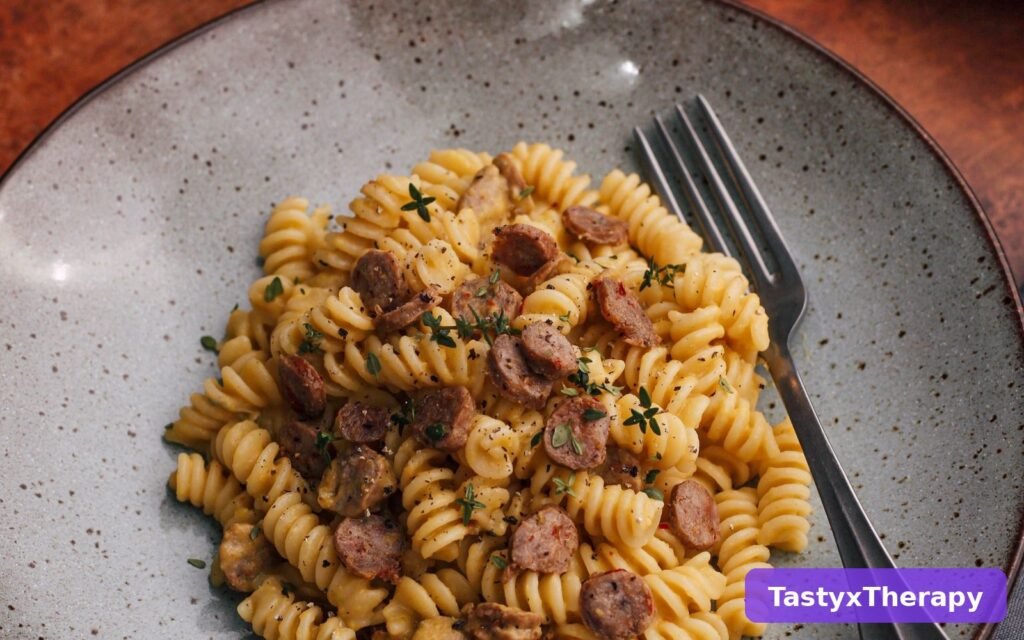
Serve this pasta straight from the pan, family style, with a bowl of grated Parmesan, a bottle of chilli oil and a simple green salad on the side. The salad is important, not as an afterthought, but because its freshness balances the richness of the sausage and tomato sauce. A salad of rocket, cucumber and lemon dressing takes two minutes and makes the whole meal feel considered rather than just hearty. Crusty bread is also welcome, for mopping up any sauce left in the bowl, though the pasta itself is filling enough that bread is a bonus rather than a necessity.
For a more substantial dinner, serve the pasta alongside a tray of roasted vegetables, or follow it with a light dessert like fruit and yoghurt. The pasta is rich enough that a heavy dessert afterwards can feel like too much, so something fresh and simple works best. If you are cooking for guests, put the pan in the middle of the table, scatter it generously with herbs, and let people serve themselves. It looks generous and relaxed, and it saves you from plating up individual portions while the pasta cools.
This dish also pairs well with other one-pan cooking. Serve a smaller portion of pasta alongside chicken and vegetables skillet without oven for a mixed table where people can try both, or start with the pasta as a main and offer chicken skillet recipes without oven as inspiration for the next night’s dinner. For a related take on the one-pan idea, this one-pan sausage pasta bake shows how the same flavours work when the pasta is baked instead of cooked on the hob.
Frequently Asked Questions
Can I use any pasta shape for one-pan pasta?
Short shapes like penne, rigatoni and fusilli work best, because they cook evenly in a shallow pan and are easy to stir. Long shapes like spaghetti can work, but they are harder to submerge and stir at the start, so break them in half if you use them. Very small shapes like orzo cook faster and absorb liquid differently, so they need less liquid and a shorter cooking time. Whatever shape you choose, check the pasta a couple of minutes early, because one-pan pasta keeps cooking in the residual heat.
Do I need to brown the sausage first?
Yes, browning the sausage first is worth the extra few minutes. It develops flavour through caramelisation, renders some fat that then cooks the peppers, and leaves browned bits in the pan that dissolve into the sauce. If you add raw sausage straight to the tomatoes and stock, it will cook through, but the dish will taste flatter and the sausage texture will be softer and less interesting. Brown it, set it aside, and build the sauce in the same pan.
Why is my one-pan pasta sauce too thin or too thick?
Sauce consistency usually comes down to liquid and cooking time. If it is too thin at the end, simmer uncovered for a few minutes, stirring, and the starch in the sauce will thicken it. If it is too thick before the pasta is cooked, add hot water or stock a splash at a time. Different pasta shapes absorb different amounts of liquid, and evaporation varies with your pan and heat, so adjusting as you go is normal. The goal is a glossy sauce that coats the pasta, not a soup and not a dry tangle.
Can I make this pasta ahead of time?
You can cook it a few hours ahead and reheat it gently with a splash of water or stock, and it will still taste very good. For best results, cook the pasta just until it still has a little bite, because it will soften further on reheating. Keep it covered in the fridge and reheat it in a pan rather than the microwave if you can, stirring often. Add fresh herbs and Parmesan at serving time, rather than before storage, so the finished dish tastes fresh.
What is the best sausage for sausage and pepper pasta?
Pasta dishes like this one suit Italian-style sausages best, because their fennel and garlic seasoning carries through the sauce. Mild Italian sausage is the safest all-round choice, hot Italian sausage adds welcome warmth, and plain pork sausage works if you add fennel seeds and extra garlic. Chicken or turkey sausages make a lighter version. Whichever you choose, buy the best quality you can, because sausage is the main flavour here and a poor sausage will show in the finished dish.