
Introduction
There is something about a peach pie coming out of the oven that makes the whole house slow down for a minute. The smell of warm peaches and cinnamon drifts down the hallway, someone wanders into the kitchen to ask how much longer, and by the time the pie has cooled enough to slice, half the family is already standing around the counter with plates in hand. That is exactly the kind of pie this is. Old-fashioned in the best way — no shortcuts that steal the flavour, no fussy techniques that scare off a home baker — just ripe peaches, a flaky crust, and a golden almond crumble that crackles a little when you press a fork into it.
I have baked a lot of fruit pies over the years, and peach pie has always been the one people ask for again. Apple pie gets the praise in autumn, and berry pies steal the show in early summer, but peach pie sits right in the middle of it all, sweet without being heavy, juicy without falling apart, and somehow both homely and a little bit special at the same time. The almond crumble on top is what sets this version apart. It replaces the usual second crust with something better: a buttery, nutty topping that stays crisp on top while the peaches underneath turn soft and syrupy.
This recipe is written for a regular home kitchen. You do not need a stand mixer, a food processor, or any special pie equipment beyond a 9-inch pie dish and a rolling pin. If you have never made a pie from scratch before, this is a good one to start with, because the crumble topping is far more forgiving than a lattice crust, and the filling is simple enough that you can focus on getting the basics right. If you have made dozens of pies, you will still find a few small details here that make a real difference — the way the peaches are sliced, the rest the filling gets before it goes into the crust, and the trick that keeps the bottom crust from going soggy.
By the end of this guide, you will know which peaches to buy, how to tell when they are ripe enough, how to build the crumble so it bakes up crisp instead of melting into the filling, and how long to let the pie rest before you cut into it — because that last part matters more than most recipes admit. Let us get started.
What Makes This Peach Pie Special
Most peach pies fall into one of two camps. There is the classic double-crust pie, which is lovely but can be a lot of work, and there is the quick crumble version, which sometimes ends up more like a cobbler with a soggy middle. This recipe sits in the sweet spot between the two. It keeps the real pie crust on the bottom, where it belongs, and finishes the top with an almond crumble that gives you crunch, richness, and a toasted nut flavour in every bite.
The almond crumble is not just a topping for the sake of it. Almonds bring a warmth that pairs naturally with peaches — think of the way a little almond extract deepens the flavour of a peach cobbler, or how marzipan and stone fruit show up together in so many old European desserts. The crumble uses sliced almonds, which toast in the oven and turn golden at the edges, plus a little almond extract in the filling that ties the whole thing together without making it taste like a candy shop.
The other thing that makes this pie work is patience in the right places. The peaches get tossed with sugar and left to sit for about twenty minutes before they go into the crust. That short rest draws out some juice, which then gets thickened properly with cornstarch instead of pooling at the bottom of the dish. It is a small step, and it is easy to skip when you are in a hurry, but it is the difference between a pie that slices cleanly and one that runs all over the plate.
Choosing the Right Peaches
A peach pie is only as good as the peaches in it, so it is worth spending a minute on this. Freestone peaches are the easiest to work with because the pit pops right out, while clingstone peaches hold onto their pits and make slicing a chore. If you are buying from a farmers market or a grocery store in summer, ask whether they are freestone — most of the peaches sold from late June onwards are.
Ripeness matters more than variety. You want peaches that give slightly when you press them gently near the stem, and that smell sweet and fragrant when you hold them close. A peach that is rock hard will never soften enough in the oven, and it will taste flat no matter how much sugar you add. A peach that is overripe and bruised will collapse into mush. The sweet spot is a peach that is just soft enough to dent with a thumb but still holds its shape when you slice it.
Yellow peaches are the classic choice for pie because they are sweet with a little tartness, and they hold up well in the oven. White peaches are sweeter and more delicate, and they work too, though they can be a touch softer after baking. Either way, taste one before you start. If your peaches are very sweet, you can cut the sugar back a little. If they are on the tart side, keep the full amount. A good pie recipe is a guide, not a set of orders, and your peaches get a vote.
Fresh peaches are best when they are in season, which in most places means mid-summer. Outside of peach season, frozen sliced peaches are a genuinely good stand-in. Thaw them fully, drain off the extra liquid, and pat them dry before you toss them with sugar. Canned peaches in juice can work in a pinch, but drain them very well and reduce the sugar in the filling, since they are already sweet. If you want to read more about how this dessert became an American classic, the history of peach pie on Wikipedia is a good place to start.
Ingredients
This recipe makes one 9-inch pie, about 8 generous slices. Everything is measured in US cups, which is how most home bakers in America work, and I have kept the list short on purpose. There is nothing exotic here — you can find all of it in a regular grocery store.
For the crust:
- 1 unbaked 9-inch pie crust, homemade or store-bought
- 1 tablespoon all-purpose flour, for dusting the work surface
For the peach filling:
- 6 cups fresh peaches, peeled and sliced (about 7 to 8 medium peaches)
- 3/4 cup granulated sugar
- 1/4 cup light brown sugar, packed
- 3 tablespoons cornstarch
- 1 teaspoon ground cinnamon
- 1/4 teaspoon ground nutmeg
- 1/4 teaspoon fine salt
- 1 tablespoon fresh lemon juice
- 1 teaspoon pure vanilla extract
- 1/4 teaspoon almond extract
- 1 tablespoon unsalted butter, cut into small pieces
For the almond crumble:
- 3/4 cup all-purpose flour
- 1/2 cup old-fashioned rolled oats
- 1/2 cup light brown sugar, packed
- 1/2 cup sliced almonds
- 1/2 teaspoon ground cinnamon
- 1/4 teaspoon fine salt
- 1/2 cup (1 stick) cold unsalted butter, cut into small cubes
A note on the crust: if you have a favourite homemade pie crust recipe, use it — this pie deserves a good one. If you are short on time, a good-quality refrigerated crust works fine, and nobody at the table will know the difference once the crumble is on top. What matters most is that the crust is cold when it goes into the oven, so keep it in the fridge until the very last minute.
How to Make Old-Fashioned Peach Pie with Almond Crumble
Start by heating your oven to 375°F (190°C) and placing a rack in the lower third of the oven. The lower rack helps the bottom crust bake through properly instead of staying pale and soft. If you have a baking sheet, put it on the rack below the pie to catch any drips — peach pies can bubble over a little, and it is much easier to clean a baking sheet than the bottom of your oven.
Peel the peaches first. The easiest way is to score a small X on the bottom of each peach with a knife, drop them into boiling water for about 30 seconds, then move them straight into a bowl of ice water. The skins will slip right off. If your peaches are very ripe, you may even be able to peel them with a vegetable peeler and skip the hot water altogether. Slice the peaches into pieces about half an inch thick — not too thin, or they will turn to mush, and not too thick, or they will stay firm in the middle.
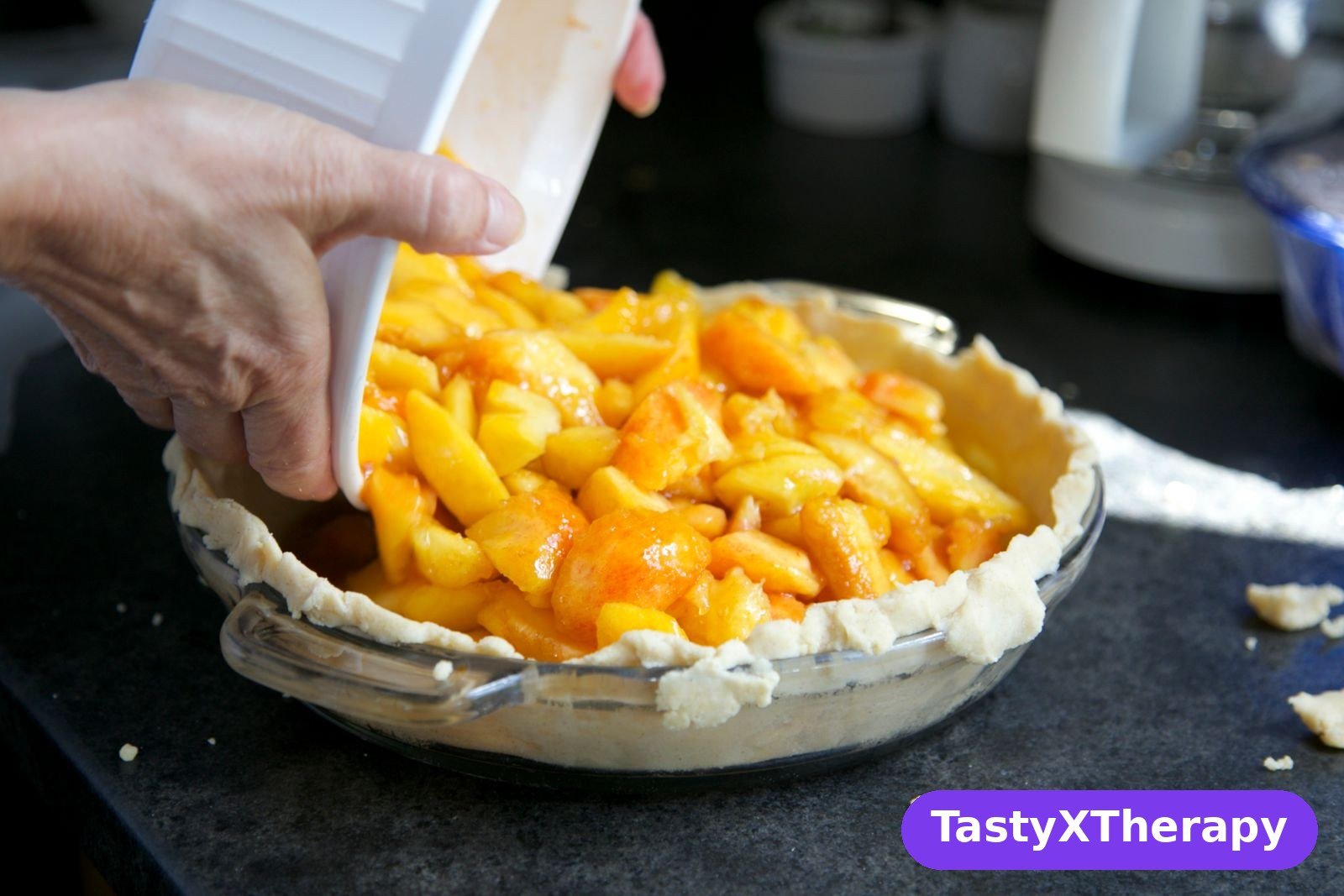
Put the sliced peaches in a large bowl and add the granulated sugar, brown sugar, cornstarch, cinnamon, nutmeg, salt, lemon juice, vanilla extract, and almond extract. Toss everything gently with your hands or a large spoon until the peaches are evenly coated. Then — and this is the part worth waiting for — let the bowl sit on the counter for 20 minutes. The sugar will pull juice out of the peaches, and the cornstarch will start to dissolve into that juice, which is exactly what you want. Give it a stir once halfway through.
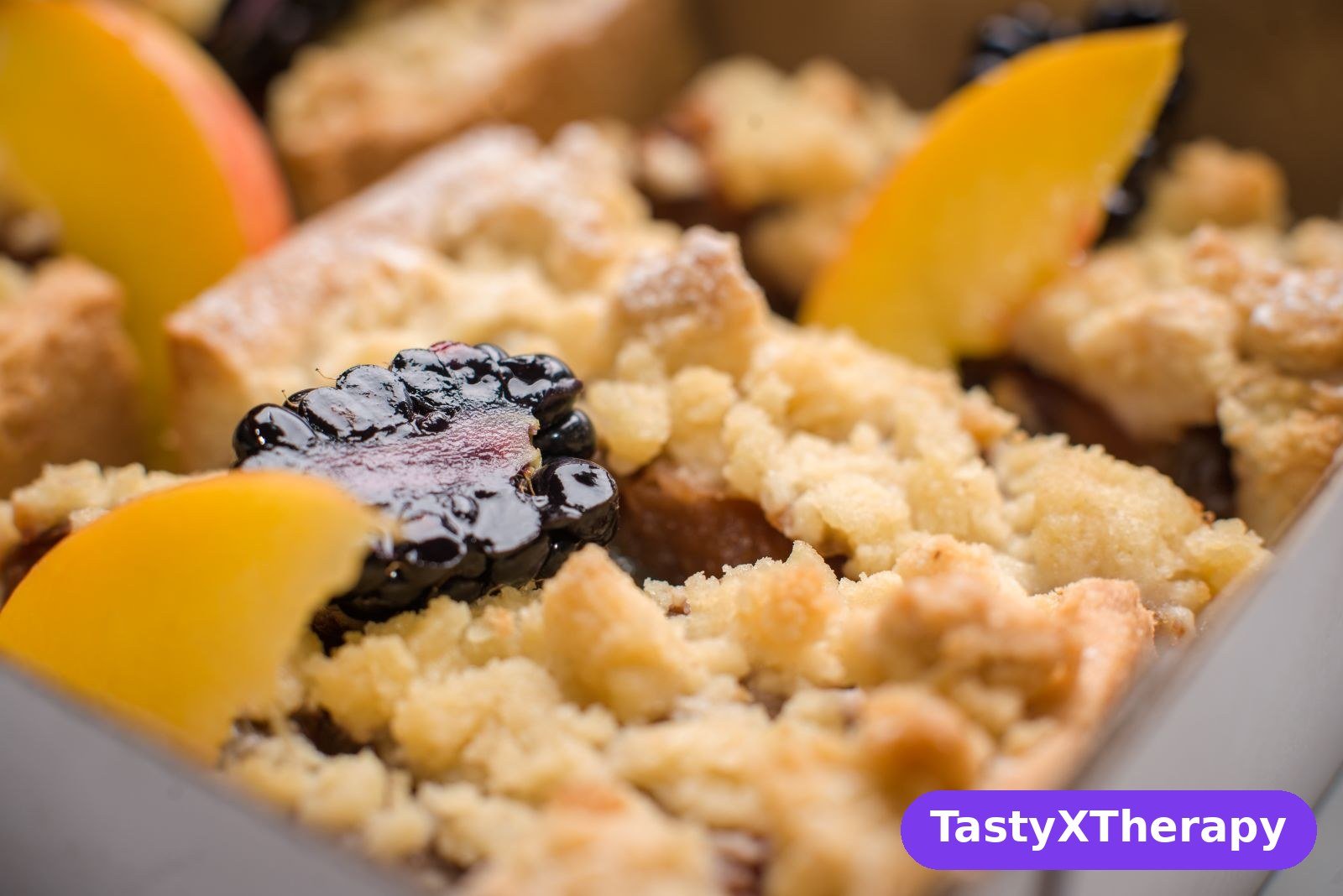
While the filling rests, make the almond crumble. In a medium bowl, stir together the flour, oats, brown sugar, sliced almonds, cinnamon, and salt. Add the cold butter cubes and work them in with your fingertips or a pastry cutter until the mixture looks like coarse crumbs with some pea-sized pieces of butter still visible. Those little pieces of butter are important — they melt in the oven and create the crisp, craggy texture that makes a crumble so good. Do not overwork it into a paste. Pop the bowl in the fridge while you finish the crust.
Roll out your pie crust on a lightly floured surface and fit it into a 9-inch pie dish, letting the edges hang over a little. Trim the excess so about half an inch hangs over the rim, then fold it under and crimp it however you like — a simple fork press works fine, and a fluted edge looks lovely if you have the patience for it. Keep the crust cold; if your kitchen is warm and the dough starts to soften, put the whole dish in the fridge for ten minutes before you fill it.
Pour the peach filling into the crust, including all the juices from the bowl, and spread it out evenly. Dot the small pieces of butter over the top. Then scatter the almond crumble over the peaches in an even layer, right out to the edges. Do not press it down — you want it loose and craggy so the heat can get in and crisp it up.
Bake for 50 to 60 minutes, until the crumble is deep golden brown and the filling is bubbling thickly around the edges. If the crumble starts to brown too fast, usually around the 35-minute mark, lay a loose sheet of foil over the top and keep baking. The pie is done when you can see the filling bubbling in the centre, not just at the edges — that bubbling tells you the cornstarch has fully thickened. Let it cool on a wire rack for at least 3 hours before slicing. I know that sounds like a long time, but a warm peach pie will run when you cut it, and all that beautiful filling will end up on the plate instead of in the slice. If you can wait, wait.
Tips for a Perfect Peach Pie Every Time
After baking this pie more times than I can count, there are a few things I have learned that are worth passing on. First, keep everything cold. Cold butter in the crumble, cold crust in the dish, cold filling going into the oven. Warm dough and warm butter melt before they bake, and that is how you end up with a flat, greasy crumble and a tough crust. If your kitchen runs warm in the summer, do not be shy about popping things in the fridge between steps.
Second, taste your peaches before you commit to the sugar. Peaches vary a lot from week to week, and the amount of sugar in a recipe is written for an average peach. If yours are very sweet, pull back a couple of tablespoons. If they are tart, add a little more. The lemon juice is not there to make the pie sour — it is there to brighten the peaches and keep them from tasting flat. Do not skip it.
Third, do not be afraid of a long bake. Underbaked peach pie is the most common mistake, and it shows up as a runny filling and a pale bottom crust. The pie should be genuinely bubbling in the centre, and the crumble should be a deep golden brown, not just lightly toasted. If you are nervous about the top burning, foil is your friend — it costs nothing and saves the pie.
Fourth, the cooling time is part of the recipe, not a suggestion. Three hours sounds like forever when the pie smells that good, but the filling is still setting during that time. If you cut into it early, you will get a delicious mess instead of a slice. Make the pie in the morning if you plan to serve it after dinner, and you will never have to stand guard over it while it cools.
Finally, if your peaches are very juicy, you can add an extra tablespoon of cornstarch to the filling. It will not change the flavour, and it will give the filling a little more insurance. This is especially useful with frozen peaches, which tend to release more liquid than fresh ones.
Serving Ideas
A slice of this pie barely needs anything alongside it, but the right accompaniment can turn a good dessert into a memorable one. Vanilla ice cream is the classic partner, and it is classic for a reason — the cold creaminess against the warm, spiced peaches is hard to beat. Let the pie cool completely, then warm individual slices gently in the oven for a few minutes before serving if you want that warm-pie-cold-ice-cream contrast.
Whipped cream is another good choice, especially if you whip it yourself with just a little sugar and vanilla. The store-bought kind in a can is fine in a pinch, but fresh whipped cream holds its shape better and tastes cleaner against the richness of the pie. A dollop of lightly sweetened crème fraîche works beautifully too, and its gentle tang cuts through the sweetness in a way that surprises people.
For a lighter touch, a spoonful of plain Greek yogurt with a drizzle of honey is lovely, and it makes the pie feel at home on a brunch table. And if you are serving it at a summer gathering, try it with a small scoop of peach or almond ice cream instead of vanilla — it doubles down on the flavours already in the pie. However you serve it, cut the slices with a sharp knife wiped clean between cuts, and use a pie server rather than a spatula so the slices hold their shape.
Storage and Make-Ahead Tips
Peach pie keeps better than most people expect. Once it has cooled completely, cover it loosely with foil or plastic wrap and keep it at room temperature for up to two days. The crumble will soften a little overnight — that is normal — and you can crisp it back up by warming slices in a 350°F oven for about ten minutes. For longer storage, keep it in the fridge for up to four or five days, covered well.
You can also freeze the baked pie. Let it cool completely, wrap it tightly in two layers of plastic wrap followed by a layer of foil, and freeze for up to three months. Thaw it overnight in the fridge, then reheat in a 350°F oven for 20 to 25 minutes until the centre is warm. The crumble will not be quite as crisp as the day it was baked, but it will still be very good.
If you like to plan ahead, you can make the crumble topping a day or two early and keep it in a sealed container in the fridge. You can also assemble the whole pie, unbaked, cover it tightly, and keep it in the fridge overnight — just add about ten minutes to the baking time since it will be going into the oven cold. The filling can be mixed a few hours ahead as well, though I would not leave it overnight, since the peaches will soften too much and release more juice than the cornstarch can handle.
Easy Variations to Try
Once you have the basic pie down, it is easy to make it your own. A handful of blueberries or raspberries folded into the filling adds colour and a little tartness that plays nicely with the sweet peaches — use about a cup, and add an extra tablespoon of cornstarch to handle the extra juice. A few slices of nectarine mixed in with the peaches work too, and nobody will be able to tell where the peach ends and the nectarine begins.
If you like a warmer spice profile, add a pinch of ground ginger or cardamom to the filling. Ginger gives the pie a gentle heat, and cardamom adds a floral note that suits stone fruit surprisingly well. A little orange zest in the crumble is another nice touch — it brightens the whole topping and smells wonderful while it bakes.
For a nut-free version, swap the sliced almonds in the crumble for chopped pecans or walnuts, or leave the nuts out altogether and add an extra quarter cup of oats instead. The pie will still be delicious, just with a different kind of crunch. And if you want to make individual servings, divide the filling and crumble between six ramekins with a small round of pie crust pressed into each one, and bake for 25 to 30 minutes. They make a lovely dessert for a dinner party.
If you enjoy this kind of old-fashioned baking, you will also like the easy peach cobbler with buttery biscuit topping on this site — it uses the same beautiful peaches in a simpler, spoonable dessert. And for a completely different kind of comfort food, the classic banana pudding with vanilla wafers is one of the most-loved desserts in our Desserts & Baking collection. For more ideas on getting a flaky crust, BBC Good Food’s peach pie recipe is a helpful second opinion. You can find plenty more comfort baking on the TastyXTherapy homepage, where new recipes appear every day.
Frequently Asked Questions
Can I use canned peaches for this pie?
Yes, you can, though fresh peaches will always give you the best flavour and texture. If you use canned peaches, choose the ones packed in juice rather than heavy syrup, drain them very well, and cut the granulated sugar in the filling down to half a cup. Pat the slices dry with a paper towel before you toss them with the other filling ingredients, and keep the cornstarch at the full amount — canned peaches release more liquid than fresh ones.
Do I need to peel the peaches?
Peeling is worth the effort. Peach skins turn tough and papery in the oven, and they can curl up in the filling in a way that is not pleasant to eat. The hot-water method described above takes only a few minutes and makes the skins slip off easily. If you are truly short on time, a sharp vegetable peeler will do the job on ripe peaches, though it is slower.
Why is my peach pie filling runny?
A runny filling almost always comes down to one of three things: not enough thickener, not enough baking time, or cutting the pie while it is still warm. Make sure you use the full three tablespoons of cornstarch, bake until the filling is bubbling in the centre, and let the pie cool for at least three hours before slicing. Very juicy peaches can also be the culprit — if yours are dripping when you slice them, add an extra tablespoon of cornstarch next time.
Can I make this pie ahead of time?
Yes. You can bake it a day ahead and keep it covered at room temperature, or assemble it unbaked and refrigerate it overnight, adding about ten minutes to the baking time. The crumble topping can be made two days ahead and kept in a sealed container in the fridge. Baked pie also freezes well for up to three months if wrapped tightly.
What is the best way to keep the crumble topping crisp?
Use cold butter and do not overwork the mixture — you want visible pieces of butter in the crumble, not a smooth paste. Bake the pie on a lower oven rack so the heat reaches the topping properly, and do not cover the pie with foil until the crumble has started to brown. If the topping softens the next day, warm slices in a 350°F oven for ten minutes and it will crisp up again.
Can I use a different nut instead of almonds?
Absolutely. Pecans and walnuts both work well in the crumble, and hazelnuts are lovely too if you have them. Keep the same amount, chop them roughly, and toast them lightly in a dry pan for a few minutes before adding them to the crumble for extra flavour. If you need a nut-free pie, replace the almonds with extra oats and a tablespoon of extra flour.
Conclusion
This old-fashioned peach pie with almond crumble is the kind of recipe that earns a permanent place in your baking rotation. It is not complicated, it does not ask for special equipment, and it rewards you with something that tastes like summer and feels like home. The peaches turn soft and syrupy, the crumble bakes up golden and crisp, and the whole thing smells so good coming out of the oven that you will have trouble waiting for it to cool.
Bake it when peaches are at their best, serve it warm with vanilla ice cream, and do not be surprised when someone asks for the recipe before they have finished their slice. That is how you know a pie has done its job. Happy baking — and save yourself a second slice, because this one goes fast.