
Introduction
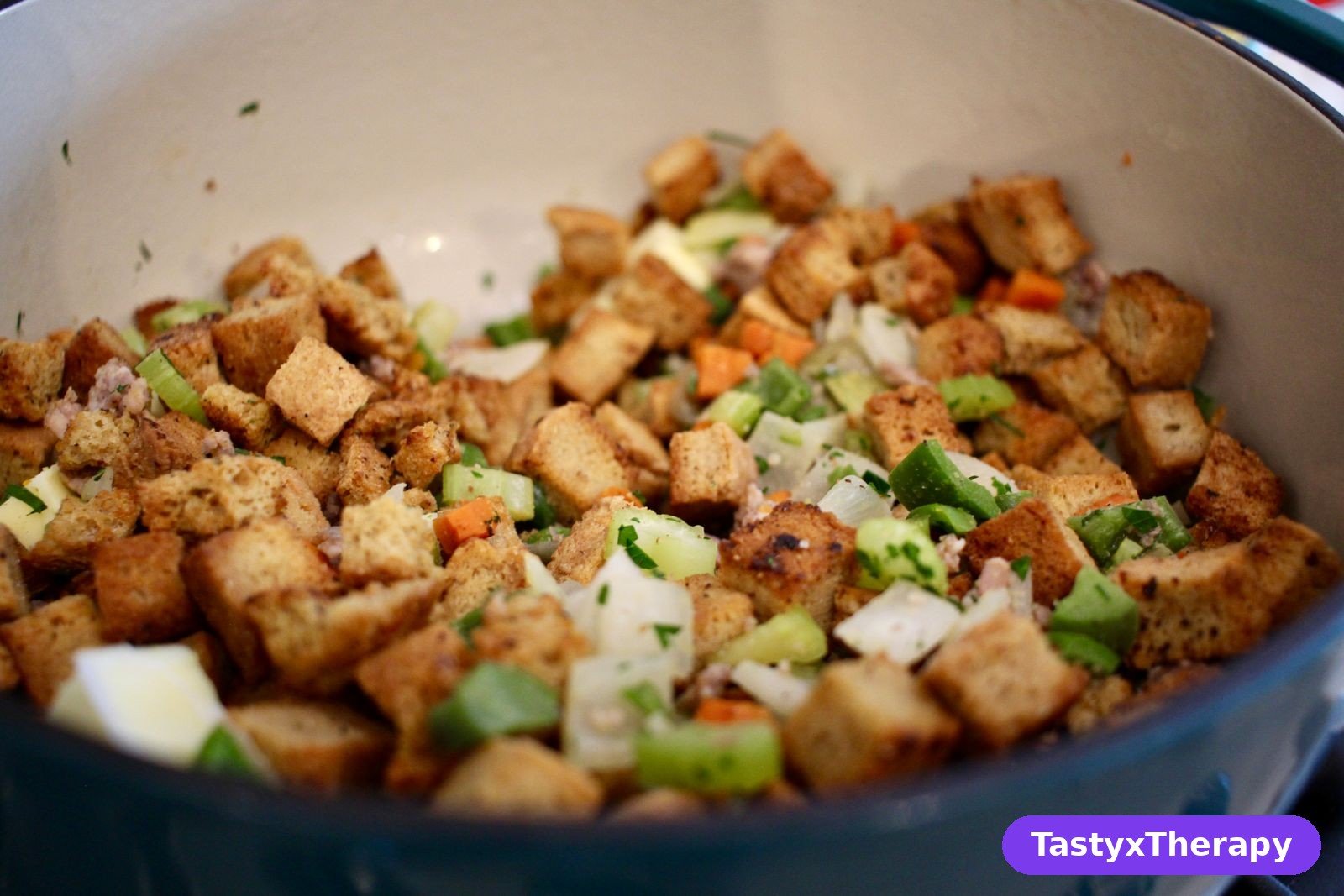
There is a smell that means the holidays have properly started in my kitchen, and it is not the turkey. It is the smell of butter melting into warm cornbread, sage crackling softly in the pan, and onions going sweet and golden on the stove. The moment that smell fills the house, everyone drifts toward the kitchen, asking what time dinner is and whether they can taste a little bit now. That is what this buttery cornbread dressing with sage does. It is not a quiet side dish that sits politely at the edge of the plate. It is the dish people go back for, the one they ask about, the one that disappears first.
I learned to make dressing the way a lot of people do — standing next to someone who had made it a hundred times and never measured a thing. My job was to crumble the cornbread, which felt like the least important job in the kitchen until I understood that it was actually the whole recipe. The size of the crumble, how dry the cornbread was, how much butter went in — all of it mattered, and none of it was written down anywhere. It took me a few years of making it on my own, with a few dry batches and one memorably soggy one, to work out the balance. This recipe is the result of all that trial and error, written down properly so you do not have to learn it the hard way.
What makes this dressing different from the boxed kind is not one secret ingredient. It is the combination of small, ordinary things done right. Real cornbread, baked a day ahead and left to dry out a little. Plenty of butter — this is not the dish for holding back. Fresh sage, not the dusty jar that has been in the cupboard since last year. And enough stock to make the inside soft and custardy while the top goes crisp and golden in the oven. Get those four things right and the rest takes care of itself.
This is a side dish, but it is also a centrepiece in its own way. It goes with roast turkey and roast chicken, with pork chops on a Sunday, or with nothing but a green salad on a night when you just want something warm and comforting. It feeds a crowd, it reheats beautifully, and it is the kind of recipe that becomes part of how your family does the holidays. So put the kettle on, heat the oven, and let us make a proper dressing together.
Why Cornbread Dressing Deserves a Place on Your Table
Every holiday table has its arguments, and one of the oldest is the one about dressing versus stuffing. In the South, it is dressing, made with cornbread, baked in a dish alongside the bird. Up north, it is often stuffing, made with white bread and cooked inside the turkey. The truth is both are wonderful, and the argument is mostly about which one you grew up eating. I grew up with cornbread dressing, and I will defend it happily, but the real reason it belongs on the table has nothing to do with geography. Cornbread brings a sweetness and a crumbly, golden texture that white bread simply cannot match, and when it soaks up butter and stock, it turns into something rich and almost custardy in the middle while the top goes wonderfully crisp.
The history of this kind of dish goes back a long way — people have been cooking seasoned bread mixtures alongside roast birds for centuries, and the history of stuffing is a reminder that this is one of the oldest ideas in cooking: take good bread, add fat and herbs, and bake it next to the meat so it soaks up all the flavour. Cornbread dressing is the Southern version of that old idea, and it has stayed popular because it works so well. The cornmeal gives it a gentle sweetness, the crumb holds together without turning to mush, and the sage gives it that unmistakable holiday smell.
Sage is the other half of the story. It is a strong herb, and a little goes a long way, but it is the flavour people associate with this dish more than any other. Fresh sage, fried briefly in butter until the edges curl and crisp, tastes completely different from dried sage shaken out of a jar. It is woodsy and warm, almost peppery, and it perfumes the whole dish. If you have only ever made dressing with dried sage, switching to fresh is the single change that will make the biggest difference. You can find it in most supermarkets through autumn and winter, and a small bunch is all you need.
The last reason this dressing earns its place is practical. It is one of the few holiday dishes that actually gets better when you do most of the work the day before. Bake the cornbread, let it sit out overnight, chop the vegetables, and the next day all you have to do is mix and bake. On a day when the oven is crowded and the timing is tight, a dish that asks for forty minutes and no attention is worth its weight in gold.
What You Need
For the cornbread, you will need two cups of yellow cornmeal, one cup of plain flour, a tablespoon of baking powder, a teaspoon of salt, a tablespoon of sugar, two large eggs, one and a half cups of milk, and a quarter of a cup of melted butter. That makes one large pan of cornbread, which is exactly what the dressing needs. If you already have a cornbread recipe you love, use that instead — just make sure it is not too sweet, because sweet cornbread makes a dressing that tastes more like cake than a savoury side.
For the dressing itself, you will need the whole pan of cornbread, crumbled, plus half a cup of butter — one full stick, and yes, it all goes in. Two medium onions, finely chopped; three celery sticks, finely chopped; three cloves of garlic, minced; a small bunch of fresh sage, about a quarter of a cup of leaves, chopped; a teaspoon of dried thyme; two large eggs, beaten; three to four cups of chicken stock or turkey stock; a teaspoon of salt; and plenty of black pepper. A little chopped fresh parsley for the top is optional but pretty.
A note on the stock: use the best you have. Homemade is wonderful, a good shop-bought stock is fine, and the liquid from cooking the turkey giblets is the traditional choice if you have it. What matters is that it is well seasoned, because the cornbread itself is fairly plain and the stock is doing a lot of the flavouring. If your stock is unsalted, you will need a bit more salt in the mix. Taste as you go — the mixture should taste well seasoned before it goes into the oven, because baking will not fix a bland dressing.
You will also need a large baking dish, roughly nine by thirteen inches, well buttered. A cast iron skillet works beautifully too, and it gives you even crisper edges. Either way, butter the dish generously. The edges of a dressing are the best part, and butter is what makes them crisp and golden instead of dry.
The Cornbread Matters Most
If there is one thing worth getting right in this recipe, it is the cornbread. A dressing is only ever as good as the bread it starts from, and cornbread for dressing is not quite the same as cornbread you would eat on its own with a bowl of chilli. For dressing, you want it a little drier and a little sturdier, so it can soak up stock without falling apart into porridge. That is why the cornbread should be baked the day before and left out, uncovered, to dry. A day-old pan of cornbread crumbles into the perfect pieces — some fine, some chunky — and holds its shape in the mix.
When you crumble it, do not be too fussy. You want a mix of textures: some crumbs as fine as sand, some pieces the size of a pea, a few bigger chunks that will stay distinct after baking. If you crumble it all into dust, the dressing turns dense. If the pieces are all huge, it falls apart when you serve it. Rough, uneven, hand-crumbled is exactly right. It should look like something a person made, not something a machine did.
The other thing to watch is the sweetness of your cornbread. Southern-style cornbread is barely sweet, and that is what you want here. If your cornbread recipe calls for a lot of sugar, cut it back for this batch. A little sweetness is lovely — cornmeal is naturally sweet — but a dressing that tastes like cake is a disappointment, and it clashes with the sage and the savoury stock. One tablespoon of sugar in the whole pan is plenty.
If you are short on time, you can buy a pan of cornbread from a bakery, or use a good cornbread mix and bake it the morning of. It will still work. But if you can, bake it yourself the day before. It takes twenty-five minutes, the house smells wonderful, and the dressing the next day is noticeably better for it. Some things are worth the small bit of planning.
How to Make Buttery Cornbread Dressing with Sage
Start the day before, or at least a few hours ahead, by baking the cornbread. Heat the oven to 200 degrees Celsius, butter a nine-inch square pan, and whisk the cornmeal, flour, baking powder, salt, and sugar together in a large bowl. In another bowl, whisk the eggs and milk, then stir in the melted butter. Pour the wet into the dry and stir just until it comes together — a few lumps are fine. Pour it into the pan and bake for twenty to twenty-five minutes, until the top is golden and a skewer comes out clean. Let it cool completely, then leave it out uncovered overnight, or for at least a few hours, so it dries out. If you are in a hurry, you can cut it into cubes and dry it in a low oven for fifteen minutes instead.
On the day, heat the oven to 190 degrees Celsius and butter your baking dish well. Crumble the cornbread into a very large bowl. You want a mix of fine crumbs and pea-sized pieces, with a few bigger chunks left in. Set it aside.
Melt the butter in a large pan over a medium heat. Add the onions and celery with a pinch of salt and cook them gently for eight to ten minutes, stirring now and then, until they are soft and the onion has turned translucent and sweet. This is not a step to rush. Soft, sweet vegetables are the backbone of the dressing, and undercooked onion stays sharp and crunchy in a way that no amount of baking will fix. When the vegetables are soft, add the garlic and the chopped sage and cook for one more minute, just until the sage smells fragrant and the garlic loses its raw edge. Take the pan off the heat.
Pour the butter and vegetables over the crumbled cornbread. Add the thyme, salt, and a generous amount of black pepper. Pour in the beaten eggs and three cups of stock, then mix everything together with your hands or a large spoon. You are aiming for a mixture that is thoroughly moist but not swimming — every crumb damp, the mixture holding together when you squeeze a handful, but no puddle of liquid in the bottom of the bowl. If it still looks dry, add more stock a splash at a time. Different cornbreads absorb differently, and the exact amount of stock is something you judge by feel, not by the measuring jug. It should look wetter than you think it needs to be, because the oven will dry it out.
Tip the mixture into the buttered dish and press it down gently — not firmly, just enough to level the top. Dot a few small pieces of butter over the surface if you like, which helps the top go golden and crisp. Cover the dish loosely with foil and bake for twenty-five minutes, then take the foil off and bake for another twenty to twenty-five minutes, until the top is deep golden brown and crisp at the edges and the centre is set. Let it rest for ten minutes before serving, so it firms up enough to cut into neat squares.
Getting the Texture Just Right
Texture is where a good dressing becomes a great one, and it comes down to two things: how wet the mixture is going in, and how long it bakes. Too little stock and the dressing comes out dry and crumbly, the kind that falls apart on the plate and needs gravy poured over it to be edible. Too much stock and it turns into a soft, steamed pudding with no crisp top at all. The sweet spot is a mixture that looks almost too wet in the bowl, then bakes into something soft and custardy in the middle with a properly crisp, golden top.
The foil step matters more than it looks. Baking covered for the first half lets the inside cook through and stay moist, while baking uncovered for the second half is what crisps the top. Skip the foil and the top dries out before the middle is done. Leave the foil on the whole time and you get a pale, soft top with no crunch. Twenty-five minutes covered, twenty to twenty-five uncovered — that is the rhythm that works in my oven, and it is worth sticking to until you know your own oven well enough to adjust.
The size of your dish matters too. Spread the dressing too thin in a huge dish and it dries out. Pack it too deep in a small dish and the middle stays soggy while the top burns. A nine-by-thirteen-inch dish is about right for this amount, giving you a layer roughly two inches deep. If you double the recipe for a crowd, use two dishes rather than one enormous one. It bakes more evenly, and you get twice as many crisp edges, which nobody has ever complained about.
One last texture trick: let it rest. I know it is hard when the house smells like this and everyone is hungry, but ten minutes out of the oven lets the dressing set. Cut into it straight away and it slumps. Give it ten minutes and it holds a clean square, with a soft middle and a top that stays crisp. It is still plenty hot. Patience, just this once, is worth it.
Common Mistakes to Avoid
The most common mistake is using fresh, soft cornbread. I understand why — you baked it this morning, it smells wonderful, and it seems a shame to let it go stale. But soft cornbread soaks up stock like a sponge and collapses into mush. Day-old, slightly dried cornbread holds its shape and gives you a dressing with texture. If you forgot to bake ahead, cut the cornbread into cubes and dry it in a low oven for fifteen minutes. It makes a real difference.
The second mistake is being shy with the butter. Half a cup sounds like a lot, and it is, but this is a holiday dish, not a weeknight health food. The butter is doing three jobs: it carries the flavour of the sage and onion, it keeps the dressing moist, and it crisps the top. Cut it back and the dressing tastes flat and dries out. Use the full amount. Your guests will not ask how much butter is in it. They will ask for the recipe.
The third is over-mixing. Once the stock goes in, mix just until everything is combined and moist. If you stir and stir, the cornbread breaks down into a paste and the dressing comes out dense and heavy. Gentle hands, a few folds, and stop as soon as it looks even. It does not need to be perfect — the oven will finish the job.
And finally, do not under-season. Cornbread is plain, stock varies, and sage is a strong flavour that needs salt behind it to taste its best. Taste the mixture before it goes into the oven — it should taste a little more seasoned than you think it should, because baking dulls seasoning slightly. A dressing that is seasoned properly at the mixing stage tastes seasoned all the way through. One that is not will taste bland no matter how much gravy you pour on it.
Variations Worth Trying
Once you have the basic recipe down, it is easy to make it your own, and dressing is one of those dishes where every family has its own version. For a richer, meatier dressing, brown half a pound of pork sausage, crumble it, and fold it into the mix before baking. It adds a savoury depth that suits the sage beautifully, and it turns the dressing into something that can almost stand as a main course on its own.
If you like a bit of sweetness against the sage, a cup of chopped apple, diced small, stirred in with the vegetables, is lovely — it softens in the oven and gives you little pockets of sweetness in every spoonful. Dried cranberries do a similar job if you prefer them, though I would keep it to half a cup so they do not take over. Toasted pecans, roughly chopped, add crunch and a nutty note that works wonderfully with cornbread. Add them at the mixing stage so they toast further in the oven without burning.
For a spicier version, a finely chopped jalapeño or a pinch of cayenne in the butter with the onions gives the whole dish a gentle warmth. It will not make the dressing hot — just awake. And if you like mushrooms, a handful of sliced mushrooms cooked down with the onions adds an earthy richness that is hard to beat.
If you want more ideas before you settle on your own version, there is a good collection of stuffing recipes out there with plenty of different takes — some with chestnuts, some with sausage, some with fruit — and browsing them is a good way to find the variation that sounds like your family. The base recipe here will hold up to almost any of them.
What to Serve with Cornbread Dressing
Cornbread dressing is a team player. It was made to sit next to roast turkey, and it does that job better than almost any other side dish, soaking up gravy and giving the plate something golden and crisp at the edge. But it is far too good to save for one day a year. It goes beautifully with a simple roast chicken on a Sunday, with pork chops and applesauce, or with a glazed ham when you want a proper family dinner without the full holiday production.
On the plate, it likes a bit of green for balance. Something like Roasted Broccoli with Parmesan and Lemon cuts through the richness nicely, and the lemon brightens the whole meal. A creamy side works too — Creamy Mashed Potatoes with Roasted Garlic next to a square of dressing is pure comfort, and nobody at the table will mind that the plate is mostly beige. Add a simple green salad with a sharp vinaigrette if you want something fresh, and the meal is complete.
For drinks, keep it simple. A glass of whatever you cooked with, a cold cider, or just a big jug of water with lemon on the table. Dressing is homely food, and it suits a homely table — no need to overthink it. And for dessert, something light and fruity suits the mood after such a rich meal. A baked apple, a fruit crumble, or just a bowl of good vanilla ice cream is the right kind of ending.

Storing and Reheating
Leftover dressing keeps well in the fridge for three to four days, covered tightly or in a sealed container. It reheats beautifully, which is one of the reasons it is worth making a full dish even for a smaller gathering. To reheat, put it in a buttered dish, sprinkle over a tablespoon or two of stock or water to stop it drying out, cover with foil, and warm it in a moderate oven for about twenty minutes. Take the foil off for the last five minutes to crisp the top again.
It also freezes well for up to three months. Let it cool completely, then cut it into portions and wrap each one well, or freeze the whole dish if you have the freezer space. Defrost overnight in the fridge and reheat as above. The texture after freezing is a little softer than fresh, but the flavour is all there, and a square of reheated dressing with a fried egg on top makes a breakfast that is far better than it has any right to be.
If you want to get ahead for the holidays, you can assemble the dressing the day before, cover it tightly, and keep it in the fridge overnight. Take it out half an hour before baking so it is not fridge-cold going into the oven, and add five minutes to the covered baking time. The cornbread and the baked dish are both make-ahead friendly, which is exactly what you want when the big day arrives and the oven is already full.
Frequently Asked Questions
Can I make cornbread dressing ahead of time?
Yes, and it is one of the best make-ahead dishes for a holiday meal. You can bake the cornbread up to two days ahead and leave it out to dry, or freeze the crumbled cornbread for up to a month. The dressing itself can be assembled the day before, covered tightly, and kept in the fridge. On the day, let it sit out for half an hour, then bake as usual, adding about five extra minutes to the covered part of the baking time. The top will still go golden and crisp.
What is the difference between dressing and stuffing?
The main difference is where it is cooked. Dressing is baked in a separate dish, outside the bird, while stuffing is cooked inside the turkey. In the South, the dish is almost always called dressing and almost always made with cornbread. In the North, it is more often called stuffing and more often made with white bread. The flavours are similar — sage, onion, butter, stock — but the texture is different: dressing baked in a dish gets a crisp top that stuffing cooked inside a bird never does.
Can I use store-bought cornbread?
You can, and it will still be a good dressing. Buy a plain, unsweetened cornbread if you can find one, and let it sit out for a day to dry, just as you would with homemade. If the bakery cornbread is very moist, cut it into cubes and dry it in a low oven for fifteen minutes before crumbling. Avoid cornbread mixes that are very sweet or cake-like, because the sweetness carries through into the finished dressing.
How do I stop my dressing from going soggy?
The three things that matter are dry cornbread, the right amount of stock, and the uncovered baking time. Start with cornbread that has had a day to dry out. Add stock gradually until the mixture is moist but not swimming, and remember it should look slightly wetter than you think, because the oven dries it out. Then make sure you bake it uncovered for the full twenty to twenty-five minutes at the end — that is what crisps the top and firms up the middle. If your dressing still comes out soft, give it five more minutes uncovered next time.
Can I make this dressing vegetarian?
Easily. The only animal ingredient besides the butter and eggs is the stock. Swap the chicken or turkey stock for a good vegetable stock, and the dressing is vegetarian. Use a well-flavoured stock, because it is doing a lot of the seasoning work — a bland vegetable stock will give you a bland dressing. Everything else in the recipe stays exactly the same, and the sage and butter carry the flavour just as well.
Can I add sausage or other ingredients?
Yes, and sausage is the most popular addition. Brown half a pound of pork sausage, break it into small crumbles, and fold it in when you mix the dressing. Chopped apple, dried cranberries, toasted pecans, mushrooms, and a little diced jalapeño all work too. Add extras at the mixing stage, keep the total amount to about a cup so the dressing still holds together, and taste for seasoning again before baking, because additions like sausage bring their own salt.
A Side Dish Worth Making from Scratch
Some recipes are worth making from scratch because the bought version is never quite right, and cornbread dressing is one of them. The boxed mixes are fine in a hurry, but they taste like a shortcut — too salty, too uniform, and missing the butter and sage that make the real thing so good. This version takes a little more time, mostly the day before, but what you get back is a dish that tastes like someone cared about it. Golden on top, soft in the middle, full of sage and butter, and gone before you know it.
Make it for the holidays, make it for a Sunday roast, or make it on a quiet evening just because the house could do with smelling wonderful. It freezes well, it reheats well, and it is the kind of recipe that becomes part of how your kitchen works. Once you have made it a couple of times, you will know it by heart — how wet the mixture should look, how much sage is enough, exactly when the top is golden enough to come out of the oven. Every kitchen needs a few recipes like that. If you are still building up your collection of sides, you will find more ideas in our Sides & Vegetables — and of course, you can always start from the TastyxTherapy homepage and see what catches your eye. Happy cooking, and enjoy every bite.