

There is a particular kind of quiet that settles over a kitchen when a peach cobbler is in the oven. It is not dramatic, exactly. It is the smell of warm fruit and butter drifting out from behind the oven door, the faint bubbling you can hear if you stand close enough, and the knowledge that something good is coming in about forty minutes. This easy peach cobbler with a buttery biscuit topping is built for exactly that kind of evening, the sort where nobody is trying to impress anyone and dessert still somehow steals the show.
I have made cobblers in all sorts of moods and with all sorts of peaches. I have used fruit so ripe it barely needed peeling, and I have rescued a tin of peaches from the back of the cupboard on a rainy Tuesday when fresh ones were nowhere to be found. Both versions worked, and both disappeared fast. That is the real charm of a cobbler. It is forgiving in a way that a fussy layer cake never is, and it rewards you for keeping things simple rather than punishing you for it.
The topping here is the part I care about most. Some cobblers are topped with a thin batter that bakes into something closer to cake, and that style has its fans. This one is different. It is a proper biscuit topping, dropped in soft mounds over the fruit, brushed with a little milk or cream, and baked until the edges turn deep gold and the middles stay tender. Where the biscuit meets the peach juices, it goes slightly jammy and soft, which is, in my opinion, the best bite in the whole dish.
What follows is not a precious recipe. It is a practical one, written the way I actually make it at home, with notes about where you can cut corners, where you should not, and how to fix the two or three things that occasionally go sideways. If you have never made a cobbler before, this is a kind place to start. If you have made a dozen, you will probably still find a trick or two worth stealing.
Why This Peach Cobbler Works So Well
A good cobbler is really a negotiation between fruit and topping, and most failures come from one side winning too easily. Too much sugar in the filling and the whole thing tastes flat and syrupy. Too little, and the peaches stay sharp and the juices run thin. Too much liquid and the topping goes soggy. Too little, and the fruit dries out at the edges before the biscuits have finished baking. This recipe keeps those forces in balance by letting the peaches do most of the talking, with just enough sugar, lemon, and spice to sharpen them rather than bury them.
The biscuit topping helps, too, because it is sturdier than a batter. It holds its shape, browns beautifully, and gives you something to spoon against the soft fruit. Cold butter is the secret, as it is in so many baked things. When you rub cold butter into flour, you leave little pockets that melt in the oven and puff the dough up. Warm butter, or butter that has been worked in too long, just melts into the flour and gives you something dense and tired. Keep the butter cold, work quickly, and stop as soon as the mixture looks like coarse crumbs with a few pea-sized bits left in it.
There is also something to be said for not overcomplicating the spice. Cinnamon is the obvious partner for peaches, and a little nutmeg behind it adds warmth without turning the filling into a spice cake. Vanilla rounds the whole thing out. You do not need ginger, cardamom, and three kinds of sugar competing for attention. A cobbler should taste like peaches first, and everything else should be there to make the peaches taste more like themselves.
Choosing Your Peaches
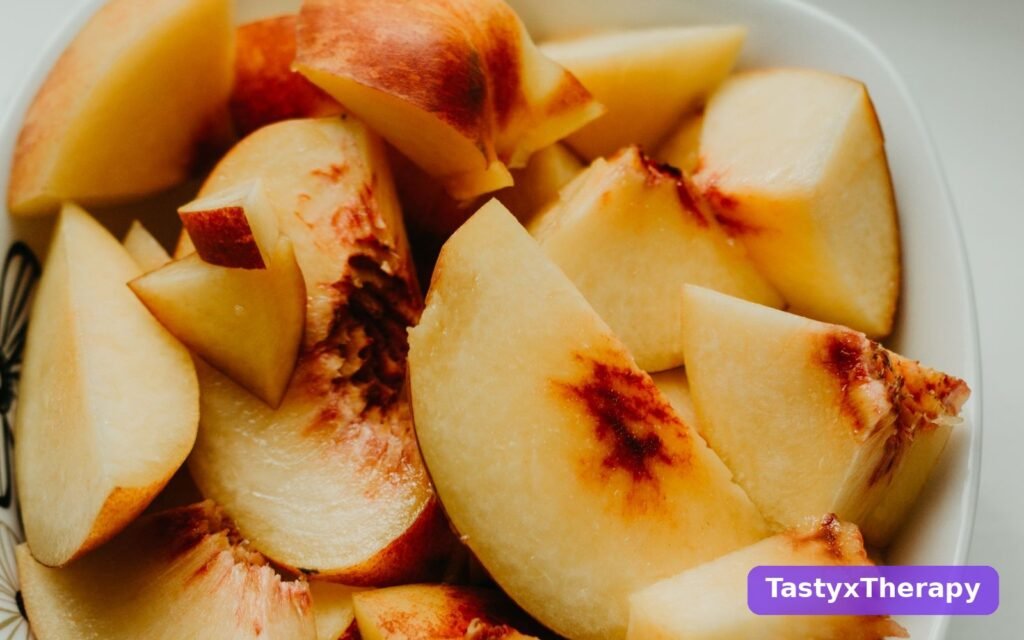
Fresh peaches, when they are genuinely ripe, are hard to beat. Look for fruit that gives slightly when you cup it gently in your hand and smells sweet at the stem end. A peach that is rock hard will not soften properly in the time the topping takes to bake, and a peach that is already bruised and mushy will fall apart into pulp. If your peaches are a little underripe, leave them in a paper bag on the counter for a day or two with a banana nearby, and check them daily, because they can turn quickly once they get going.
Frozen peaches are a perfectly respectable second choice, and in winter they are often better than the sad, hard fruit shipped in from far away. Use them straight from frozen, but add a spoonful or two of extra flour or cornstarch to the filling, because they release more water as they thaw in the oven. Canned peaches in juice, drained well, work in a pinch as well, though you should cut back the sugar in the filling by a couple of tablespoons since canned fruit is usually sweeter. Whichever you use, taste a slice before you sweeten. Peaches vary enormously, and the recipe should bend to the fruit, not the other way around.
Peeling is up to you, and I will not pretend there is one right answer. Skins soften a lot during baking and add a blush of colour, so leaving them on saves time and keeps things rustic. Peeling gives a smoother, more classic result, and it is worth doing if you are serving guests or if the skins are thick and fuzzy. The quickest way is to score a small cross in the base of each peach, drop it in boiling water for thirty seconds, then slip it into cold water. The skins usually slide right off, which feels like a small kitchen miracle every single time.
Ingredients You Will Need
For the peach filling, you will need about eight medium peaches, peeled and sliced, or roughly two pounds of fruit. To that, add three quarters of a cup of granulated sugar, two tablespoons of cornstarch, a tablespoon of lemon juice, a teaspoon of vanilla extract, a teaspoon of ground cinnamon, and a quarter teaspoon of ground nutmeg, plus a pinch of salt. The cornstarch is not there to make the filling gluey. It is there to catch the juices just enough that they spoon up thick and glossy instead of running all over the plate.
For the biscuit topping, gather two cups of all-purpose flour, a quarter cup of granulated sugar, a tablespoon of baking powder, half a teaspoon of salt, half a cup of cold unsalted butter cut into small cubes, three quarters of a cup of cold milk or buttermilk, and a teaspoon of vanilla if you like it. You will also want a tablespoon or two of coarse sugar for sprinkling, and a little extra milk for brushing the tops. If you only have salted butter, use it and leave out the added salt in the topping. If you only have self-raising flour, leave out the baking powder and the salt, and the topping will still come out well.
You will need a baking dish of about nine by thirteen inches, or a deep pie dish, plus a large bowl, a pastry cutter or two forks, and a baking sheet to sit underneath the dish in the oven. That last bit matters more than it sounds. Cobblers bubble, and a tray underneath saves you from scrubbing burnt peach juice off the bottom of your oven later. Butter the dish lightly, and have your oven heating to 190 degrees Celsius, or 375 degrees Fahrenheit, before you start assembling.
How to Make Easy Peach Cobbler with Buttery Biscuit Topping
Start by tossing the sliced peaches with the sugar, cornstarch, lemon juice, vanilla, cinnamon, nutmeg, and salt in a large bowl. Let the mixture sit for ten to fifteen minutes while you make the topping, and stir it once or twice. In that short rest, the sugar draws juice out of the peaches and the cornstarch dissolves into it, which means the filling starts to thicken before it even reaches the oven. You will see the bowl go from dry-looking slices to something glossy and promising, and that is exactly what you want.
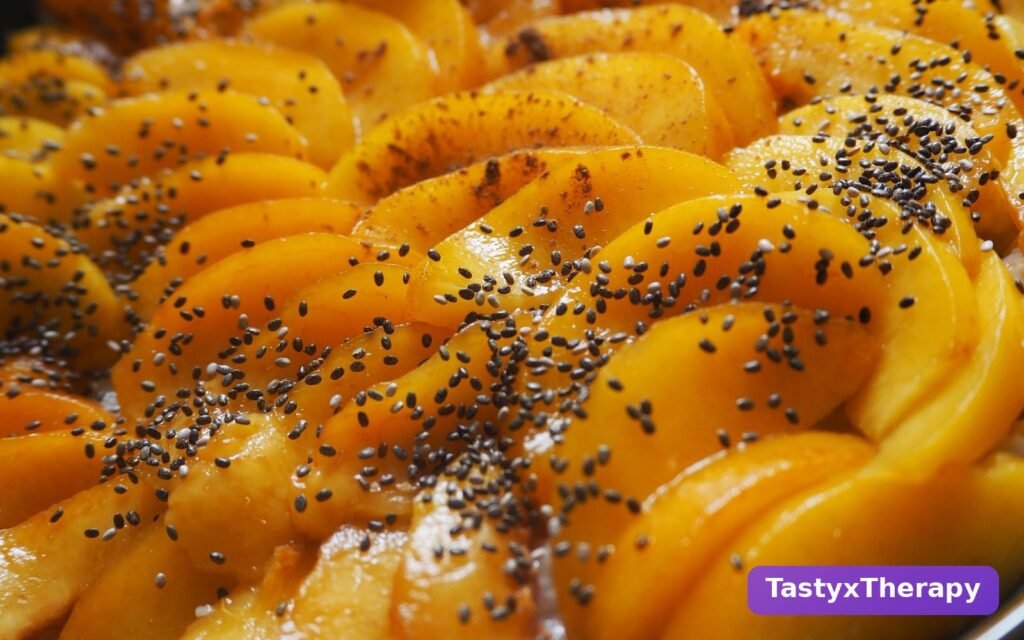
Tip the peach mixture into your buttered baking dish and spread it into an even layer, scraping in every drop of juice from the bowl. Now make the biscuit dough. Whisk the flour, sugar, baking powder, and salt together in a bowl, then rub in the cold butter with your fingertips or a pastry cutter until the mixture looks like coarse breadcrumbs with some larger, pea-sized lumps still visible. Those lumps are not a mistake. They are the bits that will melt and puff and give the topping its flaky, tender character.
Pour in the cold milk and vanilla and stir with a fork only until a soft, slightly sticky dough comes together. It will look rough and a bit shaggy, and that is fine. Overmixed biscuit dough turns tough, so stop the moment the flour disappears. If the dough feels very wet, add a spoonful of flour. If it feels dry and crumbly, add a splash more milk. You are aiming for something you can scoop rather than roll, soft enough to drop from a spoon but firm enough to hold its shape on top of the fruit.
Drop large spoonfuls of dough over the peaches, leaving small gaps between them. The gaps matter, because they let steam escape and give the peach juices somewhere to bubble up, which is part of the cobbler’s charm. You do not need to cover every inch of fruit. A cobbled look, with golden biscuits and glimpses of dark, bubbling peach between them, is the whole point of the name. Brush the tops lightly with milk or cream and sprinkle over the coarse sugar, which will crisp up into a lovely crackly crust.
Slide the dish onto the baking sheet and into the oven, and bake for thirty-five to forty-five minutes. You are looking for deeply golden biscuits and filling that bubbles thickly around the edges and through the gaps. If the tops brown too fast, lay a loose sheet of foil over the dish for the last ten minutes. Let the cobbler rest for at least fifteen minutes before serving, because the filling is molten when it first comes out and needs that time to settle into something spoonable rather than soupy.
Tips for a Golden, Flaky Topping
The single biggest difference between a good biscuit topping and a great one is temperature. Keep everything cold, from the butter to the milk, and work fast once the butter goes in. On a warm day, I sometimes pop the flour bowl in the fridge for ten minutes before I start, and I cut the butter and return it to the fridge until the very moment I need it. It sounds fussy, but it takes almost no extra time and the lift you get is noticeable.
Do not be tempted to smooth the topping into a single sheet. A cobbler is not a pie, and a solid lid traps steam and turns the underside gummy. Dropped mounds, with their craggy tops and crisp edges, bake more evenly and look far more inviting. If you want extra crunch, sprinkle the coarse sugar generously and add a few flaked almonds or a pinch of cinnamon sugar over the top before baking, though neither is essential.
If your oven runs hot, check the cobbler at thirty minutes rather than waiting for the full time. Biscuits go from golden to dark quickly, and once they have browned, the filling underneath can still be bubbling away happily. A skewer or toothpick pushed into the centre of a biscuit should come out clean, with no wet dough clinging to it. That is a better test than colour alone, especially in an oven with hot spots.
Variations Worth Trying
Once you have the basic version down, the recipe is easy to bend. A handful of raspberries or blackberries tossed in with the peaches adds a sharp, jammy note and turns the filling a beautiful deep pink. A spoonful of bourbon or amaretto in the filling, if that suits your household, adds warmth and a grown-up edge, though you should leave it out entirely if children are eating. For a lighter topping, swap half the milk for buttermilk, which gives a gentle tang and a slightly more tender crumb.
In autumn, when peaches have gone, the same biscuit topping works beautifully over apples, plums, or a mix of the two, with the sugar and spice adjusted to taste. Apples need a little longer in the oven and a touch more sugar, while plums need a little less, because they are juicier. The method stays the same, which is why this is one of those recipes worth learning properly rather than just following once. Learn the ratio, and you can improvise with whatever fruit the season hands you.
For a dairy-free version, use a firm plant-based butter, kept cold, and oat milk or another neutral plant milk in the dough. The topping will be a little less rich, but still golden and tender, and the fruit filling is naturally dairy-free already. A gluten-free flour blend made for baking also works, though you may need a splash more milk, since those blends tend to drink up liquid. Check the topping early, as gluten-free biscuits can brown a touch faster.
Serving Ideas
The classic way to serve peach cobbler is warm, in a shallow bowl, with a scoop of vanilla ice cream melting slowly into the hot fruit. There is a reason it has lasted so long. The cold cream against the warm, spiced peaches, with a piece of buttery biscuit to mop it all up, is one of those combinations that needs no improving. If ice cream feels like too much, a spoonful of softly whipped cream, barely sweetened, does the same job more quietly.
For a weekday version, I often serve it simply as it is, straight from the dish, with nothing on top at all. It is sweet enough and rich enough to stand on its own, especially when the peaches were good. A drizzle of double cream, poured cold from the jug at the table, is a nice middle ground, and it lets everyone decide how indulgent they want to be. Crème fraîche, with its gentle sourness, is another excellent partner, particularly if your peaches were on the sweeter side.
If you are serving a crowd, think about how the cobbler will look on the table, because half the pleasure is in the presentation. Bring the whole dish to the table on a folded tea towel, with the ice cream and cream nearby, and let people help themselves. Cobbler is not a dessert that wants to be plated with tweezers. It wants to be spooned generously, with extra juice, and eaten while it is still warm enough to fog up a spoon. For more inspiration on simple desserts that suit a busy week, have a look at the recipes on the TastyxTherapy homepage, where the same unfussy approach runs through everything.
Leftover cobbler, if you are lucky enough to have any, keeps well and is arguably even better the next day, when the flavours have settled and the topping has softened slightly into the fruit. Warm a portion gently in the oven or microwave, and it comes back to life beautifully. Some people I know eat cold cobbler straight from the fridge for breakfast, with yoghurt instead of ice cream, and I am not going to pretend I have never done the same. It is a perfectly respectable breakfast, as far as I am concerned, especially on a slow weekend morning.
Storing and Reheating
Let the cobbler cool completely before covering it, or condensation will soften the topping more than you want. Covered with foil or in an airtight container, it keeps in the fridge for three to four days. To reheat, warm individual portions in the microwave for a minute or so, or put the whole dish back in a moderate oven, covered loosely with foil, until it is hot through. If the topping has gone soft in the fridge, a few minutes uncovered in a hot oven will crisp it back up nicely.
You can also freeze baked cobbler, though the topping will never be quite as crisp after thawing. Cool it completely, wrap it well, and freeze for up to three months. Thaw overnight in the fridge, then reheat in the oven until bubbling. Unbaked cobbler can be assembled and frozen too, but bake it from frozen at a slightly lower temperature for longer, and cover it with foil for the first half of the baking time so the topping does not brown before the fruit is cooked.
One practical note for anyone planning ahead: this cobbler is best made the day you serve it, if you can manage it, because the topping is at its absolute best in the first few hours. That said, it is still very good the next day, and nobody has ever complained about a day-old cobbler in my house. Make it when it suits you, and do not let perfection get in the way of a perfectly good dessert.
Frequently Asked Questions
Can I use canned peaches for this cobbler?
Yes, and they work better than many people expect. Drain them well, cut any large slices smaller, and reduce the sugar in the filling by two or three tablespoons, since canned peaches are packed sweet. Skip the resting step, or keep it very short, because canned fruit is already soft and does not need time to release juice. The baking time stays about the same, though you should check that the filling is bubbling before you take it out.
Why is my biscuit topping soggy underneath?
A soggy underside usually means the filling was too wet, or the biscuits were packed too tightly together and steam got trapped. Leave gaps between the mounds of dough so steam can escape, and make sure you have used the full amount of cornstarch, especially with frozen fruit. Baking on the lowest oven shelf can help too, because it puts more heat under the dish and cooks the base of the topping more firmly.
How do I know when the cobbler is done?
Look for two things happening at once: biscuits that are deep golden on top and a filling that bubbles thickly, not thinly, around the edges. A toothpick in the middle of a biscuit should come out clean. If the biscuits look done but the filling is still watery, cover the top loosely with foil and give it another ten minutes. The resting time afterwards matters as well, because the filling thickens considerably as it cools.
Can I make peach cobbler ahead of time?
You can prepare the filling and the dough separately a few hours ahead and keep both in the fridge, then assemble and bake when you are ready. Do not assemble it far in advance, or the topping will absorb juice and lose its lift. If you need to bake it earlier in the day, serve it at room temperature or warm it gently before serving, and it will still be very welcome, especially with ice cream.
What is the difference between a cobbler, a crumble, and a crisp?
A cobbler is topped with biscuit or batter dough, dropped or spread over the fruit, while a crumble has a rubbed-in butter, flour, and sugar topping, often with oats, and a crisp is very similar to a crumble but usually contains oats and sometimes nuts. They all belong to the same happy family of baked fruit desserts. If you want to read a little more about the history of the dish, the cobbler entry on Wikipedia is a good starting point, and for another take on the method, this peach cobbler recipe from Food Network is worth a look. For more dessert ideas in the same style, browse the Desserts & Baking archive, and if small-batch baking appeals to you, these small-batch cookies without baking soda and small-batch chocolate chip cookies without brown sugar follow the same keep-it-simple spirit.
1 thought on “Easy Peach Cobbler with Buttery Biscuit Topping”