

Roasted broccoli has a way of converting people who thought they did not like broccoli. I know, because I was one of them for years. Boiled broccoli, grey-green and limp, was something to be endured rather than enjoyed, and I avoided it whenever I could. Then someone served me a tray of broccoli that had been roasted hard in a hot oven until the edges went crisp and almost charred, tossed with lemon and a snowfall of Parmesan, and I understood what I had been missing. It was not a different vegetable. It was the same vegetable, treated properly at last.
That is the whole argument for this recipe, really. Roasting does something that boiling and steaming simply cannot do. High, dry heat draws out moisture, concentrates flavour, and browns the edges through caramelisation, which brings out a nutty, almost sweet depth that surprises people. The florets go crisp in places and tender in others, the stems stay pleasantly firm, and the whole thing tastes savoury and satisfying in a way that plain cooked broccoli rarely manages.
Parmesan and lemon are not decoration here. They are doing real work. Parmesan adds salt and umami, and it melts into the hot florets in a way that makes them taste richer without any heavy sauce. Lemon, added at the end rather than before roasting, lifts everything with brightness and stops the dish from feeling oily or one-note. Together they turn a simple tray of vegetables into something you will actually look forward to eating, which is the only test that matters for a side dish.
This is also, happily, one of the fastest sides in my regular rotation. From washing the broccoli to getting it on the table takes about half an hour, most of which is hands-off oven time. It works on a busy weeknight next to chicken or fish, and it holds its own on a roast dinner table next to far more elaborate dishes. Once you have the method down, you will find yourself making it twice a week without thinking about it.
Why Roasting Beats Boiling Every Time
The science is simple enough, and it explains why so many people who dislike boiled broccoli love the roasted version. When broccoli boils, its flavour compounds dissolve into the water, and the vegetable itself absorbs water, which dilutes everything further. The result is soft, watery, and faintly sulphurous, which is not a great advertisement for a vegetable. Roasting reverses all of that. Water evaporates, flavours concentrate, and the high heat creates new, savoury compounds on the browned edges.
Cut size matters more than most recipes admit. Florets that are too large stay raw in the middle while the outside burns. Florets that are too small burn entirely before they have a chance to get tender. Aim for pieces roughly the size of a large walnut, with a bit of stem attached, and cut any very thick stems in half lengthwise so they cook at the same rate as the tops. If a few small bits break off, keep them. They go extra crisp in the oven and are the cook’s privilege to snack on while plating.
Another detail that makes a real difference is space. Broccoli that is crowded on a tray will steam instead of roast, because the moisture coming off each piece has nowhere to go. Spread the florets out in a single layer with a little room between them, and use two trays rather than one if you are doubling the recipe. It feels like extra washing up, but it is the difference between crisp and soggy, and it is worth it every time.
Choosing and Preparing Broccoli
Look for heads that feel firm and heavy for their size, with tight, dark green florets and no yellow patches. Yellow means the broccoli is past its best and turning to flower, and while it is still edible, it will not taste as sweet or hold up as well in the oven. The stalk should look fresh and moist at the cut end, not dried out or woody. A little purple tinge on the florets is perfectly normal, especially in cold weather, and does not mean anything is wrong.
Washing is straightforward. Rinse the head under cold water, shake it dry, and cut it into florets, working from the outside in. Do not throw the stalk away. Peel off the tough outer layer with a vegetable peeler, slice the tender centre into coins or batons, and roast those alongside the florets. They are sweet, firm, and delicious, and throwing them away wastes some of the best part of the vegetable. If you only have frozen broccoli, you can still roast it, but thaw and dry it very thoroughly first, and expect a slightly softer result.
Drying deserves emphasis, because wet broccoli does not crisp. After washing, spread the florets on a clean tea towel and pat them dry, or give them a spin in a salad spinner if you have one. Even a few minutes air-drying on the counter helps. Then toss them with oil and salt in a bowl, rather than drizzling oil over them on the tray, so every piece gets an even coating. Oil that pools on the tray burns and smokes, while oil that coats the broccoli helps it brown evenly.
Ingredients You Will Need
You will need two large heads of broccoli, about one and a half pounds in total, cut into florets with the stalks peeled and sliced. To that, add three tablespoons of olive oil, three quarters of a teaspoon of fine sea salt, half a teaspoon of freshly ground black pepper, and two cloves of garlic, thinly sliced, if you like garlic. The garlic is optional, and it needs watching, because sliced garlic burns quickly at high heat. If you are nervous about it, add the garlic halfway through roasting instead.
For finishing, you will need half a cup of finely grated Parmesan, the zest of one lemon, and a tablespoon of lemon juice, plus an optional pinch of chilli flakes for warmth. Use real Parmesan, grated fresh if you can, rather than the pre-grated kind in a tub. Freshly grated cheese melts better and tastes far more savoury, and since there are so few ingredients here, the quality of each one shows. A Microplane grater gives you the fine, feathery shreds that cling best to hot broccoli.
You will need a large, rimmed baking sheet, parchment paper if you like an easier clean-up, a large mixing bowl, and a grater. Preheat the oven to 220 degrees Celsius, or 425 degrees Fahrenheit, and put the empty baking sheet in the oven while it heats. A hot tray gives the broccoli a head start on browning the moment it lands, which is a small trick with an outsized payoff.
How to Make Roasted Broccoli with Parmesan and Lemon
Toss the dried broccoli florets and sliced stalks in a large bowl with the olive oil, salt, and pepper, using your hands to make sure every piece is lightly coated. Take the hot baking sheet out of the oven, line it if you wish, and spread the broccoli in a single layer, cut sides down where possible. The flat cut sides brown best against the hot metal, and those browned faces are where most of the flavour lives, so it is worth the few extra seconds to arrange them.
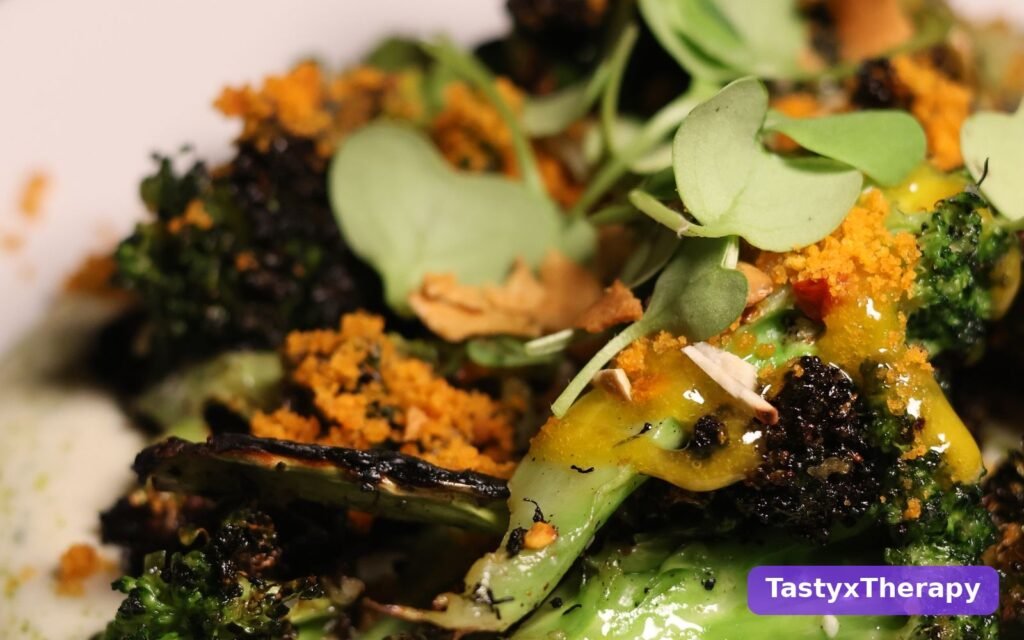
Roast for fifteen minutes without opening the oven door, then check. The florets should be browning at the edges and the stems should be starting to give when poked with a fork. If you are using garlic, scatter it over the tray now, toss everything once, and return it to the oven for another five to eight minutes. If you added the garlic at the start, just toss and continue. The total time is usually twenty to twenty-five minutes, depending on the size of your florets and how hot your oven really runs.
When the broccoli is tender inside and crisp and browned in patches on the outside, take it out and work quickly. Tip it back into the bowl or onto a serving platter, shower it with the grated Parmesan, and toss so the cheese melts onto the hot florets. Add the lemon zest and juice, toss again, and taste. You may want a little more salt, or another squeeze of lemon, depending on how salty your Parmesan is. Serve straight away, while the edges are still crisp, because roasted broccoli waits for no one.
Tips for Extra Crisp Edges
If your broccoli consistently comes out soft rather than crisp, the oven is usually the culprit, and the fix is usually heat. Many home ovens run cooler than their dials claim, so an oven thermometer is a worthwhile investment if you roast vegetables often. You can also try roasting on the lowest shelf, closest to the heating element, or finishing the tray under the grill for a minute or two, watching it constantly, to crisp the tops.
Another common mistake is seasoning too late. Salt draws out a little moisture at first, but if you salt before roasting, that moisture evaporates in the oven and the salt ends up seasoning the broccoli all the way through. Salting only at the end leaves the flavour sitting on the surface and can make the dish taste uneven. The same goes for the oil. Tossing before roasting gives an even coat, while drizzling afterwards leaves greasy patches and dry patches side by side.
Do not cover the tray with foil, and do not be tempted to add a splash of water to keep things moist. Both defeat the purpose of roasting. If the florets look dry after roasting, a little extra olive oil tossed through at the end, along with the lemon, is a better fix. And remember that broccoli continues to soften from its own heat after it leaves the oven, so take it out when it is a touch firmer than you think you want it. By the time it reaches the table, it will be perfect.
Variations Worth Trying
Once the basic method feels natural, it is easy to vary. A spoonful of tahini thinned with lemon juice and water, drizzled over the hot broccoli, turns it into something richer and more substantial, and works well as a light lunch with flatbread. Toasted almonds or pine nuts, scattered over at the end, add crunch and a nutty note that pairs beautifully with the Parmesan. A handful of breadcrumbs, fried crisp in olive oil with garlic, makes a pangrattato topping that is wonderfully old-fashioned.
For a spicier version, add chilli flakes with the oil, or toss the finished broccoli with a spoonful of chilli crisp. For an Asian-leaning variation, swap the Parmesan and lemon for soy sauce, sesame oil, and a sprinkle of sesame seeds, and finish with a squeeze of lime. The roasting method does not change, which is the point. Learn to roast broccoli well once, and you have a template you can dress up in a dozen different ways depending on what the rest of dinner looks like.
You can also roast broccoli alongside other vegetables on the same tray, as long as they cook in a similar time. Cauliflower florets, sliced carrots, and chunks of red onion all work, though they may need a few extra minutes. Just keep everything in a single layer and cut pieces to a similar size, and the tray will take care of itself. A mixed tray like this is an excellent way to clear out the vegetable drawer at the end of the week.
Serving Ideas
Roasted broccoli with Parmesan and lemon is at its best served hot, straight from the oven, as a side to simply cooked meat or fish. It is wonderful next to roast chicken, grilled salmon, or a pork chop, where its savoury, lemony edge cuts through richness without competing with the main dish. It also works beautifully as part of a grain bowl, spooned over rice or quinoa with a fried egg on top, where it stops being a side and becomes the main event.
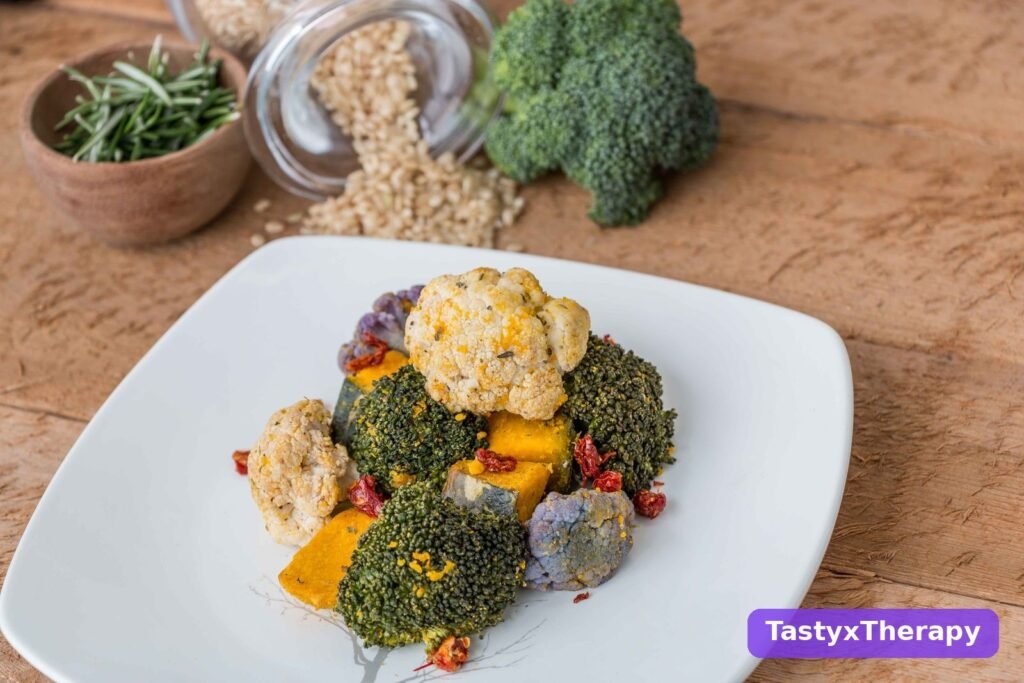
For a vegetarian dinner, serve it with pasta, tossed through with extra Parmesan and a little of the pasta cooking water, or piled onto toast rubbed with garlic and spread with ricotta. It is also good cold, though it loses its crispness, so if you are planning leftovers for lunch, keep them for a salad or a wrap rather than expecting the same crackly edges. A squeeze of fresh lemon over the top when you reheat it wakes the flavours back up nicely.
If you are building a table of sides for a roast or a gathering, this broccoli sits happily next to potatoes in almost any form, and it is a welcome green note among richer dishes. For more ideas in the same unfussy spirit, the TastyxTherapy homepage is a good place to browse, and the Sides & Vegetables archive gathers the rest of the vegetable sides together. Two potato dishes that pair especially well are these crispy potatoes without breadcrumbs and crispy potatoes in the air fryer without oil, both of which share the same love of a hot oven and a crisp edge.
One last serving thought, from experience: make more than you think you need. Roasted broccoli shrinks considerably in the oven, and it is the dish people reach for second helpings of, even when they swore they were full. Two heads sounds generous for four people, but it disappears fast, and nobody has ever complained about leftover broccoli in the fridge. If anything, the complaint is usually that there was not enough, which is a good problem for a vegetable side to have.
Storing and Reheating
Roasted broccoli keeps in an airtight container in the fridge for three days, though it will soften. To reheat, spread it on a tray and warm it in a hot oven for five to eight minutes, which restores some of the crispness. The microwave will heat it through, but it will stay soft, so save that for when you are folding it into pasta or soup rather than serving it as a side. It does not freeze well, because the texture goes mushy on thawing, so it is best eaten fresh.
Leftover broccoli is excellent chopped into an omelette, stirred into a frittata, or blended into a soup with stock and a little cream. It also makes a very good sandwich filling, cold, with mayonnaise and a slice of cheese, which sounds odd until you try it. The Parmesan and lemon already in the dish mean it needs very little else, and it is a practical way to make sure none of it goes to waste.
Frequently Asked Questions
Why is my roasted broccoli soggy instead of crisp?
The usual causes are a crowded tray, wet broccoli, or an oven that is not hot enough. Spread the florets in a single layer with space between them, dry them well after washing, and roast at 220 degrees Celsius or higher. Use a preheated tray if you can, and resist opening the oven door too often, because each peek drops the temperature and lets steam build up.
Can I roast frozen broccoli?
Yes, but thaw it completely first and dry it as thoroughly as you can, pressing it gently in a clean tea towel. Toss it with a little more oil than usual, spread it out well, and roast at the same temperature, checking after fifteen minutes. It will be softer than fresh broccoli and less crisp, but it will still taste good, especially with Parmesan and lemon at the end.
Should I add the Parmesan before or after roasting?
After, almost always. Parmesan added before roasting tends to burn and turn bitter at high heat, especially the fine shreds. Adding it to the hot broccoli just out of the oven lets it melt gently without burning, and it clings to the florets in a way that pre-roasted cheese never does. If you want a baked cheese crust, add a little extra cheese and grill the tray briefly at the very end, watching it closely.
Can I make this dairy-free?
Yes. Leave out the Parmesan and finish with nutritional yeast, which gives a similar savoury, cheesy note, or with toasted breadcrumbs and extra lemon. The broccoli itself is the star, and the lemon and olive oil carry a lot of the flavour on their own. A drizzle of tahini also works well as a dairy-free way to add richness.
What goes well with roasted broccoli?
Almost anything, which is why it is such a useful side. It pairs with roast chicken, grilled fish, steak, pasta, grain bowls, and eggs, and it sits happily on a table of mixed sides. For a little background on the vegetable itself, the broccoli entry on Wikipedia is worth a read, and this roasted broccoli recipe from BBC Good Food offers another reliable version of the same idea.
1 thought on “Roasted Broccoli with Parmesan and Lemon”