

There is a particular kind of dinner that I come back to again and again: the kind where everything goes into one pan, the kitchen stays mostly clean, and the result tastes like you put in far more effort than you did. This lemon chicken orzo is exactly that dinner. The chicken sears until golden, the orzo cooks right in the same pan soaking up all that flavour, and at the end a squeeze of lemon and a handful of parmesan turn the whole thing creamy and bright. It is comforting without being heavy, and it is on the table in about 35 minutes.
Orzo is one of those pantry ingredients that deserves more attention than it gets. It looks like rice but it is pasta, small and oval, and it cooks quickly while releasing just enough starch to thicken whatever it is cooking in. That is what makes this dish work so well: as the orzo simmers in chicken broth, it creates its own light, silky sauce, no cream required, though a splash at the end never hurt anyone. Orzo has been a staple of Mediterranean cooking for a long time, and once you start using it in one-pan meals, you will wonder why it spent so long sitting at the back of the cupboard.
I started making this on nights when I wanted something a bit more interesting than plain chicken and rice but did not want a sink full of pots. The lemon is the key. It lifts the whole dish, cuts through the richness of the parmesan, and makes the spinach taste fresh rather than just healthy. My family now asks for it by name, which is saying something, because in this house a new dinner usually gets one polite try before everyone goes back to requesting the old favourites.
If you are building a collection of reliable one-pan meals, you will find plenty of company for this recipe at TastyxTherapy, where weeknight cooking is kept practical and flavourful. This one fits right in: a single skillet, a short ingredient list, and a dinner that feels a little bit special even on a Tuesday.
Why You Will Love This Lemon Chicken Orzo
The first reason is the obvious one: one pan. The chicken sears, the aromatics soften, the orzo cooks, and the spinach wilts, all in the same skillet. That means less washing up, but it also means better flavour, because every step builds on the one before it. The browned bits left by the chicken dissolve into the broth, the garlic and shallot cook in the same oil, and the orzo absorbs all of it.
The second reason is balance. A lot of creamy pasta dishes can feel heavy, especially in warmer weather, but the lemon keeps this one lively. You get richness from the parmesan and a knob of butter, freshness from the lemon zest and juice, and a green, slightly earthy note from the spinach. It is the kind of dish that satisfies without leaving you feeling weighed down, and the leftovers, if you have any, are just as good the next day.
The third reason is flexibility. Chicken thighs stay juicy and are hard to overcook, but breasts work too if that is what you have. You can swap the spinach for kale, add sun-dried tomatoes or mushrooms, or stir in a spoonful of pesto at the end. The base method stays the same, so once you have made it once, you can riff on it with confidence.
Ingredients You Will Need
- 1 1/2 pounds boneless, skinless chicken thighs, cut into bite-sized pieces (or 4 chicken breasts, sliced)
- Salt and freshly ground black pepper, to taste
- 2 tablespoons olive oil
- 2 tablespoons unsalted butter
- 1 small shallot or half a small onion, finely diced
- 4 cloves garlic, minced
- 1 1/2 cups uncooked orzo pasta
- 3 1/2 cups low-sodium chicken broth, plus a splash more if needed
- Zest of 1 lemon, plus 3 tablespoons fresh lemon juice (from about 1 large lemon)
- 1 teaspoon dried oregano or Italian seasoning
- 1/4 teaspoon red pepper flakes (optional)
- 4 cups baby spinach, loosely packed
- 1/2 cup freshly grated parmesan cheese, plus extra for serving
- 2 tablespoons chopped fresh parsley or dill, for serving
- Lemon wedges, for serving
A few notes before you start. Use chicken thighs if you can: they are more forgiving than breasts, they stay tender even if they cook a minute too long, and their flavour is richer. If you use breasts, cut them a little larger and watch the cooking time closely so they do not dry out. For the broth, low-sodium is important because the liquid reduces as the orzo cooks, and a full-salt broth can turn the finished dish too salty. And please use fresh lemon juice here, not the bottled kind. The difference in a dish where lemon is the star is genuinely noticeable.
How to Make One-Pan Lemon Chicken Orzo

Start by seasoning the chicken generously with salt and pepper. Heat the olive oil in a large, deep skillet over medium-high heat until it shimmers. Add the chicken in a single layer and let it cook without moving it for about 3 to 4 minutes, until the underside is golden brown. Turn the pieces and cook for another 2 to 3 minutes, until mostly cooked through. Transfer the chicken to a plate. It does not need to be fully cooked at this point, because it will go back into the pan later and finish cooking in the broth.
Lower the heat to medium and add the butter to the same skillet. Once it melts, add the shallot and cook for about 2 minutes, stirring and scraping up the browned bits from the bottom of the pan. Those bits are pure flavour, so do not leave them behind. Add the garlic, oregano, and red pepper flakes if using, and cook for about 30 seconds, just until fragrant. Garlic burns quickly, so keep it moving and have the next ingredient ready.
Add the orzo to the pan and stir it around for about 2 minutes, until it smells faintly toasty and is coated in the butter and aromatics. Toasting the orzo like this gives it a slightly nutty flavour and helps it hold its shape instead of turning mushy. Pour in the chicken broth, add the lemon zest, and stir well, scraping the bottom of the pan once more. Bring it to a gentle boil, then reduce the heat to medium-low, cover, and simmer for about 10 minutes, stirring every few minutes so the orzo does not stick to the bottom.
After 10 minutes, check the orzo. It should be nearly tender but still have a little bite, and there should still be some liquid in the pan. If it looks dry, add a splash more broth. Return the chicken to the pan along with any juices from the plate, nestling the pieces into the orzo. Cover again and cook for another 4 to 5 minutes, until the chicken is cooked through and the orzo is tender.
Take the pan off the heat. Stir in the spinach a handful at a time, letting each handful wilt before adding the next. This takes about a minute. Then stir in the parmesan and the lemon juice. Taste and adjust: more salt, more lemon, or another handful of parmesan, depending on your mood. Let the pan sit, covered, for 2 minutes so the sauce thickens slightly and everything settles. Scatter over the parsley or dill and serve with extra parmesan and lemon wedges.
Tips for Perfect Orzo Every Time
Stirring matters more with orzo than with most pasta shapes. Because it is small and starchy, it likes to settle and stick, especially as the liquid thickens. A good stir every couple of minutes during simmering keeps it loose and evenly cooked. If you walk away and forget it, you may come back to a solid layer stuck to the pan, which is salvageable with a splash of broth and some vigorous stirring, but easier to avoid.
Watch the liquid level. Orzo absorbs broth fast, and different pans and heat levels change how quickly it goes. The finished dish should be creamy and slightly saucy, not dry and clumpy. If it thickens too much while it sits, a splash of warm broth or even water loosens it right back up. I always keep a little extra broth handy for this reason.
Do not add the lemon juice too early. Lemon juice cooked for a long time loses its brightness and can turn slightly bitter. The zest goes in with the broth, where it perfumes the whole dish gently, but the juice goes in at the very end, off the heat, so it stays fresh and vivid. This one small detail makes a surprising difference.
Grate your own parmesan if you can. The pre-grated kind contains anti-caking agents that stop it melting smoothly, and in a dish where the cheese is doing a lot of the saucing work, that matters. A wedge of parmesan and a box grater take an extra minute and give you a much silkier result.
For another take on this style of cooking, this one-skillet lemon butter chicken and orzo shows how the same idea works with a Dijon twist and a feta sauce, which is a lovely variation if you want to change things up next time.
Variations Worth Trying
This recipe is a great base for improvisation. Stir in a cup of halved cherry tomatoes with the spinach for sweetness and colour, or add sliced mushrooms with the shallot for an earthier version. Sun-dried tomatoes, chopped and stirred in with the broth, bring a tangy intensity that pairs beautifully with lemon. A spoonful of basil pesto swirled through at the end is another easy upgrade, and crumbled feta in place of some of the parmesan gives a salty, Mediterranean edge.
For a creamier version, stir in a splash of heavy cream, about a third of a cup, along with the parmesan. It makes the dish richer and more indulgent, and it is worth doing on a cold evening when comfort is the priority. For a lighter version, skip the butter, use a little extra olive oil, and go lighter on the cheese, letting the lemon and herbs carry the flavour.
You can also change the greens. Kale works well if you add it a few minutes earlier than spinach, since it needs longer to soften, and roughly chopped. Swiss chard, arugula stirred in right at the end, or even frozen peas added with the chicken all work. The method is forgiving, so use what you have and what your family actually eats.
If you enjoy dinners that come together in a single pot, the One-Pan & Skillet Meals collection has more ideas in the same spirit, from rice dishes to skillet pastas that keep washing up to a minimum.
Storing and Reheating Leftovers
Leftovers keep in an airtight container in the fridge for up to three days. The orzo will absorb more liquid as it sits, so it will look thicker and drier the next day. That is completely normal. To reheat, add a good splash of broth or water and warm it gently in a skillet over medium heat, stirring until it loosens and turns creamy again. The microwave works too, but stir halfway through and add liquid before you start, or the edges will dry out.
I do not recommend freezing this dish. Cooked orzo goes soft and a bit grainy after freezing, and the fresh lemon flavour fades. It is quick enough to make fresh, and the fridge life is generous enough for a couple of lunches, which is usually all you need.
A similar make-ahead friendly dinner is this one-pot chicken and rice, which reheats just as well and is a good option when you want to cook once and eat twice.
Serving Ideas
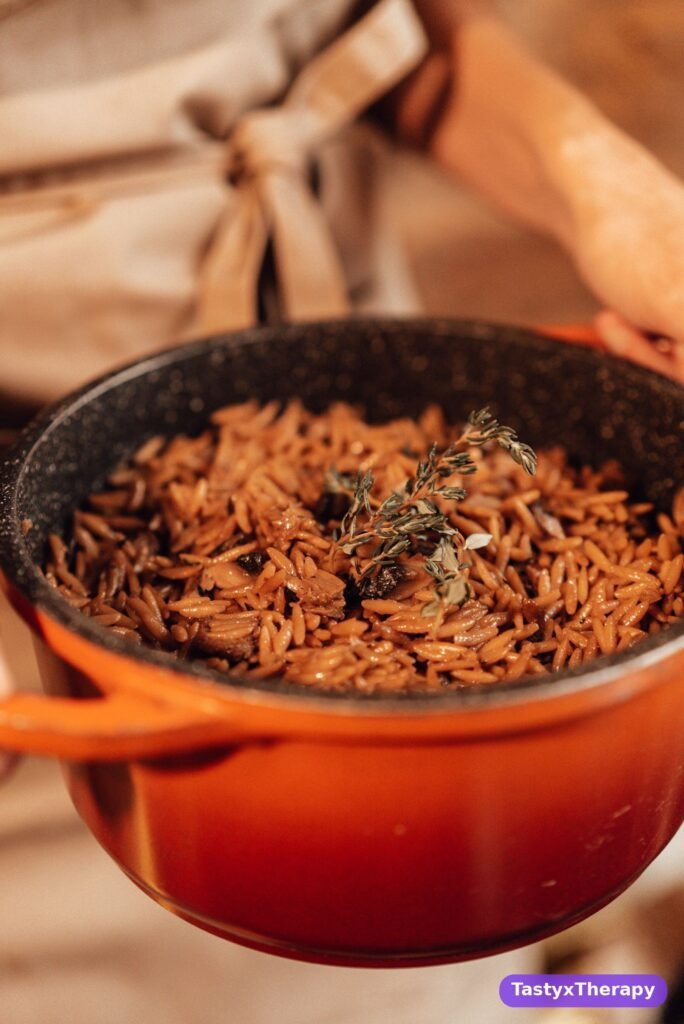
This dish is really a complete meal on its own, so it does not need much alongside it. A simple green salad with a lemon vinaigrette echoes the flavours in the pan without competing with them, and a basket of warm crusty bread is always welcome for scooping up the creamy orzo. If you want something a bit more substantial, roasted asparagus or green beans with a squeeze of lemon make a natural side.
For a dinner party, serve it straight from the skillet at the table, family style, with extra parmesan, lemon wedges, and chopped herbs in little bowls so everyone can finish their own portion. It looks generous and inviting, and it saves you plating up individual servings. A glass of crisp white wine, something like a Pinot Grigio or Sauvignon Blanc, pairs nicely, and sparkling water with lemon is a good non-alcoholic option that matches the brightness of the dish.
If there are children at the table, this is an easy win: the pasta shape is fun, the flavour is mild with the red pepper flakes left out, and the creamy texture is familiar. Let them squeeze their own lemon wedge over the top, which gives them a sense of ownership and usually means cleaner plates.
Frequently Asked Questions
Can I use chicken breasts instead of thighs?
Yes, absolutely. Cut the breasts into even, bite-sized pieces and be a little more careful with timing, since breasts dry out faster than thighs. Sear them just until golden, then return them to the pan for only as long as it takes to cook through, usually 3 to 4 minutes in the simmering orzo. Using a thermometer helps: pull the chicken when it reaches 165 degrees Fahrenheit in the thickest piece.
Can I make this dish ahead of time?
It is best served fresh, because orzo continues to absorb liquid as it sits. If you need to get ahead, you can sear the chicken and prepare the aromatics in advance, then cook the orzo fresh when you are ready to eat. If you do have leftovers, they reheat well with a splash of broth, so do not worry about making a full batch even if you are only feeding two.
What can I use instead of orzo?
Small pasta shapes like ditalini or small shells work, though cooking times vary slightly, so check the packet and taste as you go. You could also use rice, but it needs more liquid and a longer cooking time, roughly 18 to 20 minutes for white rice, so it becomes a different dish. If you are gluten-free, there are good gluten-free orzo options now, or you can use rice and adjust the liquid as described.
Why did my orzo turn out mushy?
Usually this means it cooked too long or with too little stirring, or the heat was too high and the liquid evaporated before the pasta was done, leaving it to steam in a thick paste. Keep the heat at a gentle simmer, stir every couple of minutes, and start checking for doneness a minute or two before you think it will be ready. Orzo goes from perfectly tender to soft quickly, so tasting is more reliable than the clock.
Can I add cream to this recipe?
Yes, and it is delicious. Stir in about a third of a cup of heavy cream along with the parmesan at the end, off the heat. It makes the sauce richer and silkier, and it pairs well with the lemon. If you add cream, you may want an extra squeeze of lemon juice to keep the balance, since cream can mute the brightness a little.
Is this recipe good for meal prep?
It works for a few days in the fridge, which makes it useful for lunches, but it is not ideal for freezing, since the orzo texture suffers. For a similar one-pan meal that holds up especially well as leftovers, try these easy dinner recipes with frozen vegetables, which are built around ingredients that reheat beautifully and are perfect for busy weeks.