

There are some weeknight dinners that just never get old, and for me, beef and broccoli is right at the top of that list. It is the dish I make when I want something that tastes like takeout but comes together in my own kitchen, with ingredients I actually recognise and a pan I only have to wash once. The beef turns out tender and a little caramelised at the edges, the broccoli stays bright green with a bit of bite, and the sauce is glossy and savoury without being overly sweet or salty. Put it over a pile of steamed rice and dinner is done before anyone has time to ask what is taking so long.
I first learned to make this dish the way a lot of people do, by ordering it far too often and then wondering why the homemade version never quite tasted the same. The restaurant version always seemed to have that silky sauce and beef that practically melted, while mine came out either tough or swimming in a thin, watery sauce. It took a few tries to figure out that the difference was not some secret ingredient. It was technique: slicing the beef thinly against the grain, giving it a quick coating of cornstarch, cooking it fast in a very hot pan, and not crowding the pan so the meat actually sears instead of steaming. Once those things clicked, the whole dish changed, and now it is one of the most reliable meals in my rotation.
What I love most about this recipe is how forgiving it is once you understand the rhythm of it. The prep takes a little time, mostly slicing and whisking the sauce, but the actual cooking is over in about ten minutes. That makes it perfect for busy evenings, but it is also a genuinely good dinner, not just a fast one. You can find more weeknight inspiration over at TastyxTherapy, where one-pan cooking gets a lot of love, and this dish fits right in with that way of cooking: one pan, big flavour, minimal fuss.
If you have never stir-fried at home before, do not let the high heat put you off. Stir frying is simply cooking small pieces of food quickly over high heat while keeping them moving, and it is one of the oldest and most practical cooking methods in the world. The trick is having everything ready before the pan gets hot, because once you start, there is no time to go hunting for the soy sauce. Get your beef sliced, your broccoli cut, your sauce whisked, and your rice going, and the rest is easy.
Why You Will Love This Beef and Broccoli Stir Fry
First, it is fast in the way that actually matters. From the moment you start cooking to the moment you sit down, you are looking at roughly half an hour, and most of that is prep you can do at a relaxed pace. The sauce comes together in one small bowl, the broccoli needs only a couple of minutes, and the beef cooks in about two minutes per batch. On nights when cooking feels like a chore, that speed makes all the difference.
Second, the texture is exactly right, which is where a lot of homemade stir fries fall down. The beef is coated lightly in cornstarch, which does two jobs: it protects the meat from drying out in the hot pan, and it helps the sauce cling and thicken at the end. The broccoli is blanched briefly first, so it stays crisp and green instead of turning soft and grey in the pan. When everything comes together, you get tender meat, snappy broccoli, and a sauce that coats rather than pools.
Third, it is a proper balanced meal without any extra effort. You have protein, vegetables, and a sauce with real depth from soy, oyster sauce, ginger, and garlic. Serve it with rice and you have something filling and satisfying, and if you want to stretch it further, it is easy to add a second vegetable or an extra handful of broccoli. It also reheats well enough for lunch the next day, though in my house there are rarely leftovers to test that theory properly.
Ingredients You Will Need
For the beef and marinade:
- 1 pound flank steak or sirloin, sliced very thinly against the grain
- 1 tablespoon soy sauce
- 1 teaspoon Chinese rice wine or dry sherry
- 1 tablespoon cornstarch
- 1/2 teaspoon baking soda (optional, but it really helps tenderness)
- 1/4 teaspoon black pepper
For the sauce:
- 1/4 cup low-sodium soy sauce
- 2 tablespoons oyster sauce
- 1 tablespoon brown sugar
- 1 teaspoon sesame oil
- 1 tablespoon cornstarch mixed with 2 tablespoons cold water
- 1/2 cup low-sodium beef or chicken broth
For the stir fry:
- 4 cups broccoli florets, cut into bite-sized pieces
- 2 tablespoons neutral oil with a high smoke point, such as avocado or vegetable oil, divided
- 3 cloves garlic, thinly sliced
- 1 tablespoon fresh ginger, grated
- 3 spring onions, sliced, whites and greens kept separate
- 1 teaspoon sesame seeds, for serving
- Cooked rice, for serving
A note on the beef, because it matters more than anything else here. Flank steak is my first choice: it has good flavour, it slices thinly, and it stays tender if you do not overcook it. Sirloin works well too, and it is often easier to find. Whatever you buy, pop it in the freezer for about 30 minutes before slicing. Partly frozen beef is much easier to cut thin, and thin slices are the whole game in a stir fry. Always slice against the grain, meaning across the lines you can see running through the meat, so the fibres are short and the cooked beef is tender rather than chewy.
How to Make One-Pan Beef and Broccoli Stir Fry
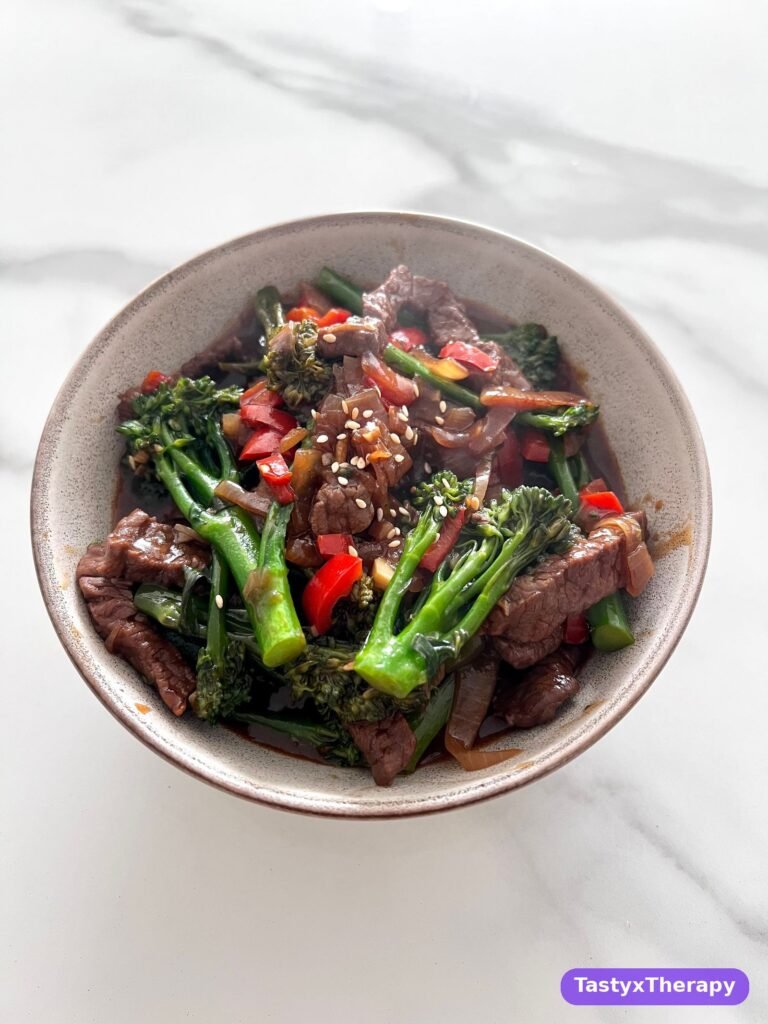
Start by marinating the beef. In a medium bowl, toss the sliced beef with the soy sauce, rice wine, cornstarch, baking soda if using, and black pepper. Mix it well so every slice is coated, then set it aside for 15 to 20 minutes while you get everything else ready. This short rest makes a real difference: the cornstarch forms a light coating and the baking soda helps break down the surface of the meat slightly, which is the trick behind that soft, restaurant-style texture.
While the beef marinates, whisk together all the sauce ingredients except the cornstarch slurry in a small bowl or jug. Keep the slurry separate for now; you will stir it in at the end to thicken the sauce. Cut your broccoli, slice the garlic, grate the ginger, and slice the spring onions. Put everything in little bowls near the stove. Stir frying moves fast, and you will be glad you did this.
Next, blanch the broccoli. Bring a pot of water to a boil, add a good pinch of salt, and drop the florets in for about 90 seconds, just until they turn bright green. Drain them well and set aside. You could skip this and cook the broccoli in the pan, but blanching gives you control: the broccoli ends up crisp-tender every time, and it only needs a minute back in the pan at the end to warm through and pick up sauce.
Now heat your largest skillet or wok over high heat until it is very hot. You want a bead of water to sizzle and vanish almost instantly. Add half the oil and swirl it around. Add half the beef in a single layer, leaving space between the slices, and do not touch it for about a minute. Let it sear and brown. Then flip the slices and cook for another 30 seconds or so, just until the pink is mostly gone. Take the beef out onto a plate. Repeat with the remaining oil and beef. Cooking in batches is the single most important step: a crowded pan drops in temperature and the beef steams instead of searing, and that is how you end up with grey, rubbery meat.
With the pan still hot, add the garlic, ginger, and spring onion whites. Stir for about 20 seconds until fragrant, being careful not to let the garlic burn. Pour in the sauce and let it bubble for a minute, then stir the cornstarch slurry once more and drizzle it in, stirring constantly, until the sauce turns glossy and thick enough to coat a spoon. This takes less than a minute.
Return the beef and broccoli to the pan and toss everything together for about a minute, until the beef is warmed through and every piece is coated in sauce. Drizzle over the sesame oil, toss once more, and take the pan off the heat. Scatter over the spring onion greens and sesame seeds and serve straight away over rice.
Tips for the Best Stir Fry Every Time
The pan needs to be genuinely hot before the beef goes in. If you are unsure, flick a drop of water in: it should dance and evaporate in a second or two. A lukewarm pan is the most common reason homemade stir fry disappoints, so give the pan a good couple of minutes over high heat and do not rush this part.
Do not skip the rest after slicing. Even 15 minutes in the marinade changes the texture noticeably, and if you have 30 minutes, even better. If you are really short on time, at least get the cornstarch coating on, since that alone helps the sauce cling beautifully.
Watch the garlic. It goes from fragrant to burnt in seconds over high heat, and burnt garlic will make the whole sauce taste bitter. Have the sauce jug in your hand ready to pour the moment the garlic smells good, and the liquid will stop the cooking instantly.
Taste the sauce before you add the slurry. Soy sauces vary a lot in saltiness, and oyster sauce brands differ too. If it tastes a touch too salty, a pinch more sugar balances it. If it tastes flat, a tiny splash of rice vinegar wakes it up. Adjusting at this stage is easy; adjusting after the sauce has thickened is harder.
If you want to compare approaches to getting that glossy, restaurant-style sauce, this beef and broccoli guide is a good reference for the velveting technique and sauce balance. It explains the same principles in a slightly different way, and reading a second take often makes the method click.
Variations Worth Trying
Once you have the base recipe down, it is easy to make it your own. A sliced red bell pepper added with the broccoli brings sweetness and colour, and a handful of sliced mushrooms adds an earthy depth that works well with the oyster sauce. If you like heat, a teaspoon of chilli garlic sauce whisked into the sauce, or a pinch of dried chilli flakes with the aromatics, gives a gentle warmth without overwhelming the dish.
For a lower-carb version, serve the stir fry over cauliflower rice or just on its own with extra broccoli. The sauce is good enough that you will not miss the rice much, though I would still want a spoonful of something to mop it up with. For a heartier meal, toss in a pack of cooked noodles at the end instead of serving over rice; the sauce coats noodles beautifully and turns the whole thing into a one-pan noodle dinner.
You can also swap the protein. The same marinade and sauce work well with thinly sliced chicken thigh or pork tenderloin, though cooking times shift slightly, so cook until just done and no longer. Prawns are another good option: they cook in about two minutes and love this sauce, but add them right at the end so they do not turn rubbery.
If one-pan cooking is becoming a habit in your kitchen, you will enjoy browsing the rest of the One-Pan & Skillet Meals collection, where the same idea, dinner from a single pan, gets applied to all sorts of ingredients and flavour combinations.
Storing and Reheating Leftovers
Leftovers keep in an airtight container in the fridge for up to three days. The broccoli will soften a little on reheating, which is normal, but the flavour holds up well. Reheat gently in a skillet over medium heat with a splash of water or broth to loosen the sauce, rather than blasting it in the microwave, which can make the beef tough. Stir it often and take it off the heat as soon as it is hot through.
I would not freeze this one. The broccoli goes mushy after freezing and thawing, and the sauce can turn a bit grainy. It is such a quick dish to make fresh that freezing rarely feels worth it. If you do want to get ahead, you can slice the beef and mix the sauce a day in advance and keep both covered in the fridge, which cuts the evening prep down to almost nothing.
For another easy skillet dinner to add to your weeknight list, this chicken and vegetable skillet uses the same one-pan approach with a lighter, lemony flavour that makes a nice contrast to the rich sauce here.
Serving Ideas
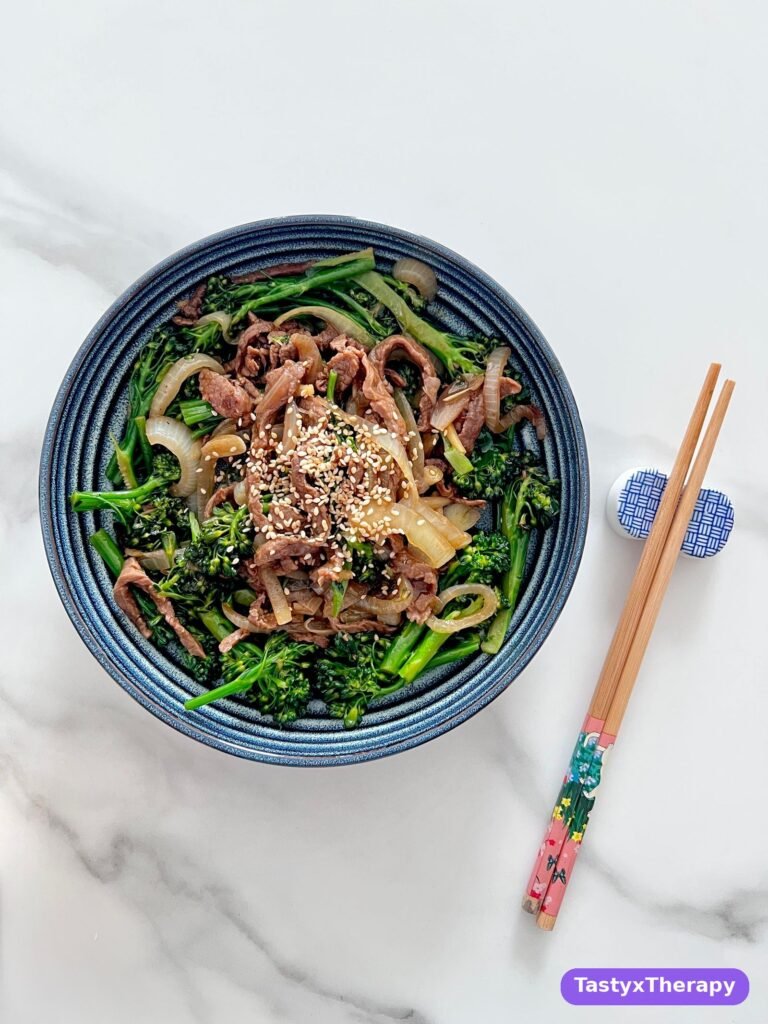
Steamed jasmine rice is the classic partner, and for good reason: it soaks up the sauce and lets the beef and broccoli shine. Brown rice works too if you prefer something nuttier and heartier, though it takes longer to cook, so start it well before you begin prep. For a lighter meal, serve the stir fry in a bowl on its own with a scattering of extra spring onions and sesame seeds, and maybe a quick cucumber salad on the side for crunch.
A few extras can turn this into a proper spread. A plate of spring rolls or dumplings, a simple egg drop soup, or a bowl of edamame with flaky salt all sit happily alongside it. If you are feeding a crowd, double the recipe but cook the beef in three batches rather than two, keeping that single layer in the pan, and keep the finished batches warm on a plate tented loosely with foil while you finish.
For drinks, keep it simple: iced green tea, sparkling water with lime, or a cold lager all work. The sauce is savoury and a little rich, so something cold and clean cuts through it nicely. And if there are kids at the table, this is a good one to get them involved with: let them whisk the sauce or scatter the sesame seeds at the end, which somehow makes them far more interested in eating the broccoli.
Frequently Asked Questions
Can I use frozen broccoli for this stir fry?
Yes, and it works better than you might expect. Thaw it first and pat it very dry, then skip the blanching step and add it straight to the pan at the end, tossing for a minute or two until heated through. The texture will be a little softer than fresh blanched broccoli, but the flavour is still good, and it makes the recipe even faster on nights when the fridge is bare.
What is the best cut of beef for beef and broccoli?
Flank steak is the classic choice because it has strong beef flavour and slices thinly, but sirloin, flat iron, or even skirt steak all work. The cut matters less than how you slice it: thin, against the grain, and ideally after a short spell in the freezer so the slices stay even. Avoid stewing cuts like chuck, which need long, slow cooking to become tender and will stay tough in a quick stir fry.
Why is my beef tough instead of tender?
Almost always, it is one of three things: the slices were cut with the grain instead of against it, the pan was not hot enough so the meat steamed, or the beef was overcooked. Stir fry beef cooks in about 90 seconds per batch, so pull it out while it still looks slightly underdone in places; it will finish cooking when it goes back into the hot sauce. The cornstarch coating and a short marinade also help a lot, so do not skip those steps.
Can I make this stir fry gluten-free?
Yes, with two swaps. Use tamari or a certified gluten-free soy sauce in place of the regular soy sauce, and check that your oyster sauce is gluten-free, since some brands contain wheat. The rest of the ingredients are naturally gluten-free, and the dish tastes just as good, so it is an easy adaptation if you need it.
How do I keep the broccoli bright green?
Blanching briefly and then shocking it is the trick, though for this recipe simply draining it well after 90 seconds in boiling water is enough. Do not overcook it in the pan afterwards: it only needs a minute tossed in the sauce to warm through. Overcooked broccoli turns dull and soft, while broccoli that is just cooked stays vivid and has a pleasant bite that contrasts with the tender beef.
Can I double this recipe for a larger group?
You can, but cook the beef in batches and keep the pan hot between them, wiping it out quickly if any residue starts to darken. If you crowd the pan, the beef will steam and the texture suffers, which defeats the purpose. The sauce quantities double easily, and you may want a slightly larger pan or wok so the final toss is comfortable. A similar one-pan favourite, these chicken skillet recipes, scale the same way and are worth a look if you cook for a crowd often.
1 thought on “One-Pan Beef and Broccoli Stir Fry”