

There is a special place in my baking rotation for snickerdoodles. They are not flashy: no chocolate chips, no frosting, no filling. Just a soft, buttery cookie rolled in cinnamon sugar, with a crackled top and a centre that stays tender for days. And yet, whenever I put a plate of them on the table, they vanish faster than cookies that took twice the effort. There is something about that simple combination, warm cinnamon, soft crumb, a hint of tang, that people find genuinely comforting.
The tang is the secret, and it comes from cream of tartar. It is not an ingredient most people keep at the front of the cupboard, but it is what gives snickerdoodles their distinctive flavour and their soft, slightly chewy texture. Without it, you have a perfectly nice sugar cookie, but you do not have a snickerdoodle. Snickerdoodle cookies have been an American baking staple for a long time, and the cream of tartar is the thread that runs through nearly every traditional version.
I bake these most often when I want something homemade without a big production. The dough comes together in one bowl, it needs only a short chill, and the cookies bake in about 10 minutes. The smell alone, butter and cinnamon drifting through the house, is worth the effort. They are also a wonderful cookie to bake with children, because rolling the dough balls in cinnamon sugar is exactly the kind of messy, hands-on job that kids love.
If you are building up a baking repertoire, you will find more recipes in this easy, homemade spirit at TastyxTherapy, where desserts are meant to be baked and eaten, not just admired. Snickerdoodles fit that philosophy perfectly: simple ingredients, reliable method, and a result that tastes like care.
Why You Will Love These Snickerdoodle Cookies
The texture is the first thing people notice. These cookies are thick and soft, with edges that are just set and centres that stay pillowy, even the next day. The trick is slightly underbaking them: they look a touch soft when they come out of the oven, but they firm up as they cool on the tray, and that is what keeps the centres tender instead of crisp. If you prefer a crisper cookie, you can bake them a minute longer, but I urge you to try the soft version first.
The flavour is deceptively complex for such a short ingredient list. The cinnamon sugar coating gives a warm, spiced exterior, the butter provides richness, the vanilla rounds everything out, and the cream of tartar adds a subtle tang that makes the cookie taste more interesting than a plain sugar cookie. It is a flavour that grows on you, which is why people who try one usually reach for another without quite knowing why.
They also keep beautifully, which is not true of every cookie. Stored in an airtight container, they stay soft for up to a week, and they freeze well both as dough and as baked cookies. That makes them a great bake-ahead option for holidays, bake sales, or just for having something homemade in the house when friends drop by unexpectedly.
Ingredients You Will Need
For the dough:
- 2 3/4 cups all-purpose flour
- 2 teaspoons cream of tartar
- 1 teaspoon baking soda
- 1/2 teaspoon fine salt
- 1 cup unsalted butter, softened to room temperature
- 1 1/2 cups granulated sugar
- 2 large eggs, at room temperature
- 2 teaspoons vanilla extract
For rolling:
- 1/4 cup granulated sugar
- 2 teaspoons ground cinnamon
A few notes on ingredients, because small details matter here. The butter should be soft enough to leave an indent when pressed, but not melty or greasy. If it is too warm, the cookies will spread too much; if it is too cold, the dough will not cream properly. Take it out of the fridge about 45 minutes before baking, or cut it into cubes to speed things up. Room temperature eggs mix in more evenly, so set them out at the same time.
Cream of tartar is essential, not optional, for a true snickerdoodle. It reacts with the baking soda to leaven the cookie and gives the characteristic tang and soft texture. If you absolutely cannot find it, you can substitute baking powder for the cream of tartar and baking soda combination, using 2 teaspoons of baking powder and omitting both, but the flavour will be closer to a sugar cookie. It is worth tracking down a small jar; it lasts for ages in the cupboard.
For the cinnamon, use a good, fresh ground cinnamon. Cinnamon loses its potency over time, so if your jar has been sitting open for a year, it is worth replacing. The coating is the first thing you taste, so fresh cinnamon makes a real difference.
How to Make Soft Baked Snickerdoodle Cookies

Start by whisking together the flour, cream of tartar, baking soda, and salt in a medium bowl. Set this aside. In a large bowl, beat the softened butter and sugar together with an electric mixer on medium-high speed for about 2 to 3 minutes, until the mixture is pale, light, and fluffy. This creaming step is important: it beats air into the butter, which helps the cookies rise and stay soft, so do not rush it. Scrape down the sides of the bowl once or twice to make sure everything is evenly mixed.
Beat in the eggs one at a time, mixing well after each addition, then beat in the vanilla. The mixture should look smooth and creamy. Add the dry ingredients in two additions, mixing on low speed just until combined after each. Stop as soon as you no longer see streaks of flour. Overmixing at this stage develops the gluten and makes the cookies tough, which is the opposite of what we want.
Cover the dough and chill it in the fridge for at least 30 minutes. This firms up the butter, which stops the cookies spreading too thin in the oven, and it lets the flour hydrate, which improves the texture. If you have time, an hour is even better, and the dough keeps in the fridge for up to 2 days if you want to bake it later.
While the dough chills, preheat the oven to 350 degrees Fahrenheit (175 degrees Celsius) and line two baking sheets with parchment paper. Mix the rolling sugar and cinnamon together in a small bowl. Scoop the dough into balls of about 1 1/2 tablespoons each, rolling them gently between your palms until smooth. Roll each ball generously in the cinnamon sugar, coating it all over, and place the balls about 2 inches apart on the prepared sheets. Do not flatten them; they will spread and crackle on their own in the oven, which is part of their charm.
Bake one sheet at a time, or both with the racks in the upper and lower thirds and swapping halfway, for 10 to 12 minutes, until the edges are set and lightly golden but the centres still look slightly soft and puffy. They will have beautiful crackled tops by now. Take them out, even if they look underdone in the middle, and let them cool on the baking sheet for 5 minutes. They will firm up as they cool. Then transfer them to a wire rack to cool completely, though I fully expect a few to be eaten warm, which is, in my opinion, the correct way to test a batch.
Tips for Soft, Thick Snickerdoodles
Chilling the dough is the single most effective way to keep these cookies thick. Warm dough spreads fast in a hot oven, giving you thin, crisp cookies instead of thick, soft ones. If your kitchen is warm, you can even chill the shaped, sugar-coated balls on the baking sheet for 15 minutes before baking, which helps further.
Measure the flour correctly. Too much flour makes dry, cakey cookies, and it is the most common baking mistake. Spoon the flour into the measuring cup and level it off with a knife, rather than scooping directly from the bag, which compacts the flour and can add a quarter cup extra without you realising. If you have kitchen scales, 345 grams of flour is the most reliable measure.
Do not overbake. This is the golden rule for soft cookies of any kind. The cookies should look slightly underdone in the centre when you take them out, and they will set as they cool. If you wait until they look fully baked in the oven, they will be crisp and dry by the time they cool. Set a timer for 10 minutes and check from there, since ovens vary.
Use parchment paper, not greased baking sheets. Grease encourages spreading, while parchment gives the cookies something to grip, helping them stay thicker. It also makes cleanup easier, which is never a bad thing. And bake in the centre of the oven where the heat is most even, rotating the sheet halfway if your oven has hot spots.
For a classic take on the same cookie, these snickerdoodles follow a similar method and are a good reference if you want to compare baking times or try a slightly different cinnamon ratio. It is reassuring to see that the fundamentals, cream of tartar, cinnamon sugar, soft bake, are the same everywhere.
Variations Worth Trying
The classic version is hard to beat, but there are a few variations that are worth a try. Brown butter snickerdoodles, made by cooking the butter until it smells nutty and turns amber, then cooling it before creaming, add a deep, toffee-like flavour that is wonderful with cinnamon. It takes an extra 10 minutes and is well worth it for a special batch.
Chai-spiced snickerdoodles swap half the cinnamon in the coating for a mix of cardamom, ginger, and a pinch of nutmeg, giving a warmer, more complex spice profile. Pumpkin spice snickerdoodles, using a pumpkin spice blend in place of plain cinnamon, are a natural autumn variation, and a drizzle of cream cheese glaze over the cooled cookies turns them into something closer to a coffee-shop treat.
You can also make them into ice cream sandwiches, which is a summer favourite in my house. Sandwich a scoop of vanilla or cinnamon ice cream between two cooled cookies, roll the edges in extra cinnamon sugar, and freeze for an hour. They are messy, joyful, and far better than anything from a packet. For a smaller treat, make the dough balls half-sized and bake for 8 to 9 minutes for bite-sized cookies that are perfect with coffee.
If you enjoy cookies in this style, the Desserts & Baking collection has more to explore, from small-batch bakes to puddings that share this recipe’s homemade, unfussy character.
Storing and Freezing
Baked snickerdoodles keep in an airtight container at room temperature for up to a week, and they stay soft for most of that time, especially if you add a slice of bread to the container, which the cookies draw moisture from. It sounds odd, but it works: the bread goes stale and the cookies stay soft. Replace the bread slice every couple of days if you keep them that long.
The dough freezes beautifully. Roll it into balls, coat them in cinnamon sugar, and freeze them on a baking sheet until solid, then transfer to a freezer bag. They keep for up to 3 months, and you can bake them straight from frozen, adding 1 to 2 minutes to the baking time. This is my favourite way to always have fresh cookies available: bake a few at a time, whenever the craving strikes, without making a full batch.
Baked cookies also freeze well, in an airtight container with parchment between layers, for up to 3 months. Thaw them at room temperature for about 30 minutes, or warm them briefly in a low oven for a just-baked feel. They are not quite as good as fresh, but they are far better than no cookies at all.
For another small-batch cookie recipe that is easy to keep on hand, these small-batch cookies without baking soda are a good companion bake, especially when you want a smaller quantity.
Serving Ideas
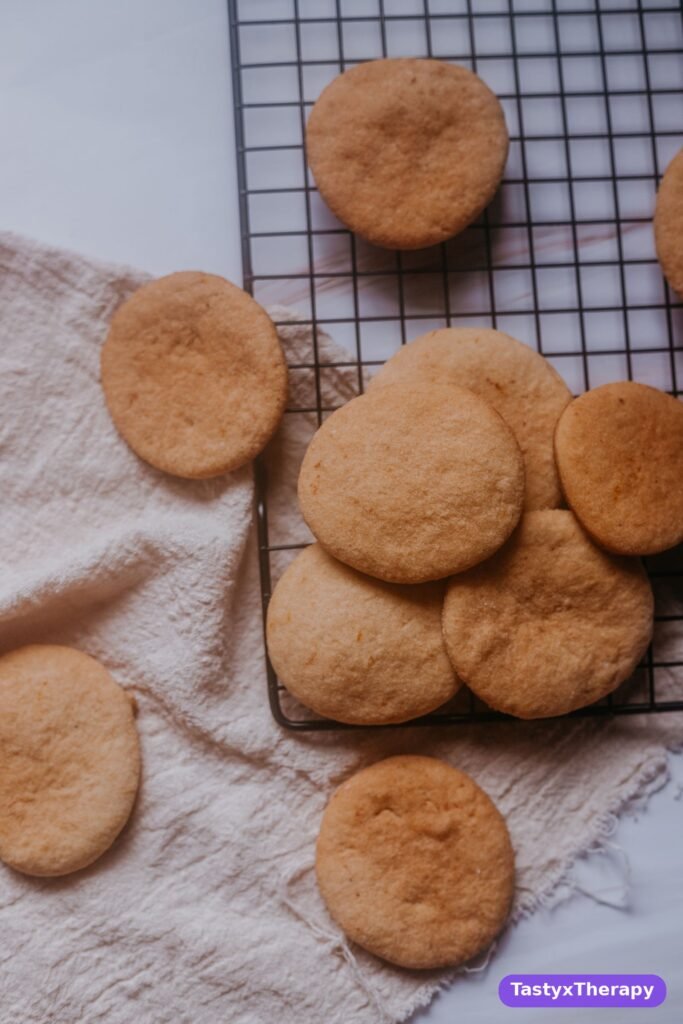
Serve snickerdoodles slightly warm if you can, with a glass of cold milk, which is the classic pairing and still the best. For adults, a cup of coffee or a chai latte echoes the cinnamon beautifully, and the cookies are sturdy enough to dunk without falling apart immediately, which is a quality I take seriously in a cookie.
For a dessert plate, serve two cookies with a scoop of vanilla ice cream and a drizzle of caramel sauce, or crumble a cookie over a bowl of ice cream for an instant crunchy topping. At a bake sale or cookie exchange, snickerdoodles stand out precisely because they are not chocolate: they offer something different, and their crackled tops look beautiful piled on a plate or wrapped in a cellophane bag tied with ribbon.
For holidays, they are a natural addition to a cookie box, alongside gingerbread and shortbread, because their warm spice fits the season and they travel well without breaking. A tin of snickerdoodles, packed with parchment between layers, makes a lovely homemade gift, and it is the kind of gift people actually eat rather than politely display.
Frequently Asked Questions
Why do snickerdoodles need cream of tartar?
Cream of tartar is what makes a snickerdoodle a snickerdoodle rather than a sugar cookie. It reacts with the baking soda to leaven the dough, and it gives the cookie its distinctive slight tang and soft, chewy texture. Without it, the cookie will still taste good, but it will be a different cookie: less tangy, slightly less soft, and missing the flavour that defines the style.
Why did my snickerdoodles turn out flat?
Flat cookies usually mean the butter was too warm, the dough was not chilled, or there was too little flour. Make sure the butter is soft but not melty, chill the dough for at least 30 minutes, and measure the flour by spooning and levelling rather than scooping. Baking on a greased sheet instead of parchment can also encourage spreading, so use parchment for the thickest result.
Can I make snickerdoodle dough ahead of time?
Yes, and it keeps well. The dough can be refrigerated for up to 2 days, tightly covered, or frozen as shaped, sugar-coated balls for up to 3 months. If refrigerated, let it sit at room temperature for 10 to 15 minutes before scooping so it is easier to handle. Baking from chilled or frozen dough actually helps the cookies stay thick, so making ahead is a genuine advantage.
How do I keep snickerdoodles soft after baking?
Do not overbake them, and store them in an airtight container once completely cool. Adding a slice of bread to the container helps them stay soft, as the cookies draw moisture from the bread. Keep the container at room temperature, not in the fridge, which dries cookies out. If they do go a little firm, a few seconds in the microwave with a damp paper towel nearby softens them again.
Can I make snickerdoodles without eggs?
Eggs contribute structure and richness, so an eggless version will be a little different, but you can try replacing each egg with a flax egg, made by mixing a tablespoon of ground flaxseed with 3 tablespoons of water and letting it sit for 5 minutes to gel. The cookies will be slightly denser and less chewy, but still tasty, especially warm from the oven with a glass of milk.
What is the difference between snickerdoodles and sugar cookies?
The main differences are cream of tartar and the cinnamon sugar coating. Sugar cookies are typically rolled in plain sugar or frosted, and they have a simpler, sweeter flavour. Snickerdoodles are always rolled in cinnamon sugar and always contain cream of tartar, which gives them their tang and soft texture. If you like experimenting with small-batch cookies, these small-batch chocolate chip cookies without brown sugar are another good recipe to compare textures and methods with.