

Introduction
There are nights when dinner needs to be simple, filling, and finished before anyone has the energy to argue about it. This chicken and vegetables skillet without oven is my answer to those nights. Everything cooks in one pan on the stovetop, there is no oven to preheat, no roasting tray to scrub, and the whole meal is on the table in about thirty-five minutes. The chicken stays juicy, the vegetables stay bright and crisp-tender, and the little sauce that forms in the pan ties it all together.
I learned to love skillet dinners in a kitchen with an oven I did not trust. It ran hot on one side and barely warm on the other, so anything I roasted came out half burnt and half pale. The stovetop, by contrast, was honest. I could see what was happening, stir when something needed stirring, and turn the heat down the moment things got too enthusiastic. That habit stuck long after I moved to a better kitchen. Cooking on the stovetop feels more hands-on, and for a weeknight dinner, that control is worth a lot.
What makes this recipe work is not a secret ingredient. It is the order of cooking. The chicken goes in first, so it gets a proper golden crust. Then it comes out to rest while the vegetables cook in the same pan, picking up all the flavour left behind. Finally, everything goes back together with a splash of stock, a squeeze of lemon, and a handful of herbs. Nothing fancy, nothing you need to buy specially, just good technique applied to ordinary ingredients.
If you are cooking for a family, this recipe scales easily, and there are more weeknight ideas on the TastyxTherapy homepage. If you are cooking for one, the leftovers reheat beautifully for lunch the next day. Either way, you end up with one pan to wash, which on a tired evening counts as a genuine blessing.
Why a Skillet Dinner Works So Well
A skillet is one of the most useful pans in any kitchen, and it earns that place for a few practical reasons. It heats evenly, it holds heat well, and its wide surface gives food room to brown instead of steam. Browning is where flavour lives. When chicken touches a hot pan, the surface caramelises, and those browned bits, the ones that stick to the bottom of the pan, become the base of a sauce when you add a little liquid later. Cooks call that fond, and it is the reason a pan sauce tastes so much better than a sauce made in a clean pot.
Cooking without the oven also saves time and heat. You do not wait ten minutes for preheating, and you do not heat the whole kitchen on a warm evening. Everything happens in front of you, so you can adjust as you go. If the vegetables are cooking too fast, turn the heat down. If the chicken needs another minute, leave it in. That flexibility is hard to get from an oven, where you mostly close the door and hope.
One-pan cooking has another quiet advantage: fewer decisions. You are not juggling a pot of rice, a tray in the oven, and a pan on the stove all at once. You cook in stages, in one pan, and the meal builds itself. For anyone who finds weeknight cooking stressful, that simplicity matters as much as the taste. The history of the skillet itself is a reminder of how long cooks have relied on this one pan for exactly this kind of straightforward, filling food.
Choosing Your Chicken and Vegetables
Boneless, skinless chicken thighs are my first choice for this recipe. They are forgiving, they stay juicy even if you cook them a minute too long, and they brown beautifully. Chicken breasts work too, but they need a little more care. If you use breasts, slice them a touch thinner, and do not let them sit in the pan after they are done, because they dry out faster than thighs. Either way, pat the chicken dry with kitchen paper before it goes in the pan. Wet chicken steams instead of browning, and that one step makes more difference than any seasoning.
For vegetables, use what you have and what you like. This recipe calls for bell peppers, zucchini, broccoli, carrots, and red onion, because they cook at roughly similar speeds and give you a good mix of colour, crunch, and sweetness. But the skillet is not fussy. Green beans, mushrooms, snap peas, and cauliflower all fit in happily. The rule is simple: cut harder vegetables, like carrots, a little smaller, so they cook in the same time as softer ones, like zucchini. If you add something very quick, like spinach or cherry tomatoes, stir it in at the very end, so it just wilts or warms through.
Fresh vegetables are ideal, but do not let a lack of fresh produce stop you. Frozen mixed vegetables can be used here, straight from the bag, as long as you cook them long enough for the extra water to evaporate. That takes a few extra minutes, and you may want to turn the heat up slightly. The result is still a proper dinner, and on a night when the fridge is nearly empty, that matters more than perfection.
Ingredients You Will Need
For four servings, you will need about 700 grams of boneless chicken thighs or breasts, cut into bite-sized pieces, two tablespoons of olive oil, one teaspoon of paprika, one teaspoon of garlic powder, half a teaspoon of dried oregano, salt and black pepper, one red onion sliced, two bell peppers in different colours, one medium zucchini halved and sliced, two cups of broccoli florets, two carrots sliced thinly, three cloves of garlic minced, half a cup of chicken stock, one tablespoon of soy sauce, and the juice of half a lemon. A handful of fresh parsley or coriander for serving is optional but lovely.
Seasoning is deliberately simple here. Paprika gives colour and a gentle warmth, garlic powder seasons the chicken all the way through, and oregano adds a herbal note that works with almost any vegetable. If you like heat, add half a teaspoon of chilli flakes with the garlic. If you prefer a smokier flavour, use smoked paprika instead of sweet. The soy sauce is not there to make the dish taste Asian. It is there for salt and depth, the same way a pinch of salt deepens a soup. If you avoid soy, a little extra salt and a splash of Worcestershire sauce will do a similar job.
How to Make Chicken and Vegetables Skillet Without Oven
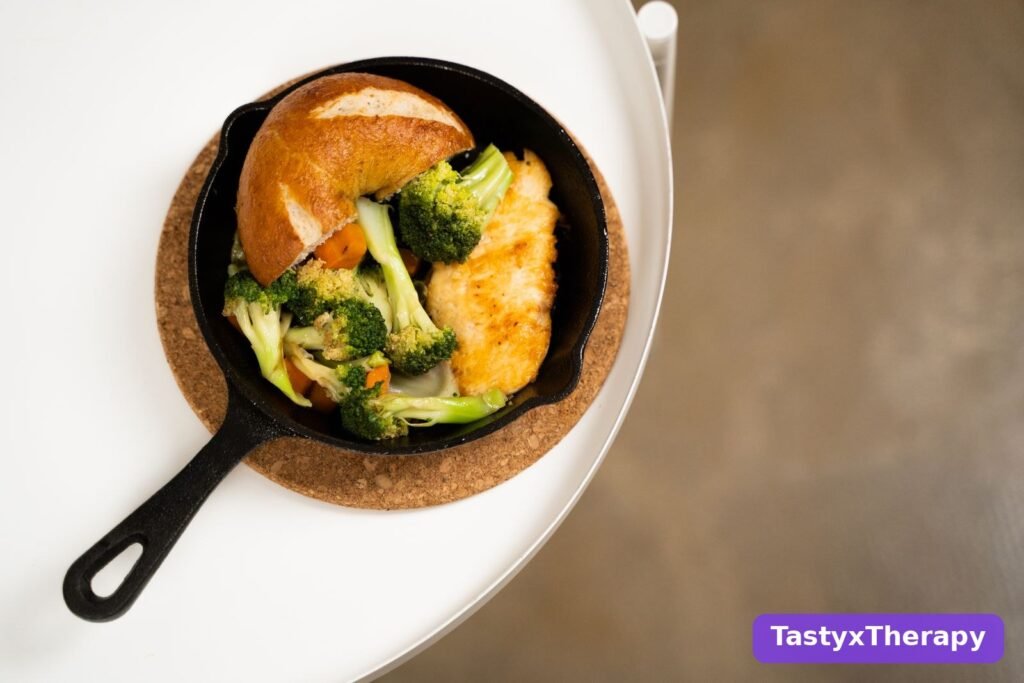
Season the chicken pieces with paprika, garlic powder, oregano, salt, and pepper, and toss them until they are evenly coated. Heat the olive oil in a large skillet over medium-high heat until it shimmers. Add the chicken in a single layer, leaving space between the pieces, and do not touch it for three to four minutes. This is the hardest part of the recipe, because it feels wrong to leave food alone, but that undisturbed contact is what creates the golden crust. When the underside is browned, turn the pieces and cook for another three minutes, until the chicken is cooked through and no longer pink in the middle. Remove the chicken to a plate and cover it loosely with foil.
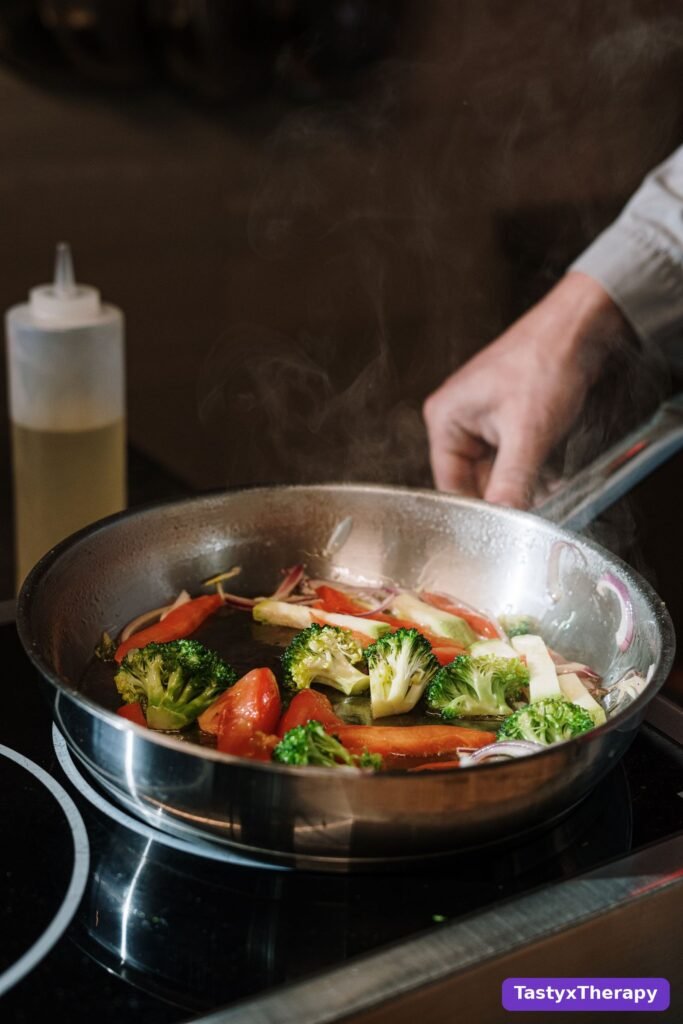
Do not wash the pan. Those browned bits are flavour, and you want them. Add a touch more oil if the pan looks dry, then add the onion and carrots. Cook for three minutes, stirring now and then, until the onion starts to soften. Add the bell peppers, zucchini, and broccoli, and cook for another five to six minutes, until the vegetables are crisp-tender, bright in colour, and just starting to brown at the edges. If the pan seems crowded, cook the vegetables in two batches. A crowded pan steams, and steamed vegetables go soft and grey, which nobody wants.
Stir in the garlic and cook for thirty seconds, just until it smells fragrant. Garlic burns quickly, so this step is short on purpose. Pour in the chicken stock and soy sauce, and scrape the bottom of the pan with a wooden spoon to loosen all the browned bits. This is called deglazing, and it turns those bits into sauce. Return the chicken to the pan, along with any juices from the plate, and stir everything together. Simmer for two minutes, until the sauce has thickened slightly and coats the chicken and vegetables. Squeeze over the lemon juice, taste, and adjust the salt. The lemon matters more than it looks. It brightens the whole pan, cutting through the richness of the chicken and making the vegetables taste fresher.
Tips for Juicy Chicken Every Time
The most common mistake with skillet chicken is overcrowding the pan. When pieces are piled on top of each other, they release steam, and steam cannot brown. If your skillet is small, cook the chicken in two batches. It takes five extra minutes, but the difference in flavour is enormous. The same applies to vegetables, and it is the single most useful thing to remember about one-pan cooking.
Cutting the chicken into even pieces matters too. If some pieces are twice the size of others, the small ones will dry out while the large ones are still cooking. Take a minute to cut them roughly the same size, about the size of the first joint of your thumb. It does not need to be precise, just consistent. And let the chicken rest for a couple of minutes after cooking, even if you are in a hurry. Resting lets the juices settle back into the meat instead of running out onto the plate.
Heat management is the third skill worth practising. Medium-high heat is right for browning, but if the pan starts to smoke, or the garlic darkens too fast, turn it down. There is no prize for cooking at the highest possible heat. A steady, confident medium-high, with the occasional adjustment, gives you better food than a pan that is constantly on the edge of burning.
Variations Worth Trying
This skillet is a template as much as a recipe, and it welcomes changes. For a Mediterranean version, add a tin of drained chickpeas with the vegetables, swap the soy sauce for a spoonful of tomato paste, and finish with crumbled feta and a handful of olives. For a creamier version, stir in three tablespoons of cream cheese at the end, off the heat, until it melts into the sauce. It will not be heavy, just silky, and it turns the same dinner into something that feels like a weekend meal.
If you want more heat, add a chopped fresh chilli with the garlic, or a teaspoon of sriracha to the stock. If you are cooking for children, leave the chilli out and add a teaspoon of honey to the sauce, which rounds off the flavours without making the dish sweet. You can also change the protein entirely. Prawns cook in three minutes and work beautifully with the same vegetables, and sliced sausage, browned first like the chicken, makes a heartier, smokier version.
For more ideas in this style, the one-pan and skillet collection has plenty of recipes built around the same principle: one pan, simple ingredients, dinner without drama. A related favourite is this chicken skillet recipe without oven, which uses a similar method with a different set of vegetables and seasonings, and a one-pot chicken and rice dinner is worth trying on nights when you want something even more filling.
Serving Ideas
This skillet is a complete meal on its own, but it pairs well with simple sides. Steamed rice soaks up the sauce beautifully, and it is the easiest option when you want something filling. Crusty bread does the same job, and it lets people mop up the pan juices, which are far too good to leave behind. For a lighter meal, serve the skillet over a bed of baby spinach, which wilts gently under the hot chicken and vegetables, or with a simple green salad and a lemon dressing.
If you are feeding a crowd, double the recipe and cook it in two pans, or in batches, rather than cramming everything into one skillet. Serve it straight from the pan at the table, family style, with the sides in bowls around it. There is something welcoming about a pan in the middle of the table, and it saves on serving dishes too. A final scatter of fresh herbs and an extra lemon wedge on the side lets everyone finish their own plate the way they like it.
Storing and Reheating Leftovers
Leftovers keep in an airtight container in the fridge for up to three days. Reheat them gently in a skillet over medium heat, with a splash of water or stock to loosen the sauce. The microwave works too, but stir halfway through so the chicken heats evenly, and do not overheat it, or the chicken will toughen. The vegetables will soften a little on reheating, but the flavour holds up well, and many people find the leftovers taste even better the next day, once the sauce has had time to settle.
This dish also freezes reasonably well, although the zucchini goes softer after thawing. If you plan to freeze it, slightly undercook the vegetables, cool the skillet quickly, and freeze in portions for up to two months. Thaw overnight in the fridge, then reheat in a pan. It will not be quite as crisp as the fresh version, but it is still a proper home-cooked dinner on a night when cooking from scratch is not going to happen.
Frequently Asked Questions
Can I use chicken breast instead of thighs?
Yes, and it works well if you are careful. Cut the breast into even pieces, do not overcrowd the pan, and take the chicken out as soon as it is cooked through, rather than leaving it in while the vegetables cook. Breasts dry out faster than thighs, so the resting step matters even more. If you are new to skillet cooking, thighs are the more forgiving choice, but breasts are a perfectly good lighter option.
Do I need a cast iron skillet for this recipe?
No, any large skillet with a heavy base will do. Cast iron holds heat beautifully and gives a wonderful crust, but a good stainless steel or non-stick skillet works fine. If you use non-stick, keep the heat at medium rather than high, and use a wooden or silicone spoon so you do not damage the coating. The important thing is a pan wide enough to give the chicken room to brown.
How do I know the chicken is cooked through?
The most reliable way is a meat thermometer, which should read 74 degrees Celsius, or 165 degrees Fahrenheit, in the thickest piece. Without a thermometer, cut the largest piece in half. The meat should be white all the way through, with no pink, and the juices should run clear. If you are unsure, cook for one more minute. One extra minute is far better than undercooked chicken.
Can I make this ahead of time?
You can prep everything ahead, which is often more useful than cooking ahead. Cut the chicken and vegetables in the morning, store them in separate containers in the fridge, and the evening cooking takes about twenty minutes. The finished dish also reheats well, as described above, so it works as a meal-prep option for two or three days of lunches.
What vegetables work best in a skillet?
Vegetables that hold their shape and cook in five to eight minutes are ideal, which is why peppers, zucchini, broccoli, and carrots feature here. Mushrooms, green beans, and snap peas are also excellent. Avoid very watery vegetables in large amounts, like courgette in huge quantities, unless you are prepared to cook off the extra liquid. For another take on the same idea, the BBC Good Food stir-fry recipes shows how a similar mix of chicken and vegetables can be adapted with different sauces and seasonings.
4 thoughts on “Chicken and Vegetables Skillet Without Oven: An Easy One-Pan Dinner”